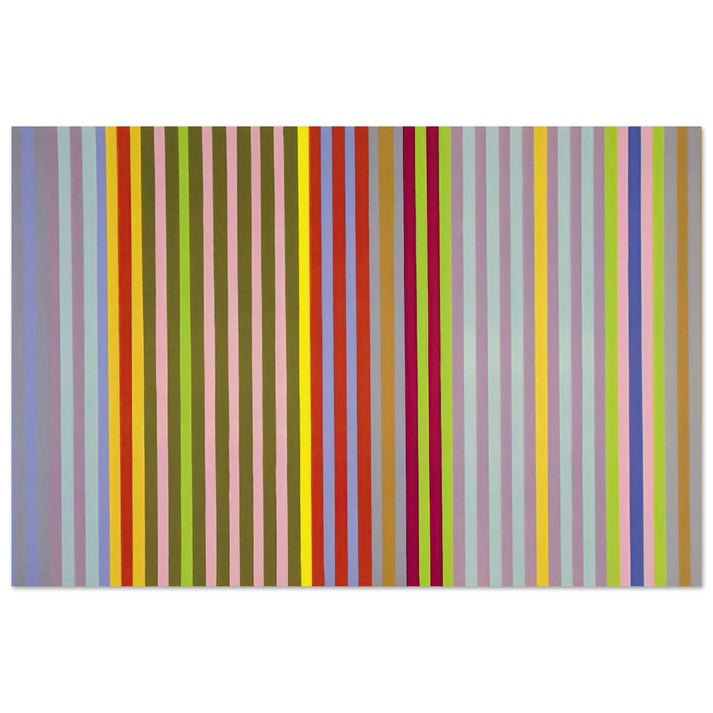


Apricot Ripple - 1968 - Gene Davis Art Prints - 100x150 cm / 40x60″ inches | Gene Davis Poster | Gene Davis Prints
Apricot Ripple - 1968 - Gene Davis Art Prints - 100x150 cm / 40x60″ inches | Gene Davis Poster | Gene Davis Prints
Impossibile caricare la disponibilità di ritiro
Gene Davis' Apricot Ripple (1968): A Vibrant Masterpiece of Color Field Painting
Elevate your space with a museum-quality reproduction of Apricot Ripple (1968), a dazzling exemplar of Gene Davis' iconic Color Field paintings. This archival fine art print captures the essence of Davis' revolutionary approach to abstraction, where vertical stripes of luminous color create a mesmerizing optical rhythm. As a leading figure in the Washington Color School, Davis redefined modern art by transforming color into a dynamic, almost musical experience.
Our Master's Edition archival print of Apricot Ripple is meticulously crafted on FSC-certified, acid-free paper with a luxurious 250 gsm (110 lb) weight and a velvety matte, uncoated finish. The natural off-white tone of the paper enhances the vibrancy of Davis' palette, ensuring a reproduction that remains true to the artist's vision while offering unparalleled longevity. This is not merely a poster—it is a museum-quality reproduction designed to endure for generations.
Measuring 100x150 cm (40x60 inches), this large-scale print commands attention, making it an ideal centerpiece for contemporary interiors, corporate spaces, or galleries. The interplay of apricot, coral, and subtle neutrals in Apricot Ripple evokes warmth and energy, while the precise verticality of the stripes creates a sense of movement and depth. Davis' work is celebrated for its ability to engage the viewer on both an emotional and intellectual level, inviting contemplation of color as an independent force.
RedKalion's commitment to excellence ensures that every detail of this print—from the archival inks to the sustainable paper—meets the highest standards of quality. Whether you are a seasoned collector or a discerning enthusiast, this Gene Davis fine art print offers a rare opportunity to own a piece of art history, rendered with the precision and care it deserves.
- Artist: Gene Davis (American, 1920–1985)
- Artwork: Apricot Ripple (1968)
- Movement: Washington Color School, Color Field Painting
- Paper: Master's Edition archival paper, matte uncoated, natural off-white
- Weight & Thickness: 250 gsm (110 lb), 0.29 mm (11.4 mils)
- Size: 100x150 cm / 40x60 inches
- Sustainability: FSC-certified, acid-free (pH above 7)
Experience the transformative power of Gene Davis' Apricot Ripple in your own space—a testament to the enduring allure of Color Field art, presented by RedKalion with uncompromising quality.


Discover Unlimited Art Possibilities
At RedKalion, you can find virtually any artwork from any artist, available in a wide range of sizes to perfectly match your space.
If you didn’t find what you’re looking for, contact us at support@redkalion.com . We will source any artwork and produce it in any size and format you need, including art prints, posters, canvas, framed pieces, framed canvas, and more.
For dedicated art enthusiasts, we also offer handcrafted replicas of any artwork, carefully painted by highly skilled artists using traditional techniques.
For custom requests, contact us at support@redkalion.com .
What is the significance of Apricot Ripple in Gene Davis' body of work?
Apricot Ripple (1968) exemplifies Gene Davis' mastery of Color Field painting, where vertical stripes create optical harmony. As a key figure in the Washington Color School, Davis used color to evoke emotion and movement, making this piece a quintessential example of his revolutionary style.
What makes this Gene Davis print museum-quality?
Our Apricot Ripple print is produced on acid-free, FSC-certified paper with archival inks, ensuring longevity and color fidelity. The 250 gsm matte finish and uncoated texture replicate the depth and richness of the original artwork.
Is the paper used for this print sustainable?
Yes, the paper is FSC-certified, ensuring it comes from responsibly managed forests. It is also acid-free (pH above 7), preventing yellowing and preserving the print's vibrancy for decades.
What are the dimensions of this Gene Davis print?
This Apricot Ripple print measures 100x150 cm (40x60 inches), offering a bold, large-scale presence ideal for modern interiors or gallery walls.
How should I care for my Gene Davis fine art print?
Avoid direct sunlight and humidity to preserve color and paper integrity. Use archival-quality framing materials and handle the print by the edges to prevent damage.
What is the Washington Color School, and how does Gene Davis fit into it?
The Washington Color School was a 1960s movement focused on large-scale, abstract color works. Gene Davis, a leading figure, used vertical stripes to explore color's emotional and optical effects, defining the movement's legacy.
Why does Gene Davis use vertical stripes in his paintings?
Davis believed vertical stripes created a rhythmic, almost musical quality in his work. The repetition of color and line in Apricot Ripple generates movement, drawing the viewer into a dynamic visual experience.