


Composition - 1952 - Serge Poliakoff Art Prints - 100x150 cm / 40x60″ inches | Serge Poliakoff Poster | Serge Poliakoff Prints
Composition - 1952 - Serge Poliakoff Art Prints - 100x150 cm / 40x60″ inches | Serge Poliakoff Poster | Serge Poliakoff Prints
Impossibile caricare la disponibilità di ritiro
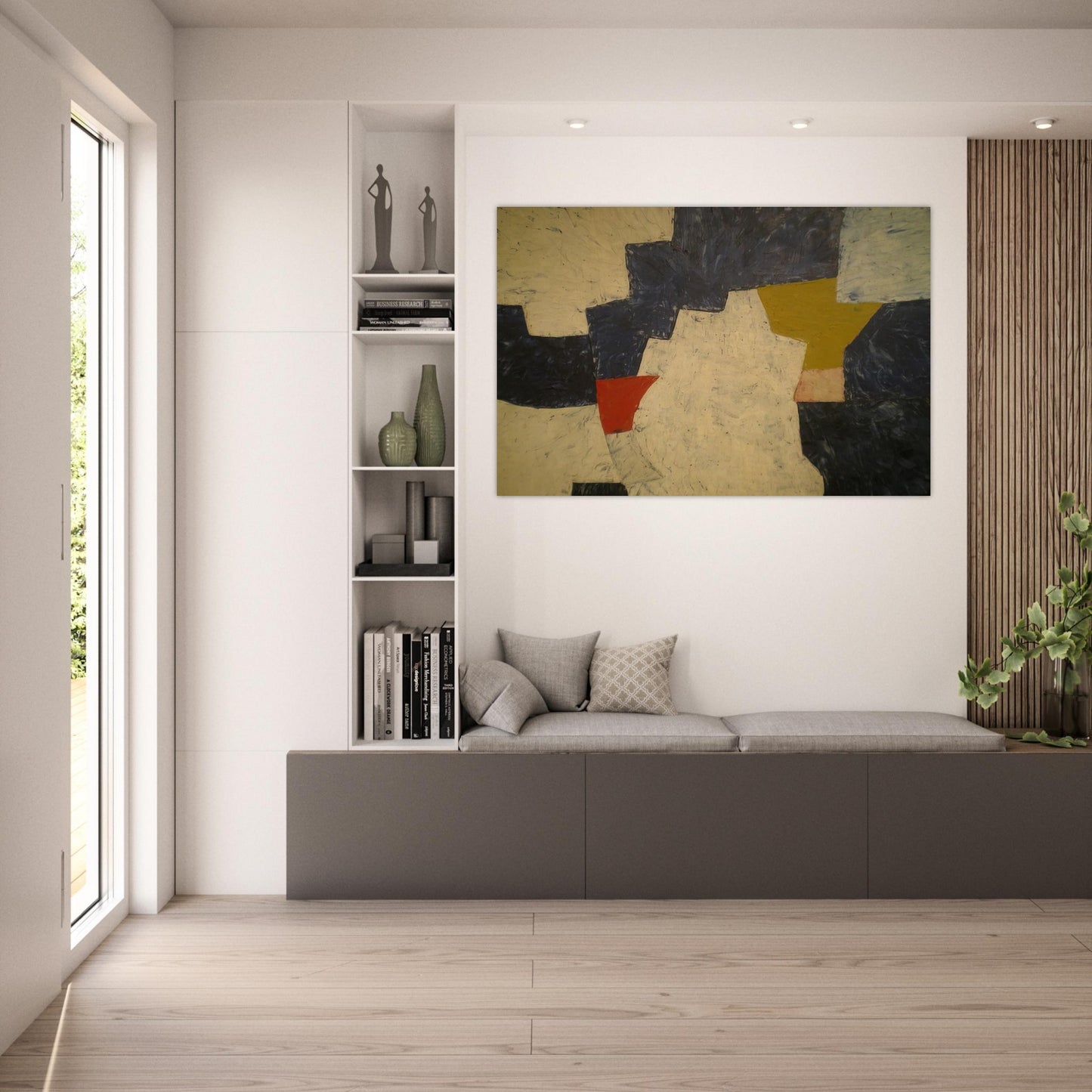
Serge Poliakoff's Composition (1952): A Masterpiece of Abstract Lyricism Reborn on Archival Paper
Step into the mesmerizing world of Serge Poliakoff (1900–1969), the Russian-French abstract painter whose Composition (1952) stands as a cornerstone of post-war European abstraction. This museum-quality fine art print captures the essence of Poliakoff’s revolutionary approach—where color, form, and spatial harmony converge to evoke profound emotion without a single representational element. Now, RedKalion brings this iconic work to your space in a luxurious, archival-grade reproduction that honors the artist’s vision with unparalleled fidelity.
Poliakoff’s Composition (1952) is a testament to his mastery of chromatic abstraction, a style he pioneered in mid-20th-century Paris. Unlike the gestural brushwork of his contemporaries, Poliakoff’s work is defined by its meticulous layering of geometric shapes, each hue vibrating against the next to create a dynamic yet meditative visual experience. The interplay of warm ochres, deep blues, and muted greens in this piece reflects his belief that color alone could convey the depth of human emotion—an idea that cemented his legacy alongside artists like Nicolas de Staël and Pierre Soulages.
This Serge Poliakoff print is not merely a decoration; it is a cultural artifact reimagined for the modern collector. Printed on RedKalion’s Master’s Edition archival paper, this reproduction is crafted to endure for generations. The 250 gsm (110 lb), uncoated, off-white matte paper—with its natural texture and acid-free, pH-neutral composition—ensures that the colors remain vibrant and true to the original, free from the yellowing or degradation that plagues lesser prints. The 0.29 mm thickness lends a substantial, gallery-worthy feel, while the FSC-certified sustainable sourcing guarantees that your purchase aligns with the highest environmental standards.
Measuring 100x150 cm (40x60 inches), this large-format Serge Poliakoff poster commands attention, transforming any room into a sanctuary of sophistication. Whether displayed in a minimalist loft, a contemporary office, or a curated gallery wall, Composition (1952) infuses your space with the quiet intensity of abstract expressionism. Its matte, uncoated finish eliminates glare, allowing the subtleties of Poliakoff’s palette to shine in any lighting.
At RedKalion, we don’t just sell prints—we curate archival masterpieces that bridge the gap between art history and modern living. Each Serge Poliakoff reproduction is produced with the same reverence for craftsmanship that defined the original, ensuring that you own a piece of art that is as enduring as it is evocative. Elevate your collection with a work that transcends trends and speaks to the timeless power of abstract art.
- Artist: Serge Poliakoff (1900–1969), Russian-French abstract painter
- Artwork: Composition (1952), a seminal work in chromatic abstraction
- Print Type: Museum-quality fine art print on archival paper
- Paper: Master’s Edition, 250 gsm (110 lb), uncoated, off-white matte, acid-free, FSC-certified
- Dimensions: 100x150 cm (40x60 inches)
- Longevity: Archival-grade materials ensure colorfastness and durability for generations


Discover Unlimited Art Possibilities
At RedKalion, you can find virtually any artwork from any artist, available in a wide range of sizes to perfectly match your space.
If you didn’t find what you’re looking for, contact us at support@redkalion.com . We will source any artwork and produce it in any size and format you need, including art prints, posters, canvas, framed pieces, framed canvas, and more.
For dedicated art enthusiasts, we also offer handcrafted replicas of any artwork, carefully painted by highly skilled artists using traditional techniques.
For custom requests, contact us at support@redkalion.com .
What makes this Composition (1952) Serge Poliakoff print museum-quality?
Our Serge Poliakoff print is produced on 250 gsm archival paper with a matte, uncoated finish and acid-free, pH-neutral properties, ensuring it meets the standards of museums and galleries for longevity and color fidelity.
How does the off-white, uncoated paper enhance the print’s appearance?
The off-white, uncoated paper provides a natural, textured surface that mimics the look of original artworks, reducing glare and allowing Poliakoff’s colors to appear rich and true to life.
Is this Serge Poliakoff poster suitable for framing?
Absolutely. The 100x150 cm (40x60 inches) size is ideal for standard large-format frames, and the 250 gsm thickness ensures it lies flat and looks professional when displayed.
How long will this archival print last without yellowing or fading?
Thanks to acid-free, pH-neutral paper and archival inks, this Serge Poliakoff reproduction is designed to resist yellowing and fading for over 100 years under proper display conditions.
What are the shipping options for this large Serge Poliakoff print?
We offer secure, tracked shipping worldwide. The print is carefully rolled in a protective tube to prevent damage, and delivery times vary by location (typically 5–10 business days).
Why did Serge Poliakoff choose such a restrained color palette for Composition (1952)?
Poliakoff believed that subtle color harmonies could evoke deeper emotions than bold contrasts. In Composition (1952), his muted tones create a meditative, almost spiritual atmosphere, reflecting his interest in theosophy and Eastern philosophy.
How does Composition (1952) fit into Serge Poliakoff’s broader artistic evolution?
This work marks Poliakoff’s shift toward pure abstraction, moving away from his earlier figurative influences. By 1952, he had fully embraced chromatic abstraction, using layered shapes to explore light, space, and emotion—hallmarks of his mature style.