


RedKalion
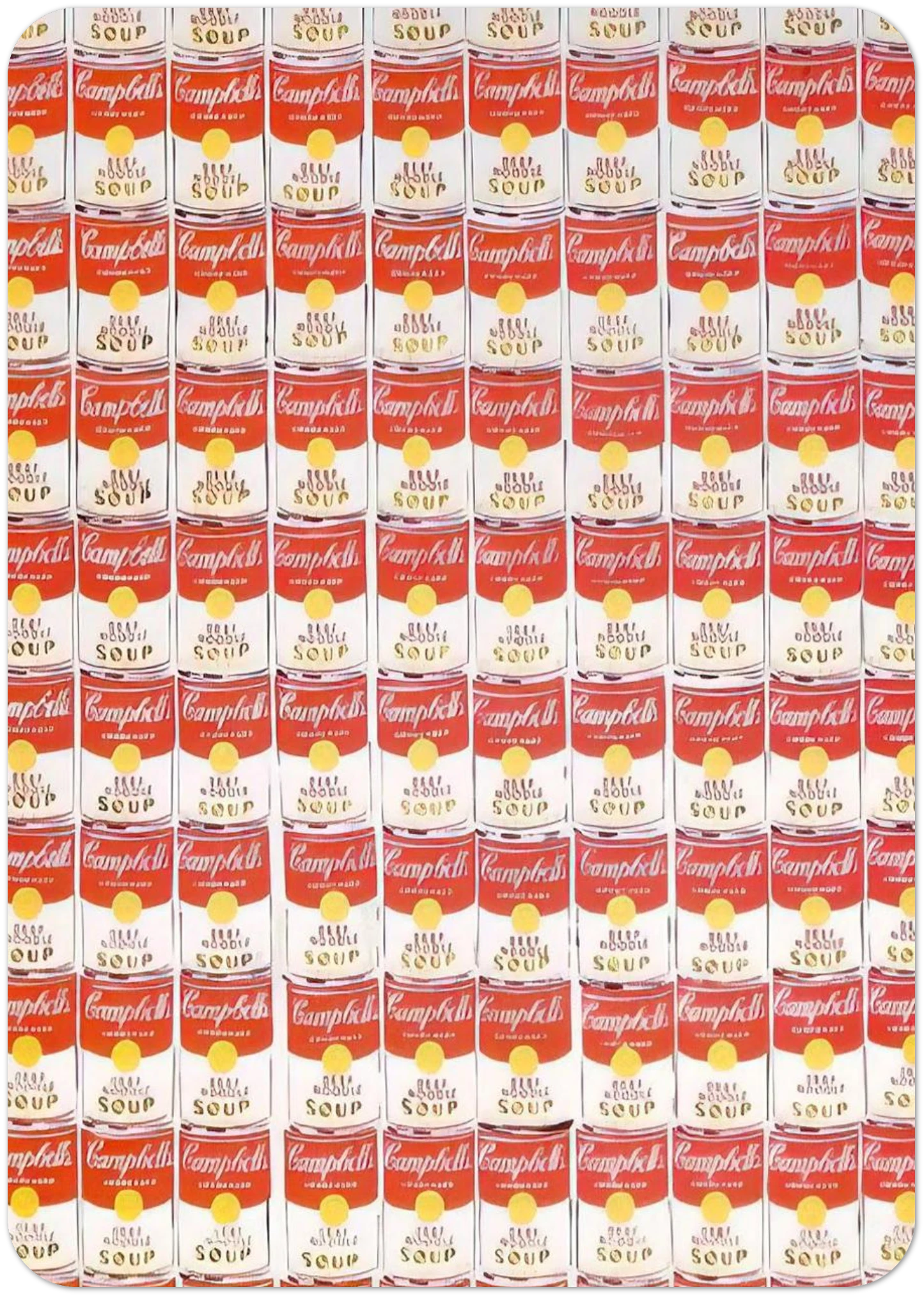
100 Cans By Andy Warhol Pack of 10 Post Cards | Andy Warhol Post Cards | A6 (10.5 x 14.8 cm) - 4.1 x 5.8 inches
100 Cans By Andy Warhol Pack of 10 Post Cards | Andy Warhol Post Cards | A6 (10.5 x 14.8 cm) - 4.1 x 5.8 inches
Couldn't load pickup availability
Elevate Your Correspondence with the Pop Art Brilliance of '100 Cans'
Experience the intersection of high art and mass production with this exclusive pack of 10 postcards featuring Andy Warhol’s '100 Cans'. Originally conceived in 1962, Warhol’s repetitive grid of Campbell’s Soup cans revolutionized the art world, challenging traditional notions of originality and craftsmanship. By choosing this museum-quality reproduction, you are not just sending a note; you are sharing a piece of 20th-century history.
RedKalion brings this icon to life using our 12-color fine art printing technology. Unlike standard 4-color commercial prints, our process captures the subtle variations and vibrant pigments of Warhol’s palette, ensuring each postcard retains the depth and soul of the original canvas. Whether you are a collector or a correspondent, these prints offer a sophisticated way to communicate your aesthetic values.
Premium Specifications for the Discerning Collector
- Historical Context: Andy Warhol’s fascination with consumerism and mechanical reproduction is perfectly encapsulated in '100 Cans', representing the height of the Pop Art movement.
- Superior Color Vibrancy: Our advanced 12-color inkjet process delivers stunning accuracy and archival depth.
- Exquisite Texture: Each postcard features a smooth matte finish, providing a glare-free, elegant surface that is a pleasure to touch and easy to write on.
- Substantial Weight: Printed on 200 gsm (80 lb) paper with a thickness of 0.26 mm, these cards offer a premium, sturdy feel that resists bending.
- Sustainability: In keeping with our commitment to quality and the environment, we use FSC-certified, eco-friendly paper.
Transform your space or your messages with these archival-grade reproductions. At RedKalion, we curate masterpieces that endure, allowing you to own a fragment of the avant-garde.


Discover Unlimited Art Possibilities
At RedKalion, you can find virtually any artwork from any artist, available in a wide range of sizes to perfectly match your space.
If you didn’t find what you’re looking for, contact us at support@redkalion.com . We will source any artwork and produce it in any size and format you need, including art prints, posters, canvas, framed pieces, framed canvas, and more.
For dedicated art enthusiasts, we also offer handcrafted replicas of any artwork, carefully painted by highly skilled artists using traditional techniques.
For custom requests, contact us at support@redkalion.com .
What makes the printing quality of these Andy Warhol postcards superior?
We utilize 12-color fine art printing technology, which provides significantly more color depth and vibrancy than standard 4-color prints, ensuring a museum-quality reproduction of Warhol’s iconic work.
What is the finish and feel of the postcard paper?
Each card features a smooth matte finish on 200 gsm (80 lb) paper. This ensures a glare-free display and a premium, substantial feel that is professional and durable.
Are these Andy Warhol postcards environmentally friendly?
Yes, RedKalion is committed to sustainability. These postcards are printed on demand using FSC-certified paper, minimizing waste and supporting responsible forest management.
Will the colors on my postcards fade over time?
Our archival-grade inks and high-quality paper are designed for longevity. The 12-color printing process ensures that the vibrant hues of '100 Cans' remain vivid for years to come.
What are the shipping and order minimums for this set?
These postcards are printed on demand with no minimum order requirements. We ship globally with protective packaging to ensure your fine art prints arrive in pristine condition.
Why did Andy Warhol choose soup cans as a subject for his art?
Warhol chose Campbell's Soup because it represented the ubiquity of American consumerism. He famously stated he ate the soup for lunch every day for twenty years, making it a symbol of daily life.
What does the '100 Cans' composition represent in Pop Art?
The repetitive grid represents the assembly line and mass production. By treating a commercial product as fine art, Warhol blurred the lines between 'high' culture and everyday commercial objects.