
RedKalion
1945 still life - 1945 - Ben Nicholson 70x100 cm / 28x40 inches Framed Art Print – Black Wooden Frame
1945 still life - 1945 - Ben Nicholson 70x100 cm / 28x40 inches Framed Art Print – Black Wooden Frame
Couldn't load pickup availability
An Intersection of Modernism and Geometry: Ben Nicholson’s '1945 Still Life'
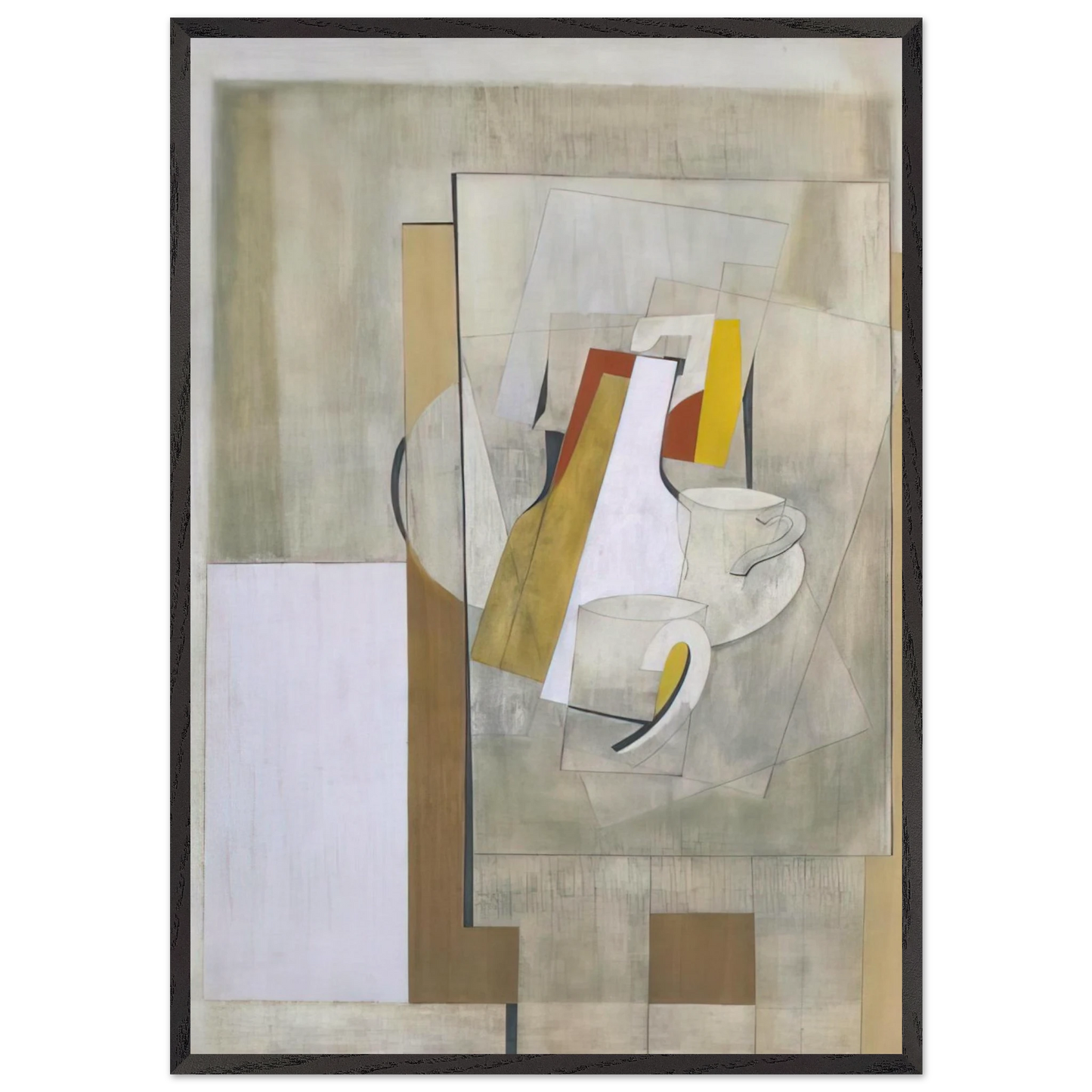
Experience the sophisticated harmony of mid-century British modernism with this museum-quality reproduction of Ben Nicholson’s 1945 (still life). As a leading figure of the St Ives School, Nicholson transitioned during the post-war era from pure abstraction to a unique synthesis of geometric form and representational elements. This particular piece captures the artist's mastery of overlapping planes and a restrained, elegant palette, making it a cornerstone of 20th-century abstract art.
Museum-Grade Reproduction by RedKalion
At RedKalion, we curate our prints for the discerning collector. This Ben Nicholson fine art print is produced on archival-grade 250 gsm (110 lb) museum-quality paper. Unlike standard posters, our paper is natural white, uncoated, and matte, ensuring that every subtle shift in Nicholson’s linear composition is rendered with absolute clarity and depth. The paper is FSC-certified, reflecting our commitment to sustainable craftsmanship and environmental stewardship.
Premium Framing and Specifications
This 70x100 cm (28x40 inches) masterpiece is housed in a robust black wooden frame crafted from responsibly sourced oak and ash. To provide a superior presence on your wall, we utilize a 20mm (0.79") frame thickness, offering more structural depth than conventional gallery frames. Your artwork is protected by shatterproof plexiglass, ensuring durability without compromising the visual integrity of the print. Each piece arrives ready-to-hang with an included professional mounting kit.
- Artist: Ben Nicholson
- Title: 1945 (still life)
- Paper: Archival 250 gsm matte finish
- Frame: 20mm solid oak/ash in black finish
- Sustainability: FSC-certified materials
- Protection: Shatterproof, high-clarity plexiglass
Elevate your interior with a piece that defines an era. This archival reproduction is designed to endure for generations, bringing the intellectual rigor and aesthetic calm of Ben Nicholson’s vision into your home or office space.
Discover Unlimited Art Possibilities
At RedKalion, you can find virtually any artwork from any artist, available in a wide range of sizes to perfectly match your space.
If you didn’t find what you’re looking for, contact us at support@redkalion.com . We will source any artwork and produce it in any size and format you need, including art prints, posters, canvas, framed pieces, framed canvas, and more.
For dedicated art enthusiasts, we also offer handcrafted replicas of any artwork, carefully painted by highly skilled artists using traditional techniques.
For custom requests, contact us at support@redkalion.com .
What kind of paper is used for this Ben Nicholson print?
We use 250 gsm (110 lb) archival museum-quality paper. It is natural white, matte, and uncoated, providing a sophisticated finish that prevents glare and ensures the longevity of the Ben Nicholson 1945 still life reproduction.
What are the dimensions and material of the black frame?
The frame is crafted from solid, responsibly sourced oak and ash wood. It measures 20mm (0.79") in thickness and width, providing a more premium, substantial profile than standard 14mm frames, finished in a sleek matte black.
How long will this archival print last?
Our prints are designed for archival longevity. Using acid-free, FSC-certified paper and high-pigment inks, this museum-quality reproduction is built to resist fading and degradation for decades when displayed away from direct moisture.
Is the 1945 still life print ready to hang?
Yes, your framed art print arrives fully assembled and ready to hang. We include a professional hanging kit to ensure you can securely mount this large-format Nicholson piece immediately upon delivery.
Are the materials used in this reproduction sustainable?
Absolutely. RedKalion prioritizes the environment by using FSC-certified wood and paper (or local equivalents), ensuring that your artwork is as responsible as it is beautiful.
What is the significance of the year 1945 in Ben Nicholson's work?
1945 marked a pivotal shift for Nicholson as he moved from the strict geometric reliefs of the 1930s back toward a landscape and still life focus, blending Cubist influence with the coastal light of St Ives.
How does Nicholson blend abstraction and realism in this still life?
In this piece, Nicholson uses thin, precise lines to suggest everyday objects like goblets or plates, then overlays them with abstract, flattened planes of color to create a rhythmic, three-dimensional space on a two-dimensional surface.