
RedKalion
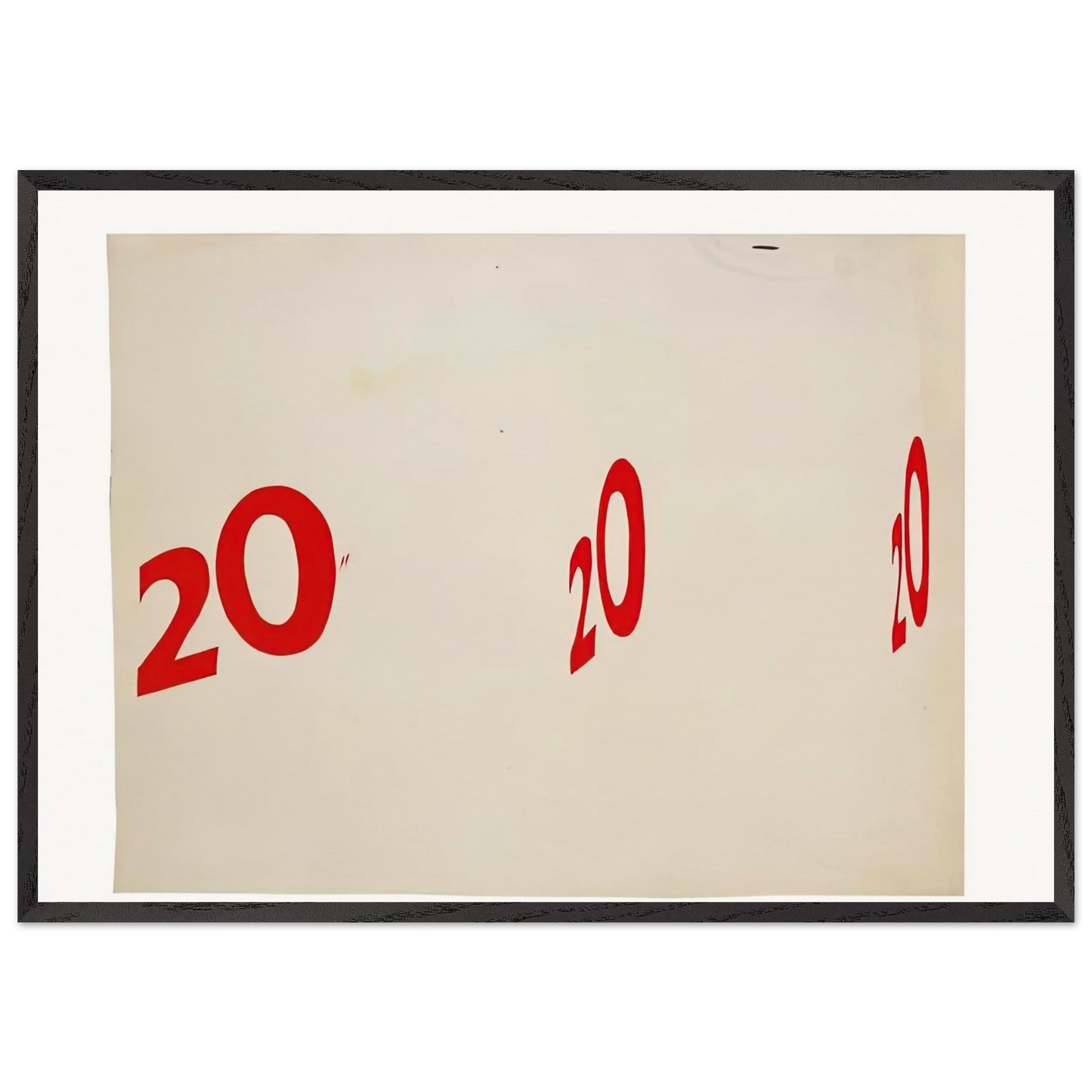
20 20 20 1962 - Edward Ruscha 70x100 cm / 28x40 inches Framed Art Print – Black Wooden Frame
20 20 20 1962 - Edward Ruscha 70x100 cm / 28x40 inches Framed Art Print – Black Wooden Frame
Couldn't load pickup availability
Edward Ruscha’s "20 20 20" (1962): A Masterpiece of Graphic Precision
Experience the intersection of typography and high art with this museum-quality reproduction of Edward Ruscha’s 20 20 20 (1962). A seminal figure in the Pop Art movement, Ruscha transformed the landscape of contemporary art by elevating words and numbers into singular subjects. This 70x100 cm (28x40 inches) framed art print captures the stark, monochromatic power of the original, showcasing Ruscha's signature fascination with commercial aesthetics and visual repetition.
As a RedKalion curator-selected piece, this reproduction is crafted on 250 gsm (110 lb) archival museum-quality paper. The natural white, uncoated matte finish ensures a sophisticated, glare-free viewing experience that preserves the subtle tonal shifts of Ruscha's 1960s palette. At a substantial thickness of 0.29 mm, the paper provides a tactile weight that reflects its longevity and premium standing.
Uncompromising Quality and Sustainable Craftsmanship
Every element of this fine art print is designed for the discerning collector. The artwork is encased in a premium black wooden frame, meticulously crafted from responsibly sourced oak and ash. Measuring 20mm (0.79") in both width and thickness, the frame offers a modern, bold profile that surpasses standard 14mm alternatives, providing superior structural integrity and a gallery-ready presence. Your investment is protected by shatterproof plexiglass, ensuring the artwork remains pristine for generations.
- Artist: Edward Ruscha (b. 1937)
- Paper Type: FSC-certified, 250 gsm archival matte
- Frame: 20mm black wooden frame (Oak/Ash)
- Protection: Transparent, shatterproof plexiglass
- Installation: Includes a premium hanging kit, arrives ready to hang
Elevate your interior space with an archival masterpiece that endures. RedKalion is proud to offer this definitive edition, bridging the gap between 20th-century conceptualism and modern sustainable luxury.
Discover Unlimited Art Possibilities
At RedKalion, you can find virtually any artwork from any artist, available in a wide range of sizes to perfectly match your space.
If you didn’t find what you’re looking for, contact us at support@redkalion.com . We will source any artwork and produce it in any size and format you need, including art prints, posters, canvas, framed pieces, framed canvas, and more.
For dedicated art enthusiasts, we also offer handcrafted replicas of any artwork, carefully painted by highly skilled artists using traditional techniques.
For custom requests, contact us at support@redkalion.com .
What makes the paper quality museum-grade?
We use 250 gsm (110 lb) natural white, uncoated paper. It is archival-grade and FSC-certified, ensuring your Edward Ruscha print resists yellowing and maintains color integrity for decades.
What are the specifications of the black wooden frame?
The frame is made from responsibly sourced oak and ash, measuring 20mm thick and wide. This provides a more robust and premium aesthetic compared to thinner, standard 14mm gallery frames.
Is the artwork protected against damage?
Yes, each framed art print features shatterproof plexiglass. This provides the clarity of glass with superior durability, ensuring your museum-quality reproduction is safe during transit and on your wall.
Does the print arrive ready to hang?
Absolutely. Your Ed Ruscha 20 20 20 print includes a professional hanging kit. It arrives fully assembled in its black wooden frame, ready for immediate installation.
How does RedKalion ensure archival longevity?
By combining acid-free 250 gsm paper with UV-protective plexiglass and premium wood frames, we ensure each piece meets the high standards required for fine art preservation.
What is the significance of the year 1962 in Ruscha's work?
1962 was a pivotal year for Edward Ruscha, marking his transition into Pop Art. This piece reflects his early experimentation with the graphic impact of numbers and commercial signage.
Why did Ruscha choose the title "20 20 20"?
Ruscha often explored repetition to strip words or numbers of their literal meaning, turning them into visual objects. The repetition of "20" emphasizes rhythmic graphic composition over numerical value.