
RedKalion
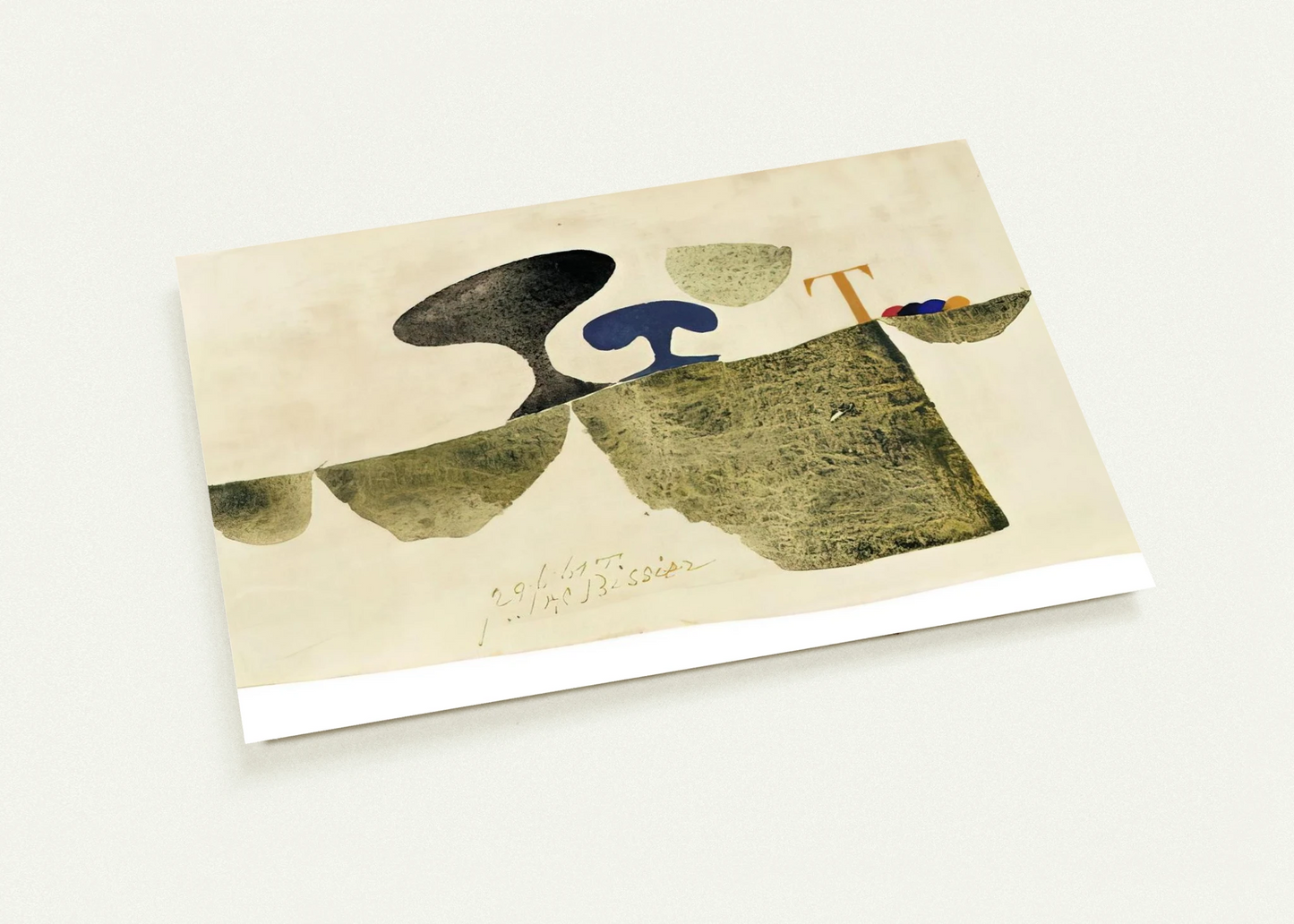
29.6.61 T - 1961 By Julius Bissier Pack of 10 Post Cards | Julius Bissier Post Cards | A6 (10.5 x 14.8 cm) - 4.1 x 5.8 inches
29.6.61 T - 1961 By Julius Bissier Pack of 10 Post Cards | Julius Bissier Post Cards | A6 (10.5 x 14.8 cm) - 4.1 x 5.8 inches
Couldn't load pickup availability
Elevate Your Correspondence with Julius Bissier's "29.6.61 T" (1961)
Immerse yourself in the meditative world of Julius Bissier with this exquisite pack of 10 museum-quality postcards. Bissier, a preeminent figure in German abstract art, was renowned for his Tusche (ink) drawings that blended European abstraction with the spiritual depth of East Asian calligraphy. The work 29.6.61 T, created in 1961, represents the pinnacle of his late-career mastery, where ethereal forms and precise brushstrokes dance across the void.
Authentic Fine Art Reproduction
At RedKalion, we believe that even small-scale prints should maintain the integrity of the original masterpiece. These A6 postcards are produced using 12-color fine art printing technology. Unlike standard 4-color commercial prints, our process captures the subtle tonal shifts and deep, carbon blacks characteristic of Bissier’s ink technique, ensuring a stunning depth of color and vibrancy.
Premium Archival Specifications
Crafted for the discerning collector, each postcard serves as a miniature archival print. We utilize 200 gsm (80 lb) FSC-certified paper with a thickness of 0.26 mm (10.3 mils), providing a substantial, premium feel. The smooth matte finish ensures a clean, glare-free display, making these cards equally suited for personal messages or for framing as a curated gallery set on your wall.
- Artist: Julius Bissier (1893–1965)
- Title: 29.6.61 T - 1961
- Print Quality: 12-color Giclée reproduction
- Paper: 200 gsm environmentally conscious, FSC-certified matte paper
- Dimensions: A6 (10.5 x 14.8 cm / 4.1 x 5.8 inches)
By choosing RedKalion, you are investing in a sustainably produced, print-on-demand masterpiece that honors the legacy of 20th-century abstraction. Elevate your space or share a moment of artistic reflection with a postcard that embodies archival excellence.
Discover Unlimited Art Possibilities
At RedKalion, you can find virtually any artwork from any artist, available in a wide range of sizes to perfectly match your space.
If you didn’t find what you’re looking for, contact us at support@redkalion.com . We will source any artwork and produce it in any size and format you need, including art prints, posters, canvas, framed pieces, framed canvas, and more.
For dedicated art enthusiasts, we also offer handcrafted replicas of any artwork, carefully painted by highly skilled artists using traditional techniques.
For custom requests, contact us at support@redkalion.com .
What printing technology is used for these Julius Bissier postcards?
We use advanced 12-color fine art printing technology. This ensures superior color vibrancy and accurate reproduction of the original ink tones, far surpassing the quality of standard 4-color inkjet or commercial digital printing.
What is the weight and feel of the paper?
The postcards are printed on 200 gsm (80 lb) FSC-certified paper with a 0.26 mm thickness. This provides a sturdy, premium feel with a smooth matte finish that eliminates glare and resists fingerprints.
Is the paper environmentally friendly?
Yes. All RedKalion postcards are printed on FSC-certified paper, ensuring the materials are sourced from responsibly managed forests that provide environmental, social, and economic benefits.
How are these postcards shipped and produced?
Our postcards are printed on demand to reduce waste. We maintain a strict quality control process and ship them in protective packaging to ensure they arrive in gallery-ready condition without a minimum order requirement.
Can these postcards be framed as fine art prints?
Absolutely. Due to the museum-quality 12-color printing and archival-grade matte paper, these cards are designed to last and look stunning when framed, offering a versatile way to display Bissier’s work.
Who was the artist Julius Bissier?
Julius Bissier was a highly influential German artist known for his small-scale abstract works. His style was deeply influenced by Zen Buddhism and East Asian ink painting, focusing on the harmony between form and space.
What does the 'T' in the title '29.6.61 T' represent?
The 'T' stands for 'Tusche' (the German word for ink). It identifies Bissier’s celebrated series of ink wash paintings where he explored calligraphic gestures and rhythmic abstractions during the early 1960s.