RedKalion
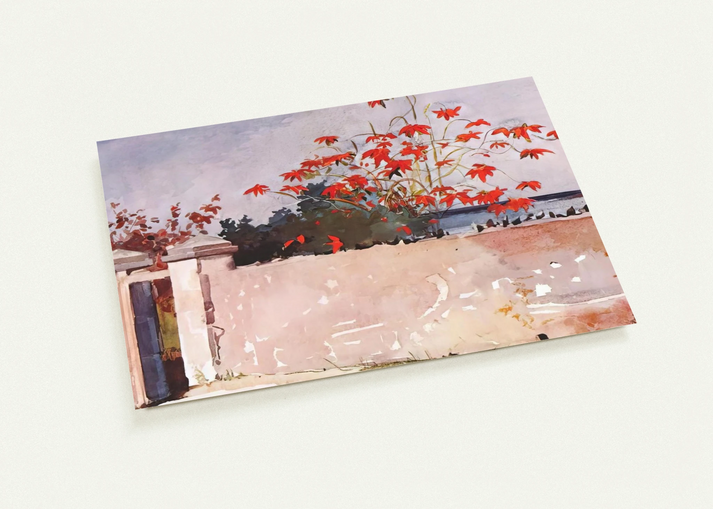
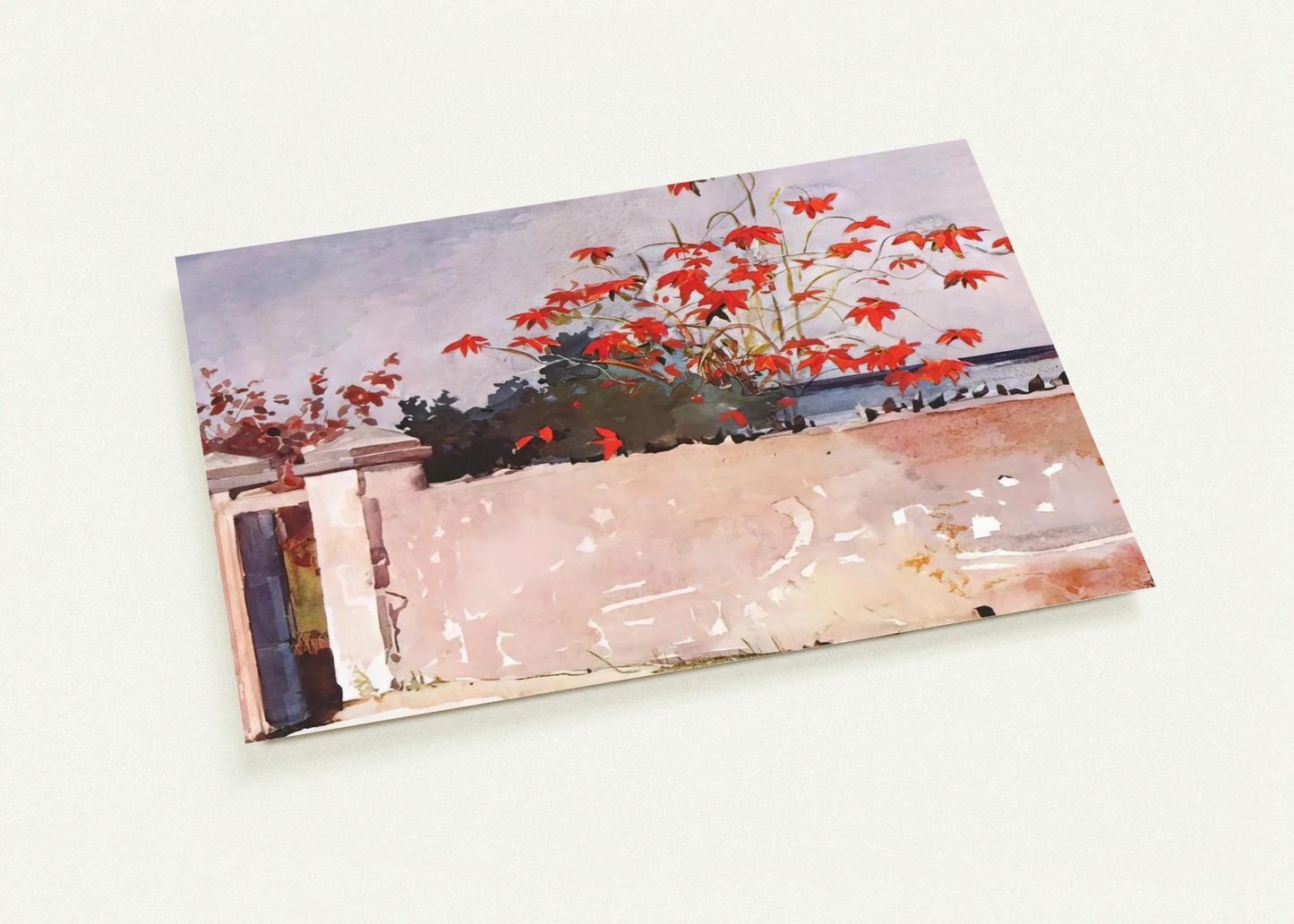
A WALL NASSAU By Winslow Homer Pack of 10 Post Cards | Winslow Homer Post Cards | A6 (10.5 x 14.8 cm) - 4.1 x 5.8 inches
A WALL NASSAU By Winslow Homer Pack of 10 Post Cards | Winslow Homer Post Cards | A6 (10.5 x 14.8 cm) - 4.1 x 5.8 inches
Couldn't load pickup availability
Elevate Your Correspondence with Winslow Homer’s 'A Wall, Nassau'
Experience the brilliant interplay of tropical light and architectural form with this premium set of ten postcards featuring Winslow Homer’s 'A Wall, Nassau' (1898). As a cornerstone of American Realism, Homer’s watercolor mastery is captured here in stunning detail, showcasing the stark, sun-drenched limestone walls and the vibrant flora of the Bahamas. This work is not merely a landscape; it is a sophisticated study of color, shadow, and the colonial boundaries of the late 19th century.
At RedKalion, we believe fine art should be accessible and enduring. These postcards are produced using 12-color fine art printing technology, which offers a vastly superior spectrum and depth compared to standard printing. The result is a museum-quality reproduction that preserves the subtle washes and bold pigments of Homer’s original palette on a portable, personal scale.
Museum-Quality Specifications
- 12-Color Precision Printing: Delivers vivid, accurate colors that capture the true essence of the original watercolor.
- Smooth Matte Finish: A refined, glare-free surface that provides a clean and sophisticated aesthetic.
- Archival Grade Paper: Printed on 200 gsm (80 lb) FSC-certified paper, ensuring both durability and environmental responsibility.
- Premium Tactile Feel: With a thickness of 0.26 mm (10.3 mils), these cards possess a substantial, high-end quality.
Whether you are sending a thoughtful note to a fellow art enthusiast or curate a mini-gallery in your own workspace, these archival-grade prints from RedKalion serve as a testament to timeless craftsmanship and the enduring legacy of Winslow Homer.
Discover Unlimited Art Possibilities
At RedKalion, you can find virtually any artwork from any artist, available in a wide range of sizes to perfectly match your space.
If you didn’t find what you’re looking for, contact us at support@redkalion.com . We will source any artwork and produce it in any size and format you need, including art prints, posters, canvas, framed pieces, framed canvas, and more.
For dedicated art enthusiasts, we also offer handcrafted replicas of any artwork, carefully painted by highly skilled artists using traditional techniques.
For custom requests, contact us at support@redkalion.com .
What printing technology is used for the Winslow Homer postcards?
We utilize advanced 12-color fine art printing technology. This process provides much greater color accuracy and depth than standard 4-color inkjet printers, ensuring each postcard is a faithful museum-quality reproduction.
What are the paper specifications for this set?
These postcards are printed on 200 gsm (80 lb) paper with a thickness of 0.26 mm. They feature a smooth matte finish for a glare-free, premium feel that is ideal for both writing and display.
Are the materials used for these postcards eco-friendly?
Yes. RedKalion uses FSC-certified paper, meaning the material is sourced from responsibly managed forests. Our print-on-demand process also minimizes waste by producing only what is ordered.
How long will these fine art postcards last?
Printed with archival-grade inks on acid-free, FSC-certified paper, these postcards are designed for longevity. When kept out of direct sunlight, the 12-color pigments will remain vibrant for decades.
Can these A6 prints be used for home decor?
Absolutely. While perfect for mailing, the archival quality and stunning detail make these 4.1 x 5.8 inch prints excellent for small-format framing or creating a curated collage wall.
What is the historical significance of 'A Wall, Nassau'?
Painted in 1898 during Homer’s second trip to the Bahamas, this work represents a pinnacle of American watercolor. It captures the intense Caribbean light and explores the contrast between natural beauty and man-made barriers.
What is the meaning behind the glass shards on the wall in the painting?
The shards of glass embedded in the top of the wall are a realistic detail reflecting 19th-century security measures. Art historians often view this as a symbolic representation of exclusion and social boundaries within the colonial landscape.