
RedKalion
Alexander Calder - MOBILE 1932 Fine Art Poster
Alexander Calder - MOBILE 1932 Fine Art Poster
Couldn't load pickup availability
Alexander Calder: The Genesis of Kinetic Art
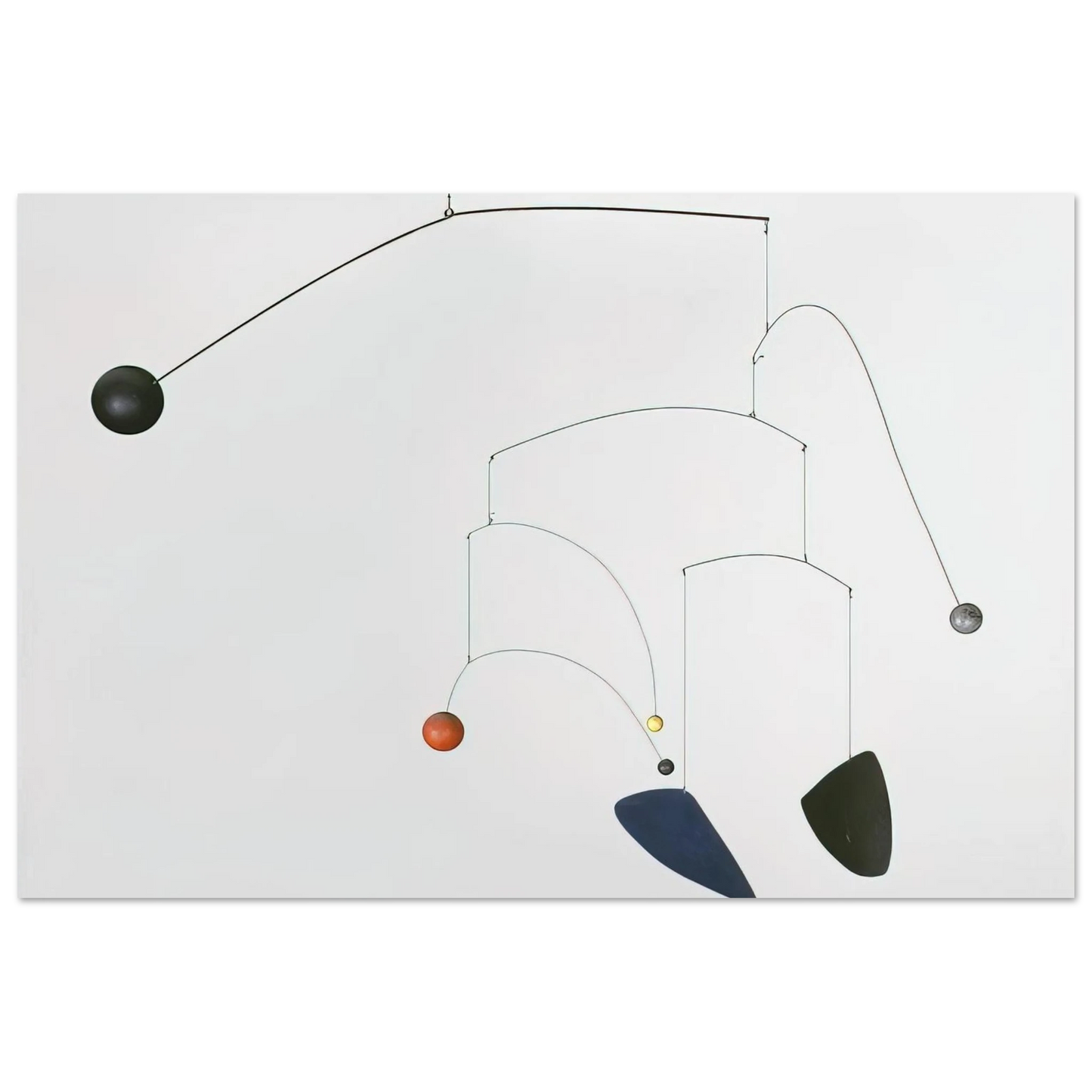
In 1932, Alexander Calder revolutionized the concept of sculpture by introducing movement as a fundamental element. This Alexander Calder Mobile 1932 fine art poster captures the elegant balance and spatial dynamism that defined his transition from static forms to what Marcel Duchamp famously coined as 'mobiles.' This reproduction honors the mid-century modern aesthetic, offering a timeless piece of art history that transforms any interior into a space of intellectual and visual harmony.
Museum-Quality Craftsmanship by RedKalion
Our commitment to excellence ensures that this museum-quality reproduction is indistinguishable from gallery standards. We utilize the Master's Edition archival paper, a premium 250 gsm (110 lb) natural white, uncoated stock. The off-white, matte finish eliminates glare and highlights the depth of Calder's minimalist forms, providing a luxurious texture that invites close inspection.
Technical Specifications & Sustainability
Designed for the discerning collector, this print is engineered for longevity. Using acid-free (pH above 7) technology, the paper prevents yellowing or degradation, ensuring the artwork remains as vivid as the day it was printed. At RedKalion, we prioritize environmental stewardship; every print is produced on FSC-certified paper and fulfilled on demand to minimize waste, resulting in a sustainable yet sophisticated addition to your art collection.
- Paper: 250 gsm (110 lb) Master's Edition.
- Finish: Matte, natural white with zero reflection.
- Durability: Archival grade, acid-free construction.
- Ethics: FSC-certified materials, printed on demand.


Discover Unlimited Art Possibilities
At RedKalion, you can find virtually any artwork from any artist, available in a wide range of sizes to perfectly match your space.
If you didn’t find what you’re looking for, contact us at support@redkalion.com . We will source any artwork and produce it in any size and format you need, including art prints, posters, canvas, framed pieces, framed canvas, and more.
For dedicated art enthusiasts, we also offer handcrafted replicas of any artwork, carefully painted by highly skilled artists using traditional techniques.
For custom requests, contact us at support@redkalion.com .
What makes the paper quality 'Museum-Grade'?
We use 250 gsm (110 lb) Master's Edition archival paper. Its natural white, matte, and uncoated finish provides a luxurious texture that mimics the materials used in high-end art galleries.
Will the Alexander Calder poster yellow over time?
No. Our prints are made on acid-free paper with a pH above 7, which prevents the chemical breakdown and yellowing common in standard posters, ensuring archival-quality longevity.
How is the artwork shipped and fulfilled?
At RedKalion, we fulfill orders on demand with no minimums. Your fine art print is meticulously packaged and shipped from the closest facility to ensure it arrives in pristine condition.
Is the paper environmentally sustainable?
Yes, we exclusively use FSC-certified paper (Forest Stewardship Council), ensuring that the materials for your Alexander Calder print are sourced from responsibly managed forests.
How thick is the 1932 Mobile print?
The print features a substantial thickness of 0.29 mm (11.4 mils), providing a premium, durable feel that sits perfectly within a frame without waving or warping.
What is the significance of the year 1932 for Calder?
1932 was a landmark year when Calder showcased his first non-motorized kinetic sculptures. This poster represents the era where Marcel Duchamp officially coined the term 'mobiles' for his work.
Does this print capture the movement of a real mobile?
While a 2D print, it utilizes Calder's 1932 compositional balance to suggest kinetic energy and weightless motion, making it a cornerstone for mid-century modern design enthusiasts.