
RedKalion
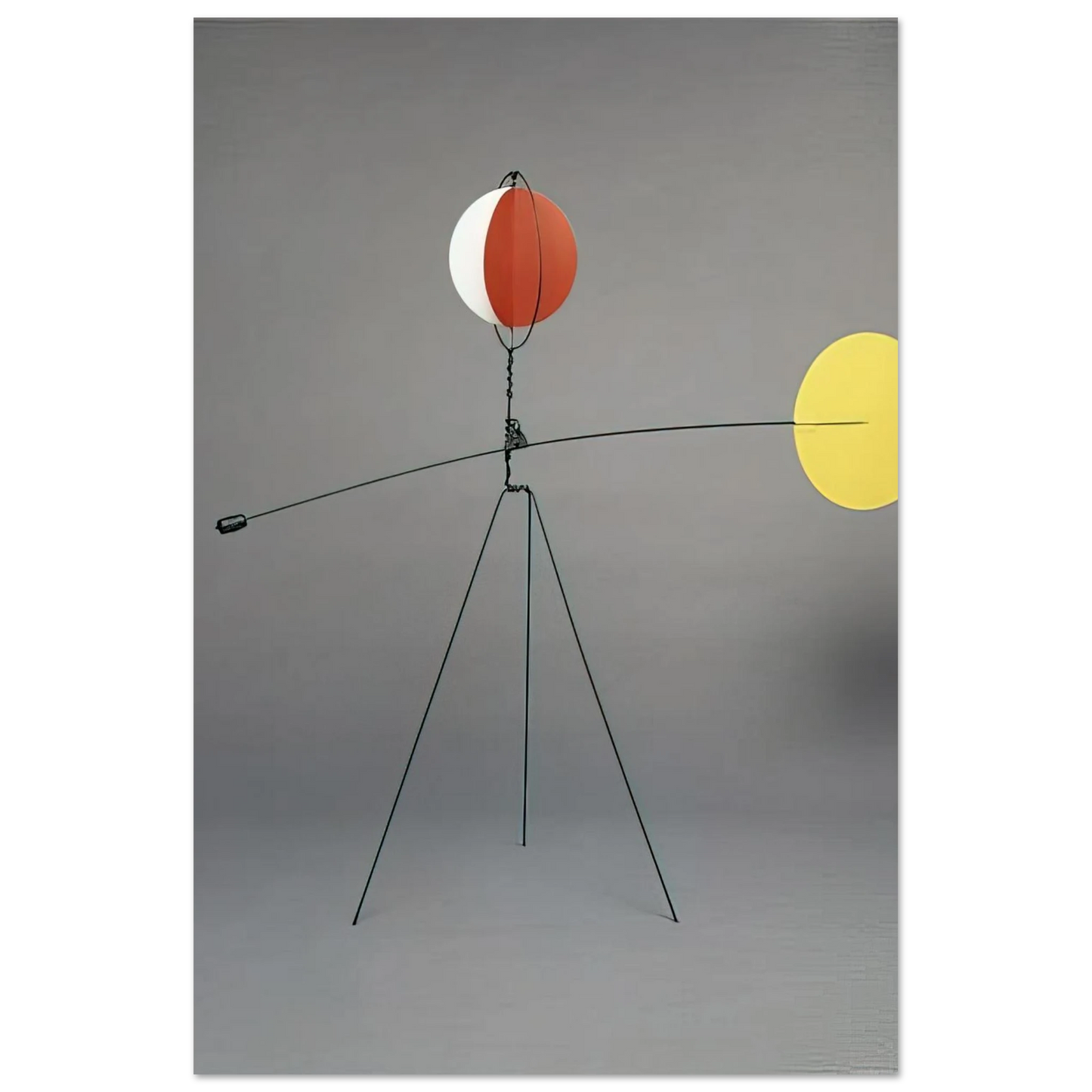
Alexander Calder - RED AND YELLOW VANE 1934 Fine Art Poster
Alexander Calder - RED AND YELLOW VANE 1934 Fine Art Poster
Couldn't load pickup availability
Alexander Calder - Red and Yellow Vane (1934): A Masterpiece of Balanced Abstraction
Invite the foundational energy of modern kinetic art into your home with this Alexander Calder - Red and Yellow Vane 1934 fine art poster. Created during a transformative decade when Calder began to redefine the boundaries of sculpture and space, this piece exemplifies his shift toward abstract, biomorphic forms. The interplay of bold primary colors against a stark, balanced composition invites a sense of poise and intellectual curiosity into any interior space.
As a museum-quality reproduction curated by RedKalion, this print honors the visionary precision of Calder’s original vision. We utilize our Master's Edition archival paper, characterized by its substantial 250 gsm (110 lb) weight and a thickness of 0.29 mm (11.4 mils). This natural white, off-white paper offers a luxurious, matte texture that eliminates glare, ensuring the vibrant reds and yellows are rendered with breathtaking fidelity.
The Artistry Behind the Vane
In 1934, Alexander Calder was refining the language of the 'stabile' and the early 'mobile.' Following a pivotal 1930 visit to Piet Mondrian’s studio, Calder sought to animate the geometric purity of Neoplasticism. Red and Yellow Vane captures the essence of this experimentation, utilizing organic silhouettes and a carefully weighted palette to suggest movement even in a static medium. It is an essential acquisition for collectors who value the intersection of engineering and fine art.
Uncompromising Quality and Longevity
RedKalion is dedicated to providing archival-grade masterpieces that endure for generations. This acid-free print features a pH level above 7, protecting the paper from yellowing or degradation over time. Furthermore, our commitment to sustainability is reflected in the use of FSC-certified paper. Each order is printed and shipped on demand, ensuring your artwork arrives in pristine condition, ready to elevate your space with an archival masterpiece that endures.


Discover Unlimited Art Possibilities
At RedKalion, you can find virtually any artwork from any artist, available in a wide range of sizes to perfectly match your space.
If you didn’t find what you’re looking for, contact us at support@redkalion.com . We will source any artwork and produce it in any size and format you need, including art prints, posters, canvas, framed pieces, framed canvas, and more.
For dedicated art enthusiasts, we also offer handcrafted replicas of any artwork, carefully painted by highly skilled artists using traditional techniques.
For custom requests, contact us at support@redkalion.com .
What defines the quality of this Alexander Calder fine art print?
We use Master's Edition archival paper (250 gsm/110 lb), which is a museum-quality, heavy-weight paper designed to capture every detail of Calder's 1934 masterpiece with precision and depth.
Is the paper used for 'Red and Yellow Vane' sustainable?
Yes, RedKalion uses FSC-certified paper for all reproductions, ensuring that your fine art poster is produced through environmentally responsible and socially beneficial forestry practices.
How long will this museum-quality reproduction last?
This print is acid-free with a pH above 7, preventing the paper from yellowing or becoming brittle over time. It is designed to maintain its vibrant color and structural integrity for decades.
What are the shipping and fulfillment details for this artwork?
To ensure maximum quality and reduce waste, each print is produced on demand. There are no minimum orders, and we ship globally using protective packaging to ensure your art arrives safely.
What is the finish of the print?
The print features a matte, uncoated, natural white finish. This luxurious texture avoids the plastic-like sheen of standard posters, offering a sophisticated look typical of gallery exhibitions.
What was the significance of 1934 in Calder's artistic development?
1934 was a pivotal year where Calder transitioned fully into abstraction, moving away from figurative wire sculptures toward the iconic 'stabiles' and 'mobiles' that defined his career as a pioneer of kinetic art.
How does 'Red and Yellow Vane' reflect Calder's transition to kinetic art?
While static, the work uses biomorphic shapes and primary colors to create a sense of 'virtual volume.' It reflects Calder's interest in how color and form occupy three-dimensional space and imply potential movement.