RedKalion
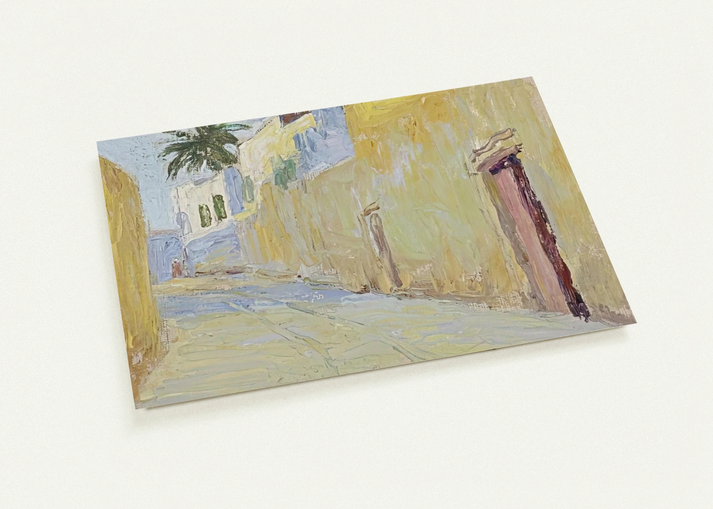
ALLEY IN TUNIS By Gabriele Munter Pack of 10 Post Cards | Gabriele Munter Post Cards | A6 (10.5 x 14.8 cm) - 4.1 x 5.8 inches
ALLEY IN TUNIS By Gabriele Munter Pack of 10 Post Cards | Gabriele Munter Post Cards | A6 (10.5 x 14.8 cm) - 4.1 x 5.8 inches
Couldn't load pickup availability
Capture the Expressionist Light of Gabriele Münter’s Tunis
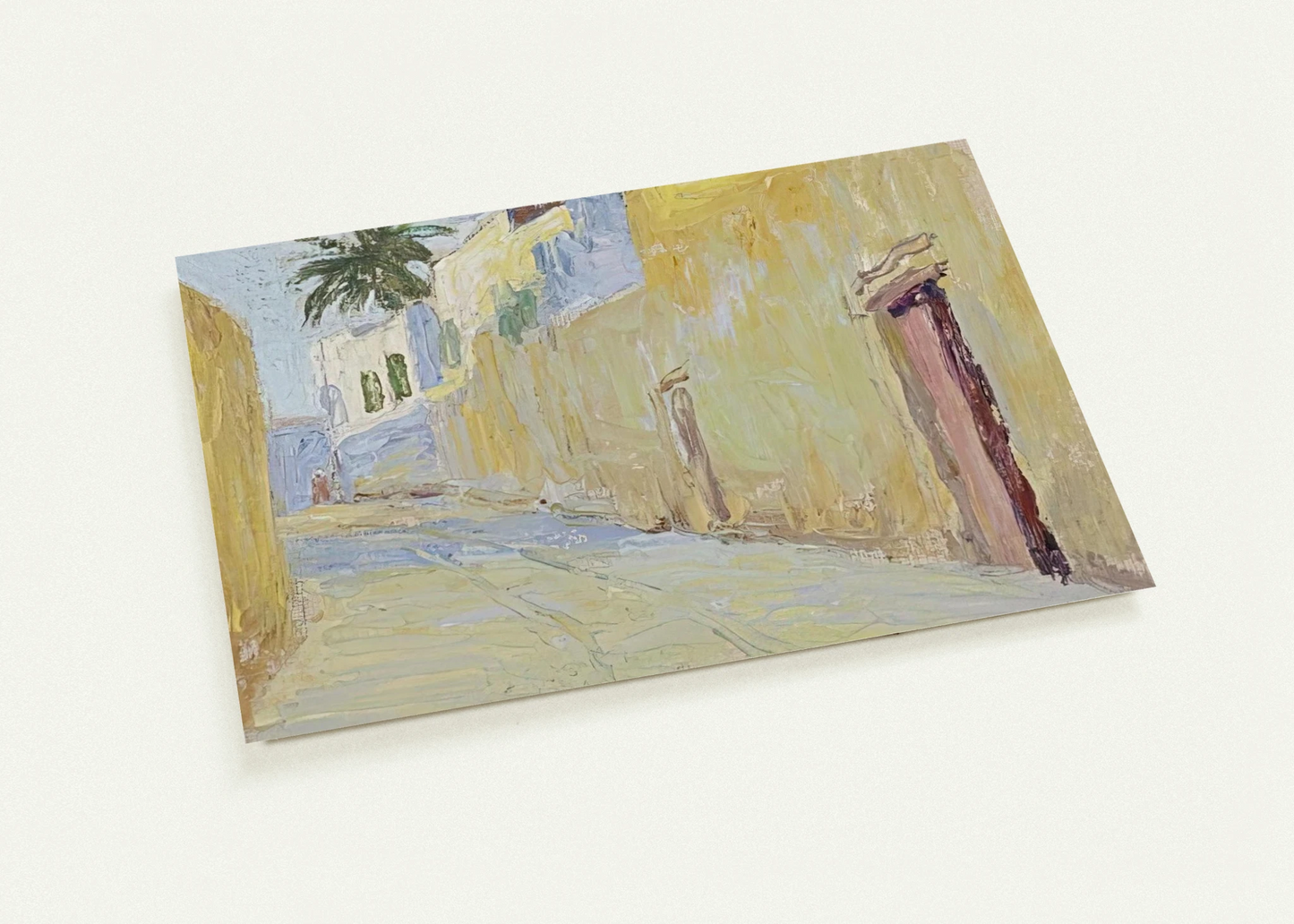
Experience the luminous allure of the Mediterranean through the eyes of a pioneer. This pack of 10 flat postcards features Alley in Tunis (1905), a seminal work by Gabriele Münter. A founding member of Der Blaue Reiter, Münter’s travels through North Africa with Wassily Kandinsky marked a transformative period in her career, where she began to distill complex landscapes into bold shapes and radiant light.
Each card is a miniature masterpiece, meticulously reproduced using our state-of-the-art 12-color fine art printing technology. Unlike standard 4-color commercial prints, our process ensures the subtle ochres, deep shadows, and brilliant whites of the Tunisian architecture are rendered with breathtaking depth and accuracy. These are not merely postcards; they are archival-grade reproductions designed for the discerning art lover.
Premium Material Specifications
At RedKalion, we believe fine art should be tactile. These postcards are printed on heavyweight 200 gsm (80 lb) FSC-certified paper, offering a substantial feel and a thickness of 0.26 mm. The smooth matte finish eliminates glare, allowing the viewer to appreciate the structural brushwork and color theory that Münter mastered. Whether used for personal correspondence or as a curated wall display, these cards embody the quality of a museum gallery shop.
- Artistic Significance: A rare glimpse into Münter’s early transition toward Expressionism.
- Sustainability: Printed on environmentally conscious, responsibly sourced paper.
- Longevity: Archival-quality inks and paper ensure the scene remains as vivid as the day it was printed.
Elevate your correspondence or home decor with a sentiment that endures. RedKalion’s commitment to quality ensures that each print serves as a lasting tribute to the legacy of women in Modern Art.
Discover Unlimited Art Possibilities
At RedKalion, you can find virtually any artwork from any artist, available in a wide range of sizes to perfectly match your space.
If you didn’t find what you’re looking for, contact us at support@redkalion.com . We will source any artwork and produce it in any size and format you need, including art prints, posters, canvas, framed pieces, framed canvas, and more.
For dedicated art enthusiasts, we also offer handcrafted replicas of any artwork, carefully painted by highly skilled artists using traditional techniques.
For custom requests, contact us at support@redkalion.com .
What makes the printing quality of these Gabriele Münter postcards unique?
We utilize 12-color fine art printing technology, which provides a significantly wider color gamut and superior tonal depth compared to standard 4-color inkjet printing, ensuring museum-quality accuracy.
What is the texture and weight of the postcard paper?
Each card is printed on 200 gsm (80 lb) FSC-certified paper with a thickness of 0.26 mm. It features a smooth matte finish for a sophisticated, glare-free appearance.
Are these postcards environmentally friendly?
Yes, we use FSC-certified paper from responsibly managed forests and eco-friendly inks. Each set is printed on demand to minimize waste and environmental impact.
Is there a minimum order requirement for these art prints?
No, at RedKalion, we offer print-on-demand services with no minimum order requirements, allowing you to acquire exactly what you need for your collection.
How long will the colors on these postcards last?
Designed for longevity, our archival-grade materials and premium pigments ensure that the vibrant colors of Münter’s work remain stable and beautiful for years to come.
What is the historical significance of "Alley in Tunis"?
Painted in 1905, this work captures Münter’s exploration of light and simplified form during her North African travels, a precursor to her breakthrough into the Expressionist movement.
Who was Gabriele Münter in the context of art history?
Gabriele Münter was a central figure in German Expressionism and a co-founder of the Blue Rider group, known for her bold use of color and revolutionary landscape compositions.