RedKalion
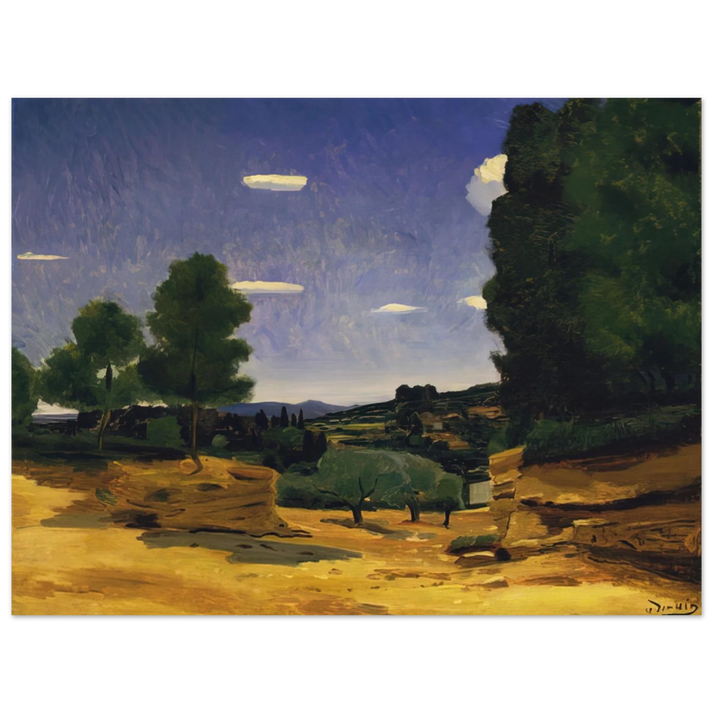
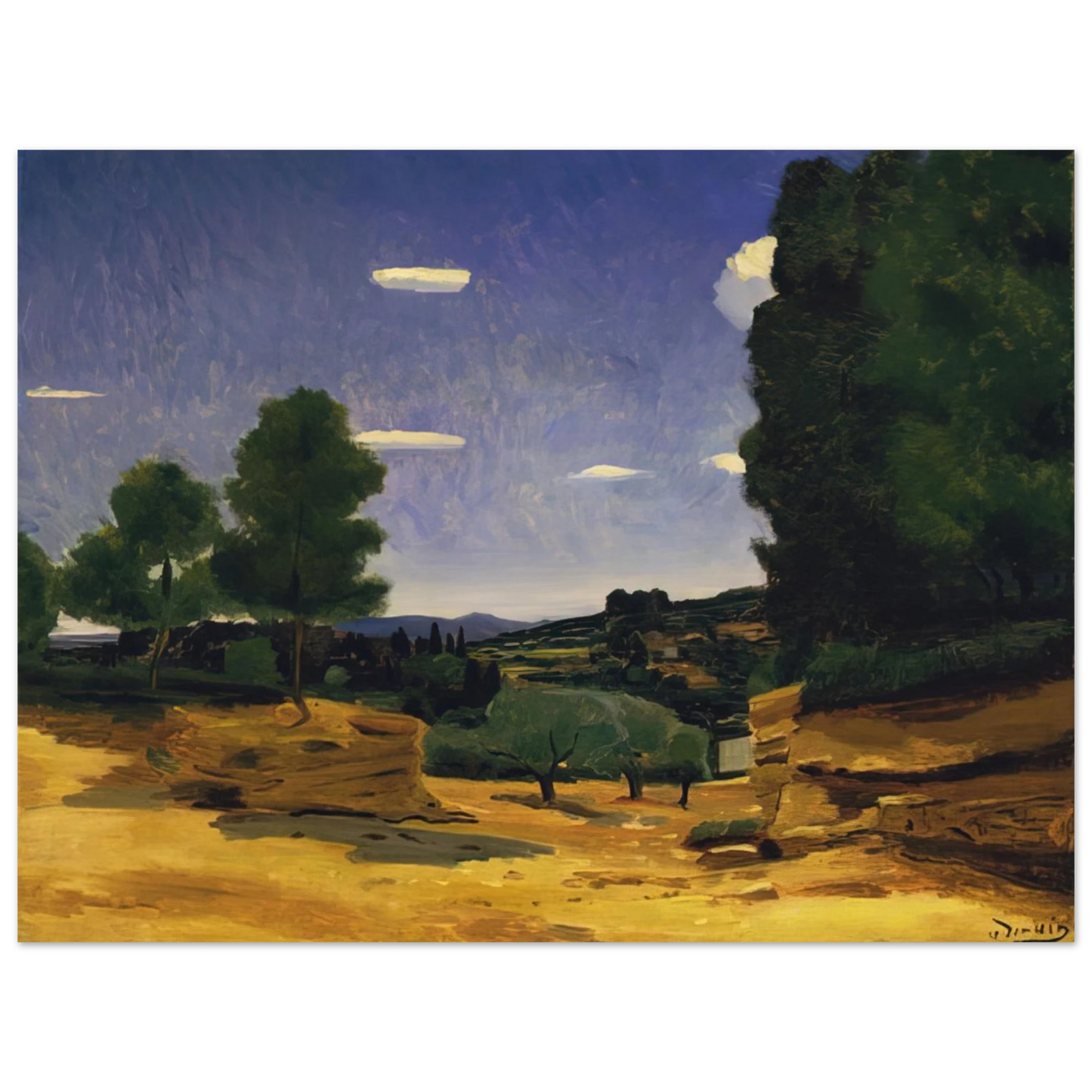
Andre Derain - LANDSCAPE PROVENCE 1925 75x100 cm / 30x40inches Fine Art Poster
Andre Derain - LANDSCAPE PROVENCE 1925 75x100 cm / 30x40inches Fine Art Poster
Couldn't load pickup availability
The Timeless Mastery of André Derain’s Provence
Experience the Mediterranean through the eyes of a master with this 1925 reproduction of André Derain’s Landscape Provence. Captured during Derain’s celebrated 'Return to Order' period, this work departs from the wild colors of his earlier Fauvist years in favor of a more structured, classical approach. The composition emphasizes the architectural beauty of the French countryside, utilizing a sophisticated palette of ochres, terracottas, and deep olives that ground the viewer in the warmth of the Provencal sun.
Museum-Quality Fine Art for the Modern Collector
This fine art print is more than a simple poster; it is a meticulously crafted reproduction designed to endure for generations. We utilize Master's Edition archival paper, which offers a luxurious, uncoated matte finish. This specific texture ensures that the subtle nuances of Derain’s brushwork are visible without the distraction of glare, making it an ideal centerpiece for any high-end interior.
Archival Excellence by RedKalion
RedKalion is dedicated to preserving the integrity of art history through superior materials. Our museum-quality reproduction of Landscape Provence 1925 is printed on 250 gsm (110 lb) paper with a thickness of 0.29 mm. Each piece is acid-free (pH above 7), preventing the yellowing or degradation often found in mass-market prints. By choosing an FSC-certified substrate, you are investing in a piece that respects both artistic heritage and environmental sustainability.
Sophisticated Decor That Endures
- Authentic Texture: The natural white, off-white finish provides a premium tactile experience.
- Durability: Archival-grade materials ensure the 1925 Provence landscape remains vibrant for decades.
- Expert Curation: RedKalion prints are fulfilled on demand, ensuring each piece meets our rigorous quality standards.
- Historical Context: Own a piece representing Derain’s transition toward neoclassical structuralism.
Elevate your personal gallery with an archival masterpiece that honors the legacy of 20th-century French modernism.
Discover Unlimited Art Possibilities
At RedKalion, you can find virtually any artwork from any artist, available in a wide range of sizes to perfectly match your space.
If you didn’t find what you’re looking for, contact us at support@redkalion.com . We will source any artwork and produce it in any size and format you need, including art prints, posters, canvas, framed pieces, framed canvas, and more.
For dedicated art enthusiasts, we also offer handcrafted replicas of any artwork, carefully painted by highly skilled artists using traditional techniques.
For custom requests, contact us at support@redkalion.com .
What are the physical dimensions of this André Derain print?
This specific fine art reproduction of Landscape Provence 1925 measures 75x100 cm (30x40 inches), providing a large-scale, impactful presence suitable for living rooms, offices, or private galleries.
What makes the Master's Edition paper special?
Our Master's Edition is a museum-quality, 250 gsm (110 lb) archival paper. It features a matte, uncoated finish and a natural white tone, ensuring the artwork looks authentic and luxurious under any lighting.
Will the print yellow or fade over time?
No. We use acid-free paper with a pH level above 7. This archival-grade material is specifically designed to prevent yellowing and ensure the longevity of the pigments for generations.
Is the paper used for this print environmentally friendly?
Yes, RedKalion uses FSC-certified paper (or equivalent certifications depending on regional availability). This ensures that your museum-quality print supports responsible forest management and sustainability.
How is my order fulfilled and shipped?
We print and ship on demand with no minimum order requirements. Each Landscape Provence print is carefully packaged to ensure it arrives in pristine condition at your doorstep, ready for framing.
What artistic movement does Derain’s 1925 Provence landscape represent?
This piece represents the 'Return to Order' movement (le rappel à l'ordre). After the chaos of WWI, Derain moved away from Fauvism toward a structured, neoclassical style inspired by Cézanne and the Old Masters.
Why did André Derain focus on the Provence region in the 1920s?
Derain was drawn to Provence for its unique Mediterranean light and rugged topography, which allowed him to explore form, volume, and a more disciplined, earthy palette than his earlier experimental works.