
RedKalion
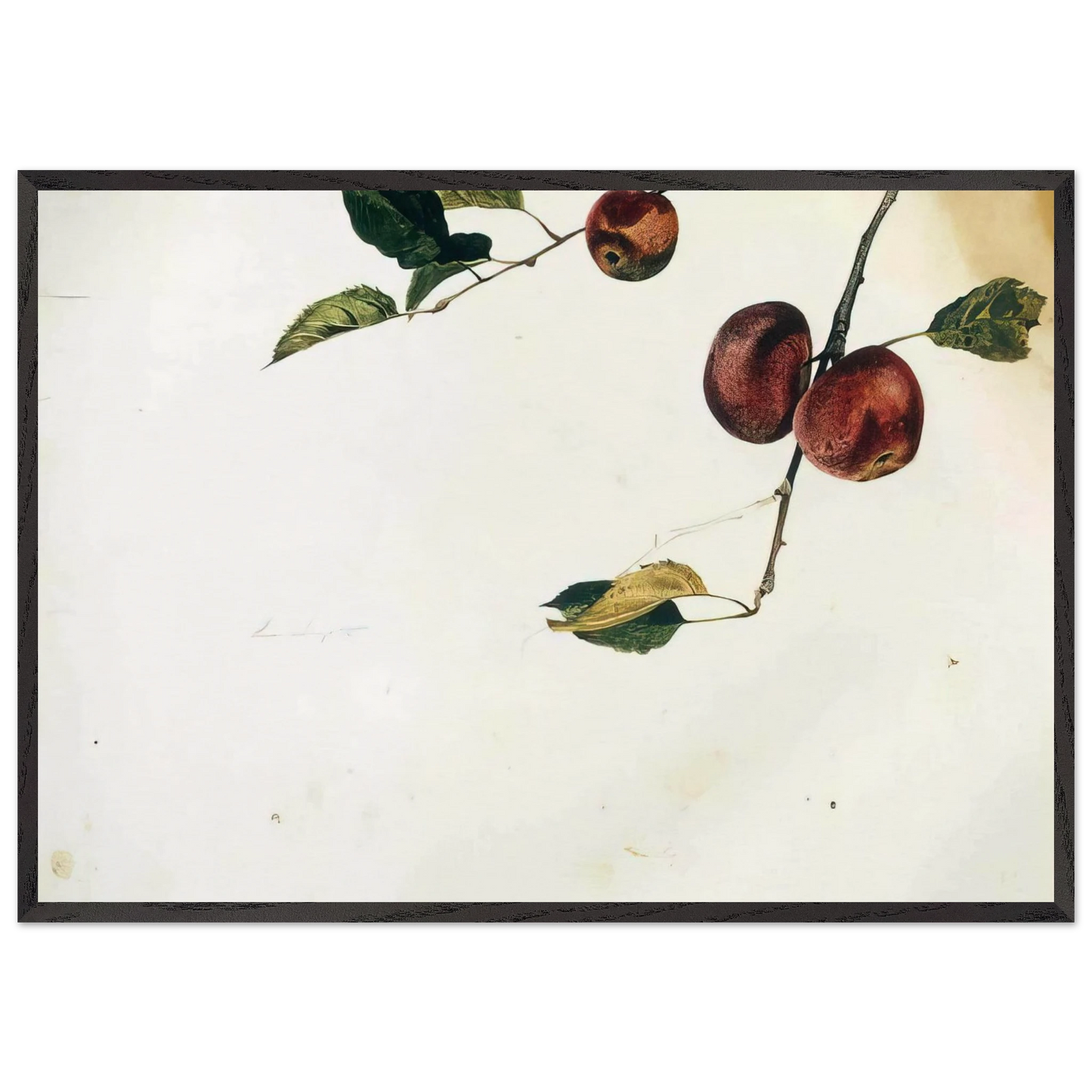
APPLES ON A BOUGH STUDY BEFORE PICKING - Andrew Wyeth 70x100 cm / 28x40 inches Framed Art Print – Black Wooden Frame
APPLES ON A BOUGH STUDY BEFORE PICKING - Andrew Wyeth 70x100 cm / 28x40 inches Framed Art Print – Black Wooden Frame
Couldn't load pickup availability
A Masterpiece of American Realism: Andrew Wyeth's 'Apples on a Bough'
Andrew Wyeth’s Apples on a Bough Study Before Picking is a profound meditation on the cycles of nature and the quiet passage of time. As a cornerstone of American Realism, Wyeth was renowned for his ability to find the extraordinary within the ordinary. This particular study captures the tactile vulnerability of fruit just before the harvest, rendered with the meticulous observational precision that defined his career.
Museum-Quality Execution and Materiality
At RedKalion, we honor Wyeth's legacy by presenting this museum-quality reproduction on 250 gsm (110 lb) archival paper. This heavy-weight, natural white paper features a sophisticated matte, uncoated finish that eliminates glare, allowing the subtle shifts in light and shadow characteristic of Wyeth’s palette to remain the focus. The print is housed in a premium black wooden frame, crafted from responsibly sourced oak and ash. At 20mm (0.79") wide and thick, the frame provides a substantial, gallery-grade presence that surpasses standard retail offerings.
Archival Longevity and Sophisticated Protection
To ensure your Andrew Wyeth fine art print endures for generations, we utilize FSC-certified materials and archival-grade pigments. The artwork is protected by shatterproof, transparent plexiglass, offering superior clarity and safety compared to traditional glass. Arriving ready-to-hang with an included professional kit, this piece allows you to transform your space instantly with a work of enduring historical significance.
- Artist: Andrew Wyeth
- Paper Weight: 250 gsm (110 lb) for premium durability.
- Frame: 20mm black wooden frame (Oak/Ash).
- Finish: Natural white, matte archival paper.
- Sustainability: FSC-certified or equivalent responsibly sourced materials.
Elevate your interior with a piece that balances rustic simplicity with academic rigors—an archival masterpiece curated for the discerning collector.
Discover Unlimited Art Possibilities
At RedKalion, you can find virtually any artwork from any artist, available in a wide range of sizes to perfectly match your space.
If you didn’t find what you’re looking for, contact us at support@redkalion.com . We will source any artwork and produce it in any size and format you need, including art prints, posters, canvas, framed pieces, framed canvas, and more.
For dedicated art enthusiasts, we also offer handcrafted replicas of any artwork, carefully painted by highly skilled artists using traditional techniques.
For custom requests, contact us at support@redkalion.com .
What materials are used for this Andrew Wyeth print?
This print uses 250 gsm (110 lb) natural white, archival museum-quality paper. The matte, uncoated finish ensures a glare-free viewing experience while maintaining the rich textures and subtle color nuances of Wyeth's original study.
Is the black wooden frame sustainably sourced?
Yes, our black frames are crafted from responsibly sourced oak and ash wood. We prioritize FSC-certified materials to ensure that your fine art reproduction meets the highest environmental and ethical standards.
How is the artwork protected during shipping and display?
Each print is protected by shatterproof, transparent plexiglass, which is more durable than standard glass. We use robust, secure packaging to ensure your framed artwork arrives in pristine, gallery-ready condition.
Is the artwork ready to hang upon arrival?
Absolutely. Your 70x100 cm framed print comes with a pre-installed hanging kit. The 20mm thick frame is designed for immediate mounting, allowing you to display your museum-quality piece without additional assembly.
What makes the archival quality of RedKalion prints unique?
RedKalion utilizes archival-grade, acid-free paper and specialized inks designed to resist fading. Our 250 gsm paper is specifically chosen for its thickness (0.29 mm) and longevity, ensuring your investment retains its value.
What is the historical significance of 'Apples on a Bough'?
This study highlights Andrew Wyeth’s obsession with 'pre-harvest' tension. It reflects the American Realist tradition of finding emotional depth in rural landscapes, serving as a technical precursor to his larger tempera masterpieces.
Why did Wyeth choose to paint a 'study' rather than a final piece?
For Wyeth, studies were essential for capturing the fleeting essence of light. 'Apples on a Bough Study Before Picking' preserves the raw, immediate energy of his observation, which is often more intimate than finished works.