
RedKalion
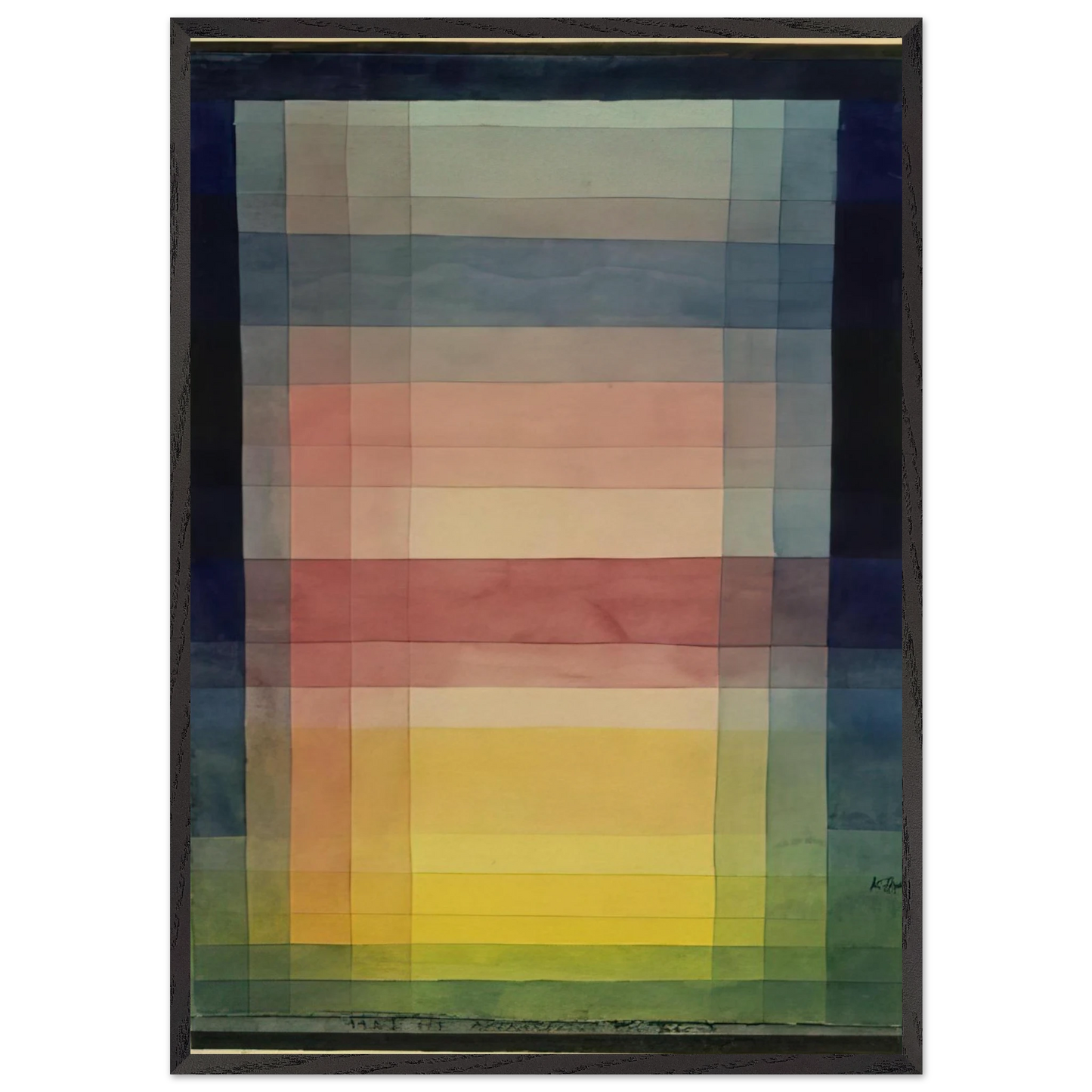
ARCHITECTURE OF THE PLAIN 1923 - Paul Klee 70x100 cm / 28x40 inches Framed Art Print – Black Wooden Frame
ARCHITECTURE OF THE PLAIN 1923 - Paul Klee 70x100 cm / 28x40 inches Framed Art Print – Black Wooden Frame
Couldn't load pickup availability
Elevate Your Space with Paul Klee’s Abstract Vision
In 1923, during his influential tenure at the Bauhaus in Weimar, Paul Klee produced Architecture of the Plain, a quintessential example of his rhythmic, geometric exploration. This 70x100 cm museum-quality reproduction captures the delicate balance between structural rigidity and the organic fluidity of color. Klee, often referred to as the 'painter of the soul,' utilized the grid as a musical notation, where each rectangle functions as a chord in a larger visual symphony.
Museum-Grade Quality for the Discerning Collector
At RedKalion, we believe that world-class art deserves world-class materials. This archival fine art print is rendered on 250 gsm (110 lb) natural white paper, featuring a matte, uncoated finish that eliminates glare while preserving the nuanced earth tones of Klee’s original palette. The 11.4 mil thickness ensures a premium feel that resists warping over time, providing a legacy piece for your collection.
Sustainably Crafted Framing
Our commitment to excellence extends to the frame. This piece arrives encased in a responsibly sourced black wooden frame, crafted from oak or ash. Measuring 20mm (0.79") in width and depth, the frame offers a more substantial, gallery-standard profile than typical retail alternatives. The artwork is protected by shattherproof plexiglass, offering crystal clarity while safeguarding the print from environmental wear.
Ready for Immediate Display
RedKalion eliminates the complexity of art installation. Your framed Paul Klee print arrives ready-to-hang with a professional-grade kit included. From the FSC-certified materials to the precision of the archival ink, every detail is designed to honor the heritage of the Bauhaus and the enduring genius of Paul Klee.
Discover Unlimited Art Possibilities
At RedKalion, you can find virtually any artwork from any artist, available in a wide range of sizes to perfectly match your space.
If you didn’t find what you’re looking for, contact us at support@redkalion.com . We will source any artwork and produce it in any size and format you need, including art prints, posters, canvas, framed pieces, framed canvas, and more.
For dedicated art enthusiasts, we also offer handcrafted replicas of any artwork, carefully painted by highly skilled artists using traditional techniques.
For custom requests, contact us at support@redkalion.com .
What defines the quality of this Paul Klee fine art print?
We use 250 gsm archival museum-quality paper with a matte finish. This ensures a glare-free viewing experience and depth of color that mirrors the 1923 original masterpiece.
Is the frame sustainably sourced?
Yes, our black wooden frames are crafted from FSC-certified oak and ash, ensuring your decor is both sophisticated and environmentally responsible.
How is the artwork protected during shipping and display?
Each print is protected by shatterproof, transparent plexiglass and shipped in robust packaging to ensure it reaches your home in pristine condition.
Does the print come ready to hang?
Absolutely. Every RedKalion framed art print includes a pre-installed hanging kit, allowing you to elevate your interior design the moment it arrives.
What is the archival life of this museum-quality reproduction?
Designed to last for generations, our archival-grade paper and acid-free materials prevent yellowing, ensuring the print remains vibrant for decades.
What inspired Paul Klee's 'Architecture of the Plain' in 1923?
Produced during Klee's Bauhaus years, the work reflects his fascination with 'constructive' art, translating landscape elements into a rhythmic, mathematical grid of color and form.
Why is the grid structure significant in Klee's Bauhaus period?
The grid allowed Klee to explore color theory and visual rhythm. It represents his belief that art should function like music, with repetitive structural motifs creating harmony.