
RedKalion
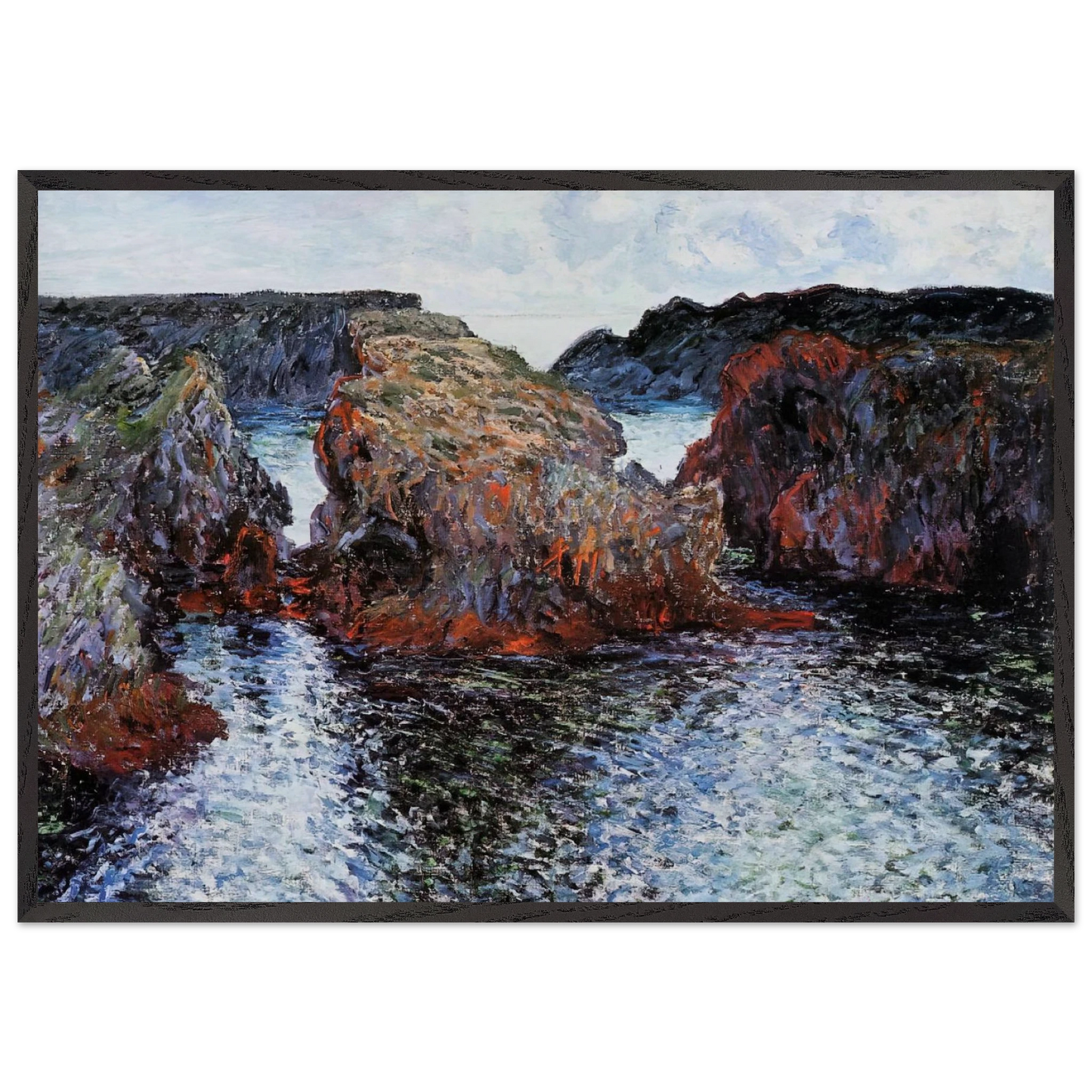
Belle-Ile Rocks at Port-Goulphar - claude monet 70x100 cm / 28x40 inches Framed Art Print – Black Wooden Frame
Belle-Ile Rocks at Port-Goulphar - claude monet 70x100 cm / 28x40 inches Framed Art Print – Black Wooden Frame
Couldn't load pickup availability
Bring the Rugged Majesty of Monet's Brittany into Your Home
Experience the raw, untamed beauty of the Atlantic coast through Claude Monet's Belle-Ile Rocks at Port-Goulphar. Painted in 1886 during the height of the Impressionist movement, this masterpiece captures the dramatic interplay between the jagged, dark needles of rock and the churning turquoise waters of the Morbihan coast. At RedKalion, we curate these fine art prints to ensure that every nuanced brushstroke and atmospheric shift is preserved for the modern collector.
The Mastery of Light and Form
In Belle-Ile Rocks at Port-Goulphar, Monet moved away from the soft landscapes of Giverny to confront the 'sinister' and 'terrible' beauty of the wild sea. Using a palette of deep indigos, emeralds, and ochres, he utilized rapid, rhythmic brushwork to convey the movement of the tides. This museum-quality reproduction allows you to appreciate Monet's en plein air technique, where the changing light of a single afternoon is immortalized in vibrant, archival detail.
Museum-Grade Specifications for the Discerning Collector
RedKalion elevates this iconic work with a presentation that matches its historical significance. Your 70x100 cm (28x40 inches) framed art print is produced on 250 gsm (110 lb) archival museum-quality paper. This natural white, matte, and uncoated paper ensures a reflection-free viewing experience while preserving the integrity of the pigments for generations. The piece is protected by shatterproof plexiglass, ensuring both clarity and safety.
A Statement of Timeless Elegance
Encased in a premium black wooden frame crafted from responsibly sourced oak and ash, this print offers a sophisticated profile. With a 20mm (0.79") thickness and width, the frame provides a more substantial and luxurious presence than standard retail alternatives. Arriving ready-to-hang with a professional kit included, this archival masterpiece is designed to transform your space with the enduring spirit of French Impressionism.
Discover Unlimited Art Possibilities
At RedKalion, you can find virtually any artwork from any artist, available in a wide range of sizes to perfectly match your space.
If you didn’t find what you’re looking for, contact us at support@redkalion.com . We will source any artwork and produce it in any size and format you need, including art prints, posters, canvas, framed pieces, framed canvas, and more.
For dedicated art enthusiasts, we also offer handcrafted replicas of any artwork, carefully painted by highly skilled artists using traditional techniques.
For custom requests, contact us at support@redkalion.com .
What makes the Belle-Ile Rocks at Port-Goulphar print museum-quality?
RedKalion uses 250 gsm archival-grade paper and advanced printing techniques to replicate the original textures and colors of Claude Monet’s work, ensuring a fine art reproduction that meets gallery standards.
How is the black wooden frame constructed?
Our frames are made from responsibly sourced, FSC-certified oak and ash wood. They measure 20mm in width and thickness, providing a robust, premium look that exceeds classic thin frames.
Is the paper used for this Claude Monet print sustainable?
Yes, we use FSC-certified materials or equivalent sustainable paper. The 250 gsm natural white paper is acid-free and archival, ensuring it does not yellow or degrade over time.
Does the print come ready to hang?
Absolutely. Your framed Claude Monet print arrives with a pre-installed hanging kit, allowing you to easily mount the artwork on your wall immediately upon delivery.
How does RedKalion ensure the artwork is protected?
Each print is shielded by shatterproof plexiglass, which provides a crystal-clear view while protecting the artwork from impact and UV damage. We ship in secure, protective packaging.
Why did Monet choose Port-Goulphar as a subject?
Monet was drawn to the 'wild' character of Belle-Ile-en-Mer to challenge his Impressionist style against the stark, unchanging granite rocks and the violent Atlantic currents.
What artistic technique defines this specific work?
Monet employed a series-based approach, capturing the same rock formations under different light conditions. He used high-contrast colors and thick, directional strokes to mimic the sea's energy.