RedKalion
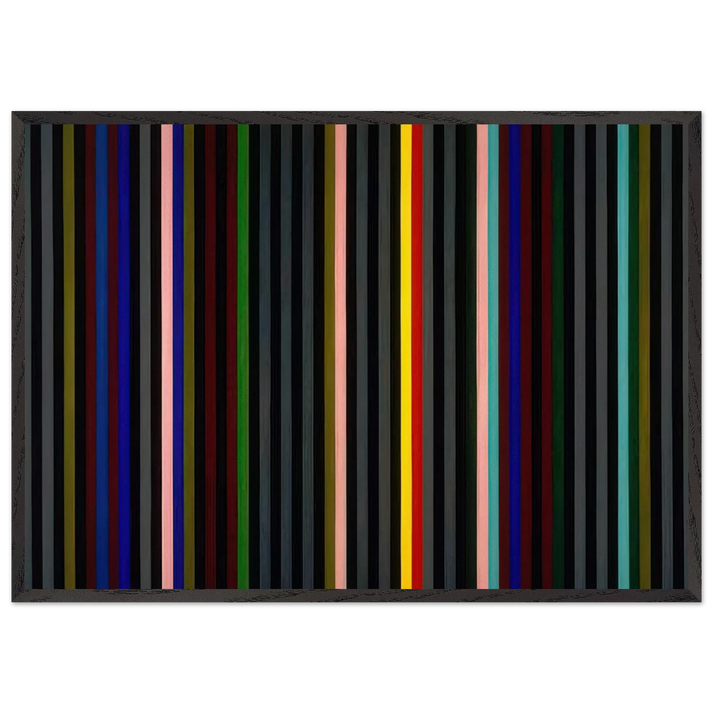
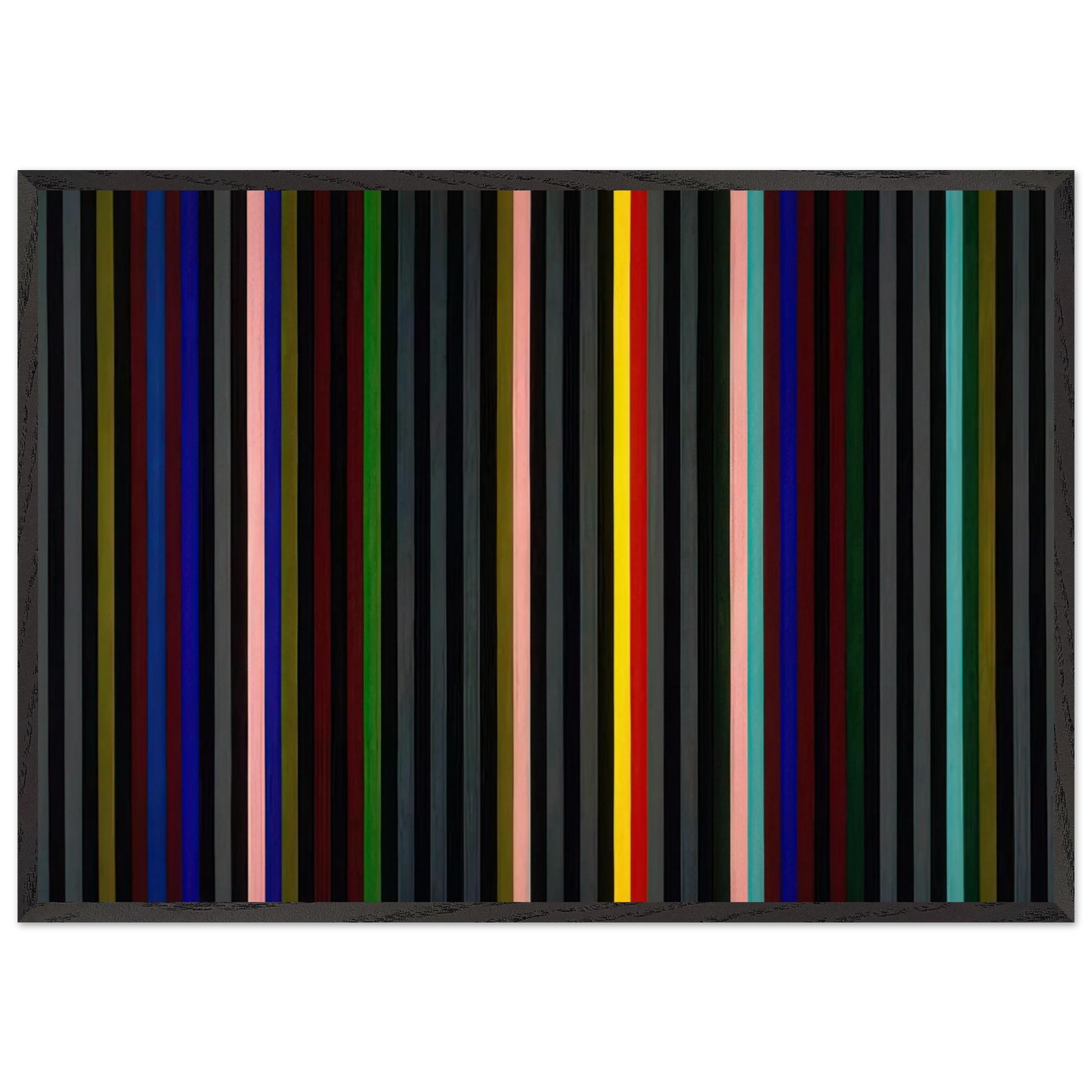
Black Grey Beat - 1964 - Gene Davis 70x100 cm / 28x40 inches Framed Art Print – Black Wooden Frame
Black Grey Beat - 1964 - Gene Davis 70x100 cm / 28x40 inches Framed Art Print – Black Wooden Frame
Couldn't load pickup availability
The Rhythmic Precision of Gene Davis’s "Black Grey Beat"
Experience the mesmerizing cadence of the Washington Color School with "Black Grey Beat" (1964), a seminal work by the influential American abstract painter Gene Davis. Known for his signature "stripe paintings," Davis explored the interplay of color, interval, and repetition, creating a visual language that transcends static form. In this masterpiece, the deliberate arrangement of black and grey vertical bands evokes a musical tempo—a "beat" that invites the viewer to scan the canvas in a rhythmic dance of perception.
As a hallmark of Post-Painterly Abstraction, this piece eschews the gestural brushwork of traditional expressionism in favor of clean lines and chromatic rigor. At RedKalion, we curate this museum-quality reproduction to capture the exact intensity and mathematical beauty of Davis’s original vision, making it a sophisticated focal point for minimalist and contemporary interiors alike. Elevate your space with an archival masterpiece that endures through its timeless geometry.
Uncompromising Craftsmanship and Archival Excellence
Every "Black Grey Beat" fine art print is produced on 250 gsm (110 lb) natural white, archival museum-quality paper. This premium, uncoated matte finish ensures a glare-free experience, allowing the subtle shifts in monochromatic tones to remain visible from any angle. To maintain the integrity of the artwork, each print is protected by shatterproof plexiglass and housed in a responsibly sourced black ash wood frame, measuring a substantial 20mm (0.79") in width for a presence that commands the room.
- Sustainable Materials: FSC-certified or equivalent sustainably sourced wood and paper.
- Ready to Hang: Includes a professional hanging kit for immediate installation.
- Enduring Beauty: Archival-grade materials designed to prevent yellowing or fading over time.
- Premium Framing: Sturdy 20mm thick frame, providing a more robust profile than standard alternatives.
Discover Unlimited Art Possibilities
At RedKalion, you can find virtually any artwork from any artist, available in a wide range of sizes to perfectly match your space.
If you didn’t find what you’re looking for, contact us at support@redkalion.com . We will source any artwork and produce it in any size and format you need, including art prints, posters, canvas, framed pieces, framed canvas, and more.
For dedicated art enthusiasts, we also offer handcrafted replicas of any artwork, carefully painted by highly skilled artists using traditional techniques.
For custom requests, contact us at support@redkalion.com .
What paper quality is used for the Gene Davis print?
We use 250 gsm (110 lb) natural white, museum-quality paper. This archival-grade, uncoated matte paper provides a sophisticated finish that resists aging and yellowing for decades.
What are the specifications of the black wooden frame?
The frame is crafted from responsibly sourced ash wood, measuring 20mm (0.79") in width and thickness. This provides a more substantial and premium aesthetic than standard 14mm frames.
Is the artwork ready to be displayed upon arrival?
Yes, each framed print includes a complete hanging kit. The artwork arrives fully assembled and ready to hang directly on your wall out of the box.
How is the print protected from damage?
We use high-quality, shatterproof plexiglass to protect the print from dust and impact while maintaining crystal-clear visibility of the artwork’s rhythmic detail.
Is this product environmentally sustainable?
RedKalion prioritizes sustainability by using FSC-certified wood and paper materials, ensuring your art collection supports responsible and ethical forestry practices.
What was Gene Davis's role in the Washington Color School?
Gene Davis was a leading figure who helped define the Washington Color School, focusing on the rhythmic power of vertical stripes to explore pure color relationships.
Why did Davis title his 1964 works with terms like "Beat"?
Davis was influenced by jazz and musical intervals. The stripes function like notes, creating a rhythmic "beat" through varying widths and tonal contrast across the canvas.