
RedKalion
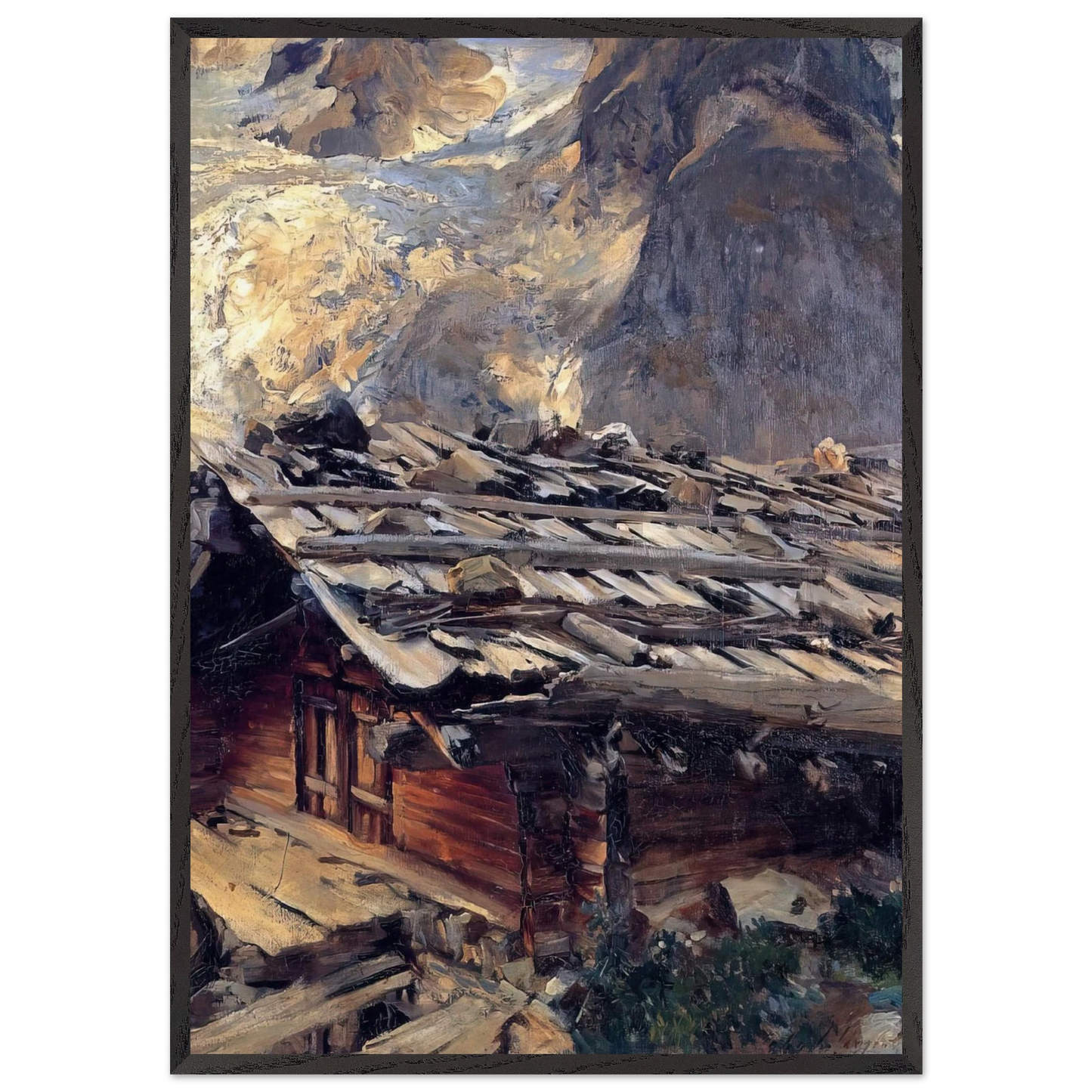
Brenva Glacier - John Singer Sargent 70x100 cm / 28x40 inches Framed Art Print – Black Wooden Frame
Brenva Glacier - John Singer Sargent 70x100 cm / 28x40 inches Framed Art Print – Black Wooden Frame
Couldn't load pickup availability
The Sublime Alpine Vision: Brenva Glacier by John Singer Sargent
While John Singer Sargent is world-renowned for his high-society portraiture, his landscapes represent the pinnacle of his personal artistic expression. This Brenva Glacier fine art print captures the raw, formidable beauty of the Mont Blanc massif with the gestural brilliance that defined Sargent’s later career. Moving away from the constraints of commissions, he utilized his mastery of light and shadow to depict the crystalline blue depths and rugged textures of the Italian Alps.
Museum-Grade Curation by RedKalion
At RedKalion, we believe a masterpiece deserves a presentation that matches its historical weight. This museum-quality reproduction is printed on archival-grade, 250 gsm (110 lb) paper. The paper’s natural white, uncoated matte finish ensures that the subtle cool tones and painterly details of Sargent’s work are rendered with stunning accuracy, free from distracting glares. This is a sophisticated addition for collectors seeking an archival masterpiece that endures.
- Premium Framing: The artwork is housed in a robust 20mm (0.79") thick black wooden frame, crafted from responsibly sourced oak and ash.
- Substantial Presence: Our frames are purposefully wider than the industry-standard 14mm to provide a more gallery-focused, authoritative look on your wall.
- Shatterproof Protection: Each print is shielded by premium shatterproof plexiglass, ensuring safety without compromising visual clarity.
- Sustainable Excellence: We utilize FSC-certified materials, aligning luxury art with environmental responsibility.
Elevate your interior space with a piece that bridges the gap between early 20th-century Impressionism and the timeless grandeur of the natural world. This ready-to-hang framed print arrives with all necessary hardware, allowing you to transform your environment instantly.
Discover Unlimited Art Possibilities
At RedKalion, you can find virtually any artwork from any artist, available in a wide range of sizes to perfectly match your space.
If you didn’t find what you’re looking for, contact us at support@redkalion.com . We will source any artwork and produce it in any size and format you need, including art prints, posters, canvas, framed pieces, framed canvas, and more.
For dedicated art enthusiasts, we also offer handcrafted replicas of any artwork, carefully painted by highly skilled artists using traditional techniques.
For custom requests, contact us at support@redkalion.com .
What makes this John Singer Sargent print museum-quality?
RedKalion uses 250 gsm archival museum-quality paper and acid-free inks. This ensures the Brenva Glacier reproduction maintains its vibrant color and structural integrity for decades, matching the standards found in world-class art galleries.
What are the physical specifications of the frame and paper?
The print features 250 gsm (110 lb) natural white matte paper. The black wooden frame is crafted from responsibly sourced oak/ash, measuring 20mm (0.79") in width and thickness for a premium aesthetic.
Is the artwork protected during shipping and display?
Yes, each framed print is protected by shatterproof plexiglass and arrives in secure, reinforced packaging. A hanging kit is included, making the artwork ready to hang directly upon arrival.
Is this product environmentally friendly?
Absolutely. We use FSC-certified paper and frames or equivalent sustainable materials, ensuring that your fine art print supports responsible forest management and environmental stewardship.
Will the colors of the Brenva Glacier fade over time?
No. By using archival-grade, acid-free paper and high-pigment inks, our prints are designed to resist yellowing and fading, preserving Sargent’s intricate color palette for generations.
When did John Singer Sargent paint Brenva Glacier?
Sargent painted various Alpine scenes, including those of the Brenva Glacier, primarily during his summer excursions in the early 1900s (circa 1904-1907) as he sought refuge from his hectic portrait studio.
What artistic technique did Sargent use for this Alpine scene?
Sargent employed an 'en plein air' watercolor and oil technique, focusing on the 'sublime' qualities of nature. He used bold, shorthand brushstrokes to capture the reflection of light on ice and rock.