RedKalion
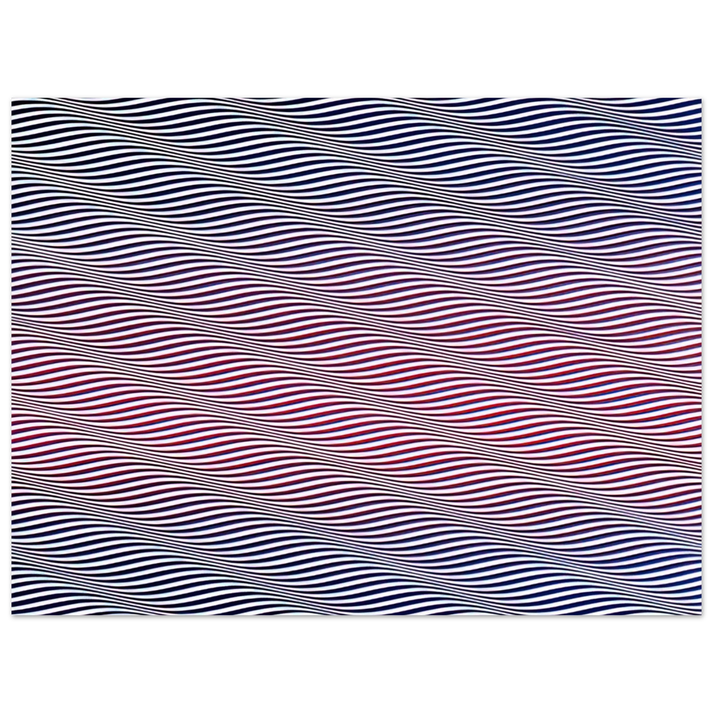
Bridget Riley - CATARACT 3 1967 75x100 cm / 30x40inches Fine Art Poster
Bridget Riley - CATARACT 3 1967 75x100 cm / 30x40inches Fine Art Poster
Couldn't load pickup availability
A Masterpiece of Optical Perception: Bridget Riley's Cataract 3 (1967)
Immerse yourself in the hypnotic rhythms of Bridget Riley, the preeminent figure of the Op Art movement. Cataract 3, executed in 1967, represents a definitive moment in contemporary art history where Riley moved beyond monochromatic constraints into a complex exploration of color and movement. This fine art print captures the undulating waves that appear to vibrate and shift before the viewer's eyes, a phenomenon achieved through Riley's meticulous arrangement of cold and warm tones.
As a museum-quality reproduction, this piece is curated for the discerning collector who values both historical significance and technical precision. The work challenges the eye, creating a perceptual experience that is as much about the viewer's physiological response as it is about the pigment on the page. At RedKalion, we preserve this intensity by utilizing archival-grade materials that honor the artist's original vision.
RedKalion Archival Specifications
To ensure your Cataract 3 print remains a timeless centerpiece, we utilize the Master's Edition archival paper. This premium substrate offers a sophisticated matte, uncoated finish with a natural white (off-white) base, providing a luxurious texture that eliminates glare and enhances the depth of the rhythmic lines. Our commitment to quality is reflected in the technical details:
- Weight & Substance: A substantial 250 gsm (110 lb) paper weight for a premium, heavy-duty feel.
- Longevity: Acid-free (pH above 7) composition prevents yellowing and degradation over decades.
- Sustainability: Printed on FSC-certified paper, supporting responsible forest management.
- Precision Thickness: 0.29 mm (11.4 mils) ensuring the print sits perfectly within any high-end frame.
Elevate your interior with a piece that does not merely sit on a wall, but interacts with the space it inhabits. This is more than a poster; it is an archival masterpiece designed to endure for generations.

Discover Unlimited Art Possibilities
At RedKalion, you can find virtually any artwork from any artist, available in a wide range of sizes to perfectly match your space.
If you didn’t find what you’re looking for, contact us at support@redkalion.com . We will source any artwork and produce it in any size and format you need, including art prints, posters, canvas, framed pieces, framed canvas, and more.
For dedicated art enthusiasts, we also offer handcrafted replicas of any artwork, carefully painted by highly skilled artists using traditional techniques.
For custom requests, contact us at support@redkalion.com .
What defines the quality of this Bridget Riley fine art print?
This is a Master's Edition archival reproduction, utilizing 250 gsm (110 lb) museum-quality paper. It offers a luxurious matte finish and natural white tone, ensuring the artwork's optical vibrations are rendered with professional precision and depth.
How does the paper finish affect the visual impact of Cataract 3?
The uncoated, matte finish eliminates distracting reflections, allowing the undulating lines of Riley's work to maintain their intended optical effect under any lighting condition, while the natural white base provides a warm, sophisticated contrast.
Is this print archival-grade for long-term collecting?
Yes. The paper is acid-free with a pH level above 7, specifically designed to prevent yellowing or brittleness over time. This ensures your investment in fine art remains vibrant and intact for decades.
How is my order fulfilled and shipped?
RedKalion prints and ships each order on demand with no minimums. We use robust packaging to protect the 75x100 cm dimensions, ensuring your museum-quality print arrives in pristine condition via carbon-conscious fulfillment channels.
What are the exact dimensions of this specific reproduction?
This Bridget Riley fine art poster is sized at 75x100 cm (30x40 inches). The 0.29 mm thickness and 250 gsm weight ensure a sturdy, premium feel suitable for professional framing.
What is the significance of the wave pattern in Riley's work?
The wave pattern in Cataract 3 is a hallmark of Riley's 1960s period. It explores 'perceptual instability,' where the repetition of form induces a sense of physical movement and light flickering in the viewer's eye.
How does 'Cataract 3' create the illusion of color?
Riley uses alternating bands of turquoise, red, and grey. Through a process of optical mixing, the interaction of these specific tones creates a shimmering effect that produces perceived colors not actually present on the paper.