RedKalion
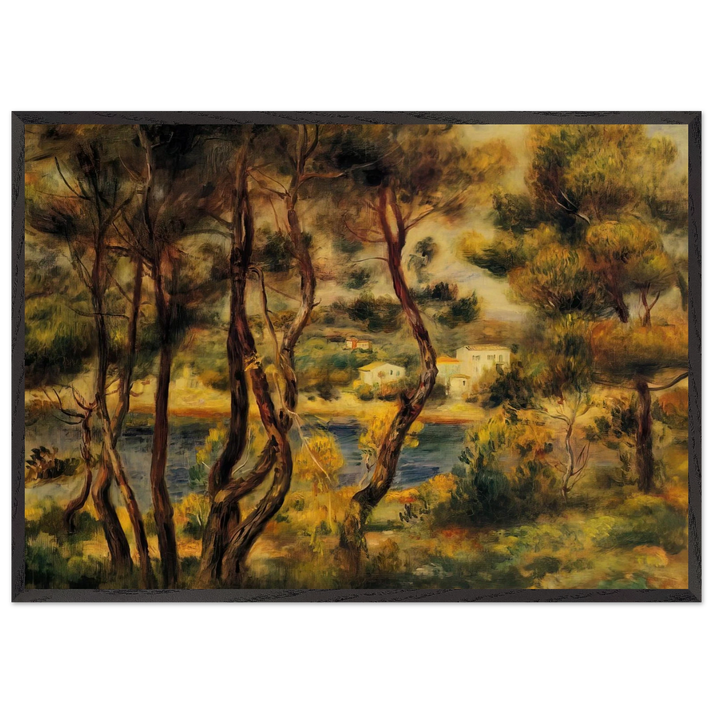
Cape Saint Jean - Pierre-Auguste Renoir 70x100 cm / 28x40 inches Framed Art Print – Black Wooden Frame
Cape Saint Jean - Pierre-Auguste Renoir 70x100 cm / 28x40 inches Framed Art Print – Black Wooden Frame
Couldn't load pickup availability
Elevate Your Interior with Renoir’s Radiant Mediterranean Vision
Experience the luminous charm of the French Riviera with Pierre-Auguste Renoir’s Cape Saint Jean. This stunning fine art print captures the quintessence of Impressionism, where light and color harmonize to depict the serene beauty of the Mediterranean coast. Renoir, a master of capturing fleeting atmospheric effects, utilized a vibrant palette of ochres, azure, and emerald greens to bring this coastal landscape to life during his later period when he sought the perpetual sun of the South of France.
Museum-Quality Craftsmanship by RedKalion
At RedKalion, we curate only the finest museum-quality reproductions. This archival masterpiece is printed on premium 250 gsm (110 lb) natural white paper. The matte, uncoated finish ensures an elegant look without distracting glare, preserving the depth of Renoir’s brushwork. Our commitment to quality means using archival-grade materials that resist yellowing, ensuring your investment remains a centerpiece for generations.
Sophisticated Framing and Sustainable Elegance
Each print arrives in a responsibly sourced black wooden frame, crafted from high-quality oak or ash. Measuring 20mm (0.79") in both thickness and width, our frames provide a more substantial and premium presence on your wall than standard thin frames. Protected by shatterproof plexiglass, your artwork is shielded from the elements while maintaining crystal-clear visibility.
- Artist: Pierre-Auguste Renoir
- Title: Cape Saint Jean
- Paper: 250 gsm archival matte paper (FSC-certified)
- Frame: 20mm black solid wood with hanging kit included
- Ready-to-hang: Delivered fully assembled for immediate installation
Transform your home or office into a private gallery. This 70x100 cm (28x40 inches) framed art print offers a sophisticated window into the golden age of Impressionism, delivered with the uncompromising quality of RedKalion.

Discover Unlimited Art Possibilities
At RedKalion, you can find virtually any artwork from any artist, available in a wide range of sizes to perfectly match your space.
If you didn’t find what you’re looking for, contact us at support@redkalion.com . We will source any artwork and produce it in any size and format you need, including art prints, posters, canvas, framed pieces, framed canvas, and more.
For dedicated art enthusiasts, we also offer handcrafted replicas of any artwork, carefully painted by highly skilled artists using traditional techniques.
For custom requests, contact us at support@redkalion.com .
What makes the paper quality suitable for fine art?
We use 250 gsm (110 lb) natural white, archival-grade paper. This heavy-weight, matte, and uncoated material is designed to preserve color integrity and resist aging, meeting the high standards required for museum-quality reproductions.
Is the frame made of real wood?
Yes, our frames are crafted from responsibly sourced oak and ash wood. They feature a premium 20mm (0.79") thickness and width, providing a sturdy and aesthetically superior finish compared to thinner, standard frames.
Is the artwork ready to hang upon arrival?
Absolutely. Your Renoir print arrives professionally framed and includes a pre-installed hanging kit. It is ready to be displayed on your wall the moment it is delivered to your door.
How is the print protected during shipping and display?
We utilize shatterproof, transparent plexiglass to protect the artwork from dust and damage. Additionally, our packaging is designed to ensure your framed print reaches you in perfect condition, regardless of the destination.
Are the materials used in this product sustainable?
RedKalion is committed to sustainability. We use FSC-certified paper and wood or equivalent sustainable materials, ensuring that your art piece is as environmentally friendly as it is beautiful.
What is the historical significance of Renoir’s Cape Saint Jean?
Cape Saint Jean represents Renoir's fascination with the Mediterranean light. Painted during his move to the South of France, it reflects his transition toward a more structured yet fluid style, focusing on the warmth and vibrancy of the French Riviera.
How does Renoir’s technique differ in this landscape?
In this piece, Renoir employs soft, feathered brushstrokes to blend colors seamlessly, avoiding harsh lines. This technique creates a sense of shimmering heat and atmospheric depth, characteristic of his mature Impressionist style.