RedKalion
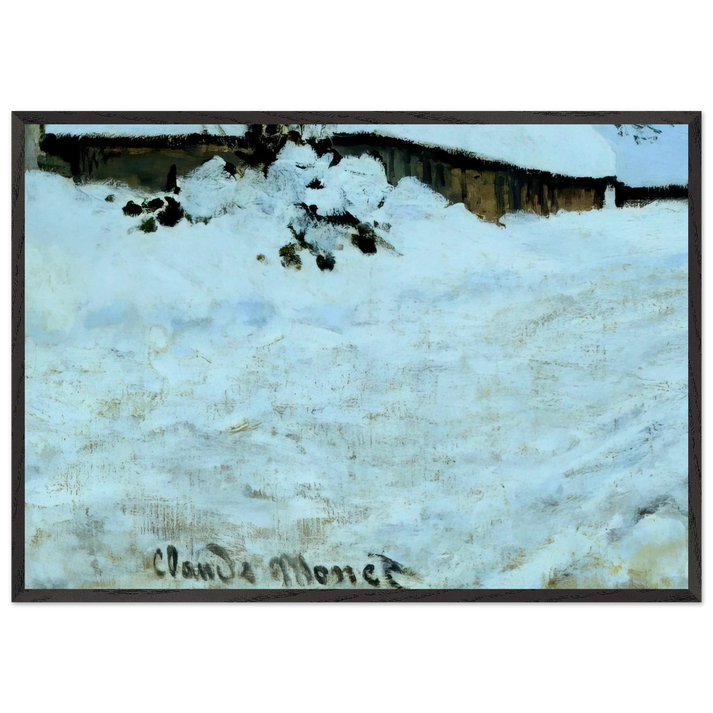
Cart on the Snow Covered Road with Saint-Simeon Farm - claude monet 70x100 cm / 28x40 inches Framed Art Print – Black Wooden Frame
Cart on the Snow Covered Road with Saint-Simeon Farm - claude monet 70x100 cm / 28x40 inches Framed Art Print – Black Wooden Frame
Couldn't load pickup availability
Experience the Quietude of Monet’s Winter Vision
Step into the serene landscape of 19th-century Normandy with Claude Monet’s Cart on the Snow Covered Road with Saint-Simeon Farm. This early Impressionist masterpiece captures the transformative power of light on a frozen terrain. Painted near the Saint-Siméon farm in Honfleur—a legendary retreat for artists like Boudin and Jongkind—this work showcases Monet’s budding fascination with effets de neige (snow effects). Instead of using stark whites, Monet meticulously observed the nuanced blues and violets reflected in the shadows of the cart tracks, a technique that would eventually define the Impressionist movement.
At RedKalion, we preserve this delicate interplay of color and light through a museum-quality reproduction. Every brushstroke is rendered on 250 gsm (110 lb) archival-grade paper, ensuring that the subtle tonal shifts of the wintry sky and the rustic architecture of the farm remain vivid and true to the original 1867 oil painting.
Specifications of Your Archival Masterpiece
- Premium Frame: A robust, responsibly sourced black wooden frame crafted from oak and ash, measuring 20mm (0.79") in width for a sophisticated, gallery-ready profile.
- Archival Paper: Printed on 250 gsm natural white, matte, and uncoated paper that eliminates glare and preserves historical authenticity.
- Protective Glazing: Outfitted with high-clarity, shatterproof plexiglass to safeguard the print from UV rays and physical damage.
- Sustainability: Produced using FSC-certified materials, reflecting our commitment to both fine art and environmental stewardship.
- Ready-to-Hang: Each print arrives with a professional hanging kit, ready to elevate your space immediately.
This 70x100 cm (28x40 inches) framed art print offers more than decoration; it provides a window into the evolution of modern art. Elevate your interior with an archival masterpiece that endures for generations.

Discover Unlimited Art Possibilities
At RedKalion, you can find virtually any artwork from any artist, available in a wide range of sizes to perfectly match your space.
If you didn’t find what you’re looking for, contact us at support@redkalion.com . We will source any artwork and produce it in any size and format you need, including art prints, posters, canvas, framed pieces, framed canvas, and more.
For dedicated art enthusiasts, we also offer handcrafted replicas of any artwork, carefully painted by highly skilled artists using traditional techniques.
For custom requests, contact us at support@redkalion.com .
What makes the paper quality suitable for fine art?
We use 250 gsm (110 lb) natural white, matte, and archival paper. This heavy-weight, uncoated stock ensures high-resolution detail and long-term durability, making it perfect for museum-quality fine art prints.
Is the frame made from sustainable materials?
Yes, our frames are crafted from responsibly sourced oak and ash wood. All materials are FSC-certified or equivalent, ensuring your art print meets the highest environmental and ethical standards.
How is the artwork protected from the environment?
Your Monet print is protected by high-quality, shatterproof plexiglass. This provides superior clarity while shielding the archival paper from dust, moisture, and potential breakage during shipping.
Does the print arrive ready to be displayed?
Absolutely. Every framed art print includes a pre-installed hanging kit. The 20mm thick frame is designed for a flush, professional mount on your wall immediately upon arrival.
How is the print packaged for shipping?
We utilize robust, specialized packaging designed for large-format fine art. Each framed piece is securely wrapped and placed in reinforced boxes to ensure it reaches you in pristine condition.
What is the historical significance of the Saint-Siméon Farm?
The Saint-Siméon farm was a vital meeting point for early Impressionists. Located in Honfleur, it served as a hub where Monet, Boudin, and Jongkind shared techniques, influencing the transition toward modern landscape painting.
Why did Monet use blue and purple tones in the snow?
Monet pioneered the observation that shadows on snow are rarely black. By using blue and lavender tones, he accurately captured the reflection of the sky and the atmospheric light of winter mornings.