


RedKalion
CELL CHOISY 1993 - Louise Bourgeois Brushed Aluminum Print - 70x100 cm / 28x40 inches | Louise Bourgeois Aluminum Print | Louise Bourgeois Prints
CELL CHOISY 1993 - Louise Bourgeois Brushed Aluminum Print - 70x100 cm / 28x40 inches | Louise Bourgeois Aluminum Print | Louise Bourgeois Prints
Couldn't load pickup availability
An Intersection of Memory and Architecture: Louise Bourgeois’s Cell (Choisy)
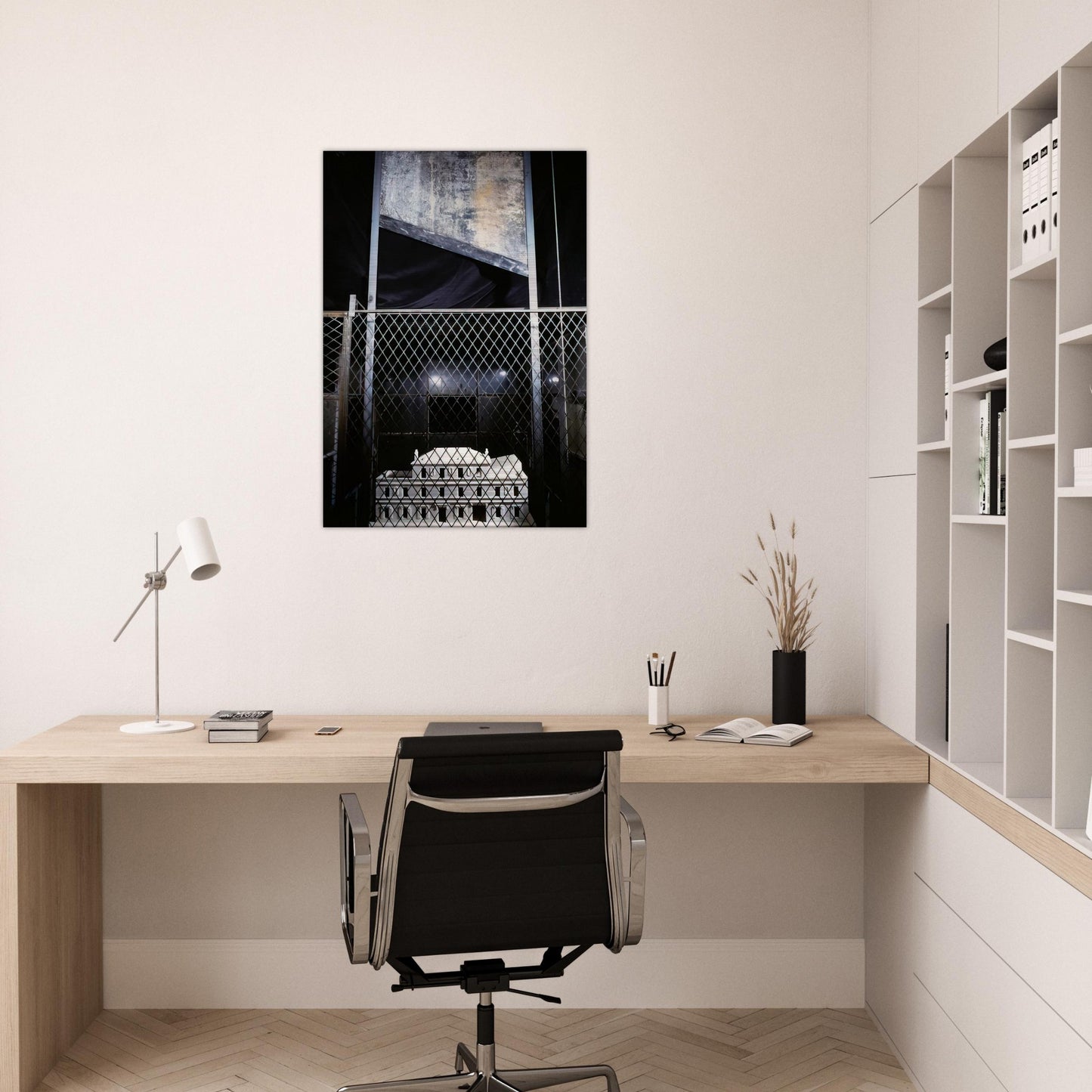
Experience the profound psychological depth of Louise Bourgeois’s Cell (Choisy) (1993), a seminal work from her evocative 'Cells' series. This piece presents a marble replica of the artist's childhood home in Choisy-le-Roi, encased within a cage-like structure that oscillates between a sanctuary and a prison. At RedKalion, we have meticulously translated this monumental work onto a brushed silver Aluminum DIBOND® substrate, perfectly capturing the industrial, raw, and introspective essence of Bourgeois’s vision.
The Power of the Cell Series
Bourgeois began her 'Cells' in the late 1980s, using the architectural form to explore the complexities of memory, domesticity, and the body. Cell (Choisy) is particularly poignant; the house is both a symbol of familial heritage and a site of repressed trauma. By choosing our fine art aluminum print, the viewer engages with the artwork's inherent tension—the matte, glare-free finish and the horizontal grain of the metal echo the cold, clinical feel of the cage, while the metallic silver effect in unprinted areas provides a luminous, ethereal quality to the marble home itself.
Museum-Quality Execution on Aluminum
To honor the legacy of this contemporary masterpiece, RedKalion utilizes a 3mm (0.12") durable AluDibond base. The direct print technique ensures vivid color reproduction while maintaining a sophisticated matte appearance. The inherent horizontal grain of the brushed aluminum adds a dynamic, shimmering texture that changes with the light, offering a sensory experience that standard paper prints cannot replicate. This is a museum-quality reproduction designed to endure for generations.
- Material: Premium brushed silver Aluminum DIBOND® with a dynamic horizontal grain.
- Durability: 3mm thickness for a rigid, archival-grade foundation.
- Finish: Matte and glare-free, highlighting the intricate details of the marble and cage structure.
- Longevity: Archival-grade inks resistant to fading, ensuring a lasting investment.
- Ready to Display: A professional hanging kit is included with every order.
Elevate your curated collection with a piece that bridges the gap between historical significance and modern industrial elegance. This archival masterpiece is not merely a reproduction; it is a tribute to the enduring power of Louise Bourgeois.


Discover Unlimited Art Possibilities
At RedKalion, you can find virtually any artwork from any artist, available in a wide range of sizes to perfectly match your space.
If you didn’t find what you’re looking for, contact us at support@redkalion.com . We will source any artwork and produce it in any size and format you need, including art prints, posters, canvas, framed pieces, framed canvas, and more.
For dedicated art enthusiasts, we also offer handcrafted replicas of any artwork, carefully painted by highly skilled artists using traditional techniques.
For custom requests, contact us at support@redkalion.com .
What are the physical dimensions and material of this Louise Bourgeois print?
This print measures 70x100 cm (28x40 inches) and is crafted on 3mm thick brushed silver Aluminum DIBOND®, featuring a unique horizontal grain for a metallic, textured finish.
Does this aluminum print come ready to hang?
Yes, every RedKalion aluminum print includes a professional hanging kit tailored to your fulfillment location, allowing you to display your museum-quality reproduction immediately upon arrival.
How does the metallic finish affect the appearance of Cell (Choisy)?
The brushed aluminum creates a striking metallic silver effect in unprinted white areas, adding a dynamic depth and shimmering quality that enhances the architectural lines of Bourgeois's work.
Is the print finish matte or glossy?
The print features a sophisticated matte, glare-free finish. This ensures the artwork remains clearly visible from all angles, even in rooms with high ambient light or direct sun.
What is the archival longevity of an Aluminum DIBOND® print?
AluDibond is an exceptionally durable, rigid material. Combined with our direct-print archival inks, this piece is designed to resist fading and environmental wear for decades.
What is the significance of the house in Louise Bourgeois's Cell (Choisy)?
The house represents Bourgeois’s childhood home in Choisy-le-Roi. It serves as a symbol of memory, family history, and the psychological constraints of the domestic sphere.
Why did Louise Bourgeois use cages in her 'Cells' series?
Bourgeois used cages to create a sense of enclosure and isolation. They represent the boundaries of individual consciousness and the physical manifestation of emotional states.