


RedKalion
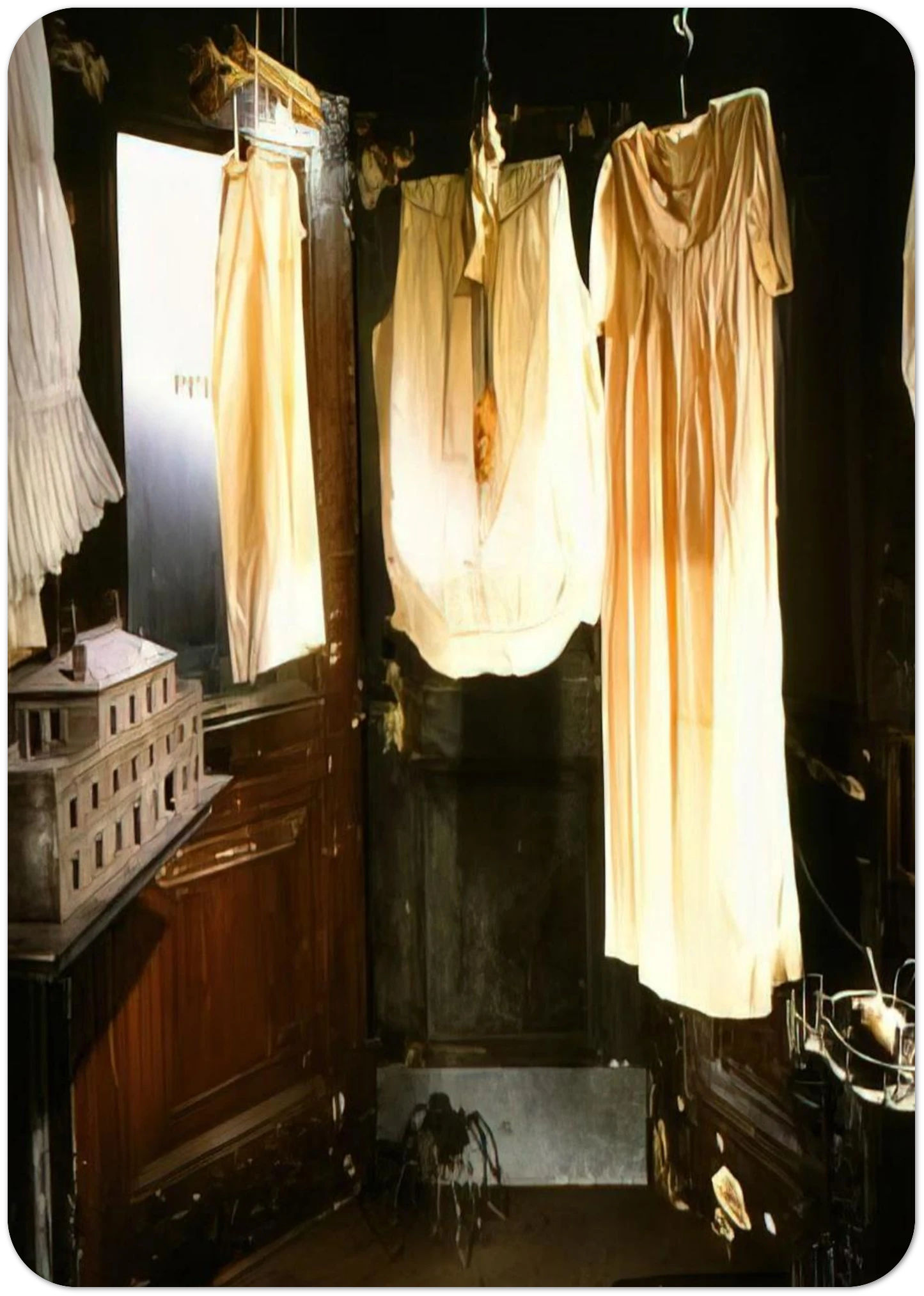
CELL VII 1998 By Louise Bourgeois Pack of 10 Post Cards | Louise Bourgeois Post Cards | A6 (10.5 x 14.8 cm) - 4.1 x 5.8 inches
CELL VII 1998 By Louise Bourgeois Pack of 10 Post Cards | Louise Bourgeois Post Cards | A6 (10.5 x 14.8 cm) - 4.1 x 5.8 inches
Couldn't load pickup availability
Experience the Psychological Depth of Louise Bourgeois’s Cell VII (1998)
Invite the profound introspection of Louise Bourgeois into your daily correspondence or curated home display with this exclusive pack of 10 fine art postcards. Cell VII (1998) belongs to the artist's seminal series of architectural installations—enclosed, cage-like structures that serve as private theaters of memory and emotion. In this work, Bourgeois explores themes of domesticity, the body, and the psyche, utilizing found objects and sculptural forms to evoke a sense of poignant nostalgia and visceral vulnerability.
Museum-Grade Reproduction by RedKalion
At RedKalion, we treat every postcard as a miniature masterpiece. Unlike standard commercial prints, these postcards are produced using 12-color fine art printing technology. This advanced process ensures that the nuanced shadows and textures of Bourgeois’s original sculpture are rendered with stunning depth and chromatic accuracy, far surpassing the limitations of traditional 4-color printing.
- Artist: Louise Bourgeois (1911–2010)
- Paper Quality: 200 gsm (80 lb) heavy-weight paper with a thickness of 0.26 mm (10.3 mils).
- Finish: A sophisticated smooth matte finish that eliminates glare and enhances the tactile experience.
- Sustainability: Printed on FSC-certified paper, reflecting our commitment to environmental responsibility.
- Dimensions: A6 format (10.5 x 14.8 cm / 4.1 x 5.8 inches), ideal for framing or mailing.
By choosing RedKalion, you are investing in archival-grade reproductions that honor the legacy of contemporary art. Elevate your space or share a thoughtful sentiment with a piece of art history that endures.


Discover Unlimited Art Possibilities
At RedKalion, you can find virtually any artwork from any artist, available in a wide range of sizes to perfectly match your space.
If you didn’t find what you’re looking for, contact us at support@redkalion.com . We will source any artwork and produce it in any size and format you need, including art prints, posters, canvas, framed pieces, framed canvas, and more.
For dedicated art enthusiasts, we also offer handcrafted replicas of any artwork, carefully painted by highly skilled artists using traditional techniques.
For custom requests, contact us at support@redkalion.com .
What makes the printing quality of these Louise Bourgeois postcards unique?
We use 12-color fine art printing technology, which provides superior color vibrancy and tonal depth compared to standard 4-color prints. This ensures a museum-quality reproduction of the intricate textures found in Cell VII (1998).
What are the specific paper and finish specifications?
Each postcard is printed on 200 gsm (80 lb) FSC-certified paper with a 0.26 mm thickness. The smooth matte finish ensures a clean, glare-free display, making them perfect for both writing and framing.
Are these postcards produced sustainably?
Yes. RedKalion utilizes FSC-certified paper and eco-friendly materials. Our print-on-demand model reduces waste by ensuring we only produce what is ordered, supporting a more conscious approach to art distribution.
How long does it take to process and ship my order?
As these postcards are printed on demand to maintain peak quality, orders are typically processed within 2-4 business days. Shipping times vary by location, but we prioritize secure, damage-proof packaging.
Will the colors fade over time?
No. By using archival-grade inks and heavy-weight matte paper, our prints are designed for longevity. The 12-color process ensures the pigments remain stable and vivid for years under normal display conditions.
What is the significance of the 'Cells' series in Bourgeois's work?
The 'Cells' series, started in the 1980s, represents Bourgeois’s transition into large-scale installation art. Each cell is an enclosed space representing a different type of pain—physical, emotional, or psychological—often linked to childhood memories.
Is Cell VII (1998) representative of Bourgeois's later style?
Yes, Cell VII was created when Bourgeois was in her late 80s. It showcases her mastery of creating architectural 'spaces of memory,' combining metal enclosures with deeply personal objects to evoke universal themes of isolation and protection.