RedKalion
Chaim Soutine - VIEW OF CERET 75x100 cm / 30x40inches Fine Art Poster
Chaim Soutine - VIEW OF CERET 75x100 cm / 30x40inches Fine Art Poster
Couldn't load pickup availability
The Visceral Intensity of Chaim Soutine's View of Céret
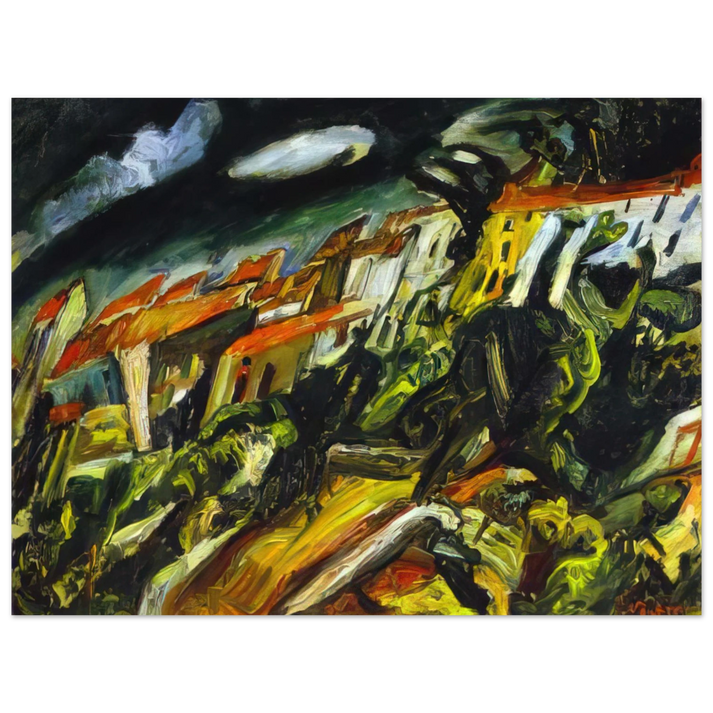
Chaim Soutine’s View of Céret is a masterclass in emotional landscape painting, hailing from his seminal period in the French Pyrenees between 1919 and 1922. This museum-quality reproduction captures the 'convulsive' beauty of Soutine’s style—where the earth, trees, and architecture seem to heave and sway with a rhythmic, almost living energy. Unlike traditional landscapes, Soutine’s View of Céret bypasses literal representation to convey the raw psychological state of the artist, making it a foundational piece of 20th-century Expressionism.
Authentic Reproduction for Discerning Collectors
At RedKalion, we believe such a profound work of art deserves a medium that honors its historical weight. This 75x100 cm (30x40 inches) fine art print is meticulously produced on Master's Edition archival paper. The luxury matte, uncoated finish provides a natural white (off-white) base that prevents glare, allowing the deep, turbulent pigments of Soutine’s palette to resonate with sophisticated clarity.
Technical Excellence and Archival Longevity
To ensure this masterpiece remains a centerpiece of your collection for generations, we utilize materials that meet the highest museum standards:
- Weight & Thickness: A robust 250 gsm (110 lb) paper with a thickness of 0.29 mm (11.4 mils) provides a premium, tactile feel.
- Archival Integrity: Acid-free paper with a pH above 7 prevents yellowing or degradation over time.
- Sustainable Craftsmanship: Our prints use FSC-certified paper, reflecting a commitment to both artistic excellence and environmental responsibility.
Elevate your interior space with a work that bridges the gap between historical intensity and modern archival technology. This Chaim Soutine reproduction is printed and shipped on demand, ensuring every piece arrives in pristine condition as a testament to RedKalion’s curatorial authority.

Discover Unlimited Art Possibilities
At RedKalion, you can find virtually any artwork from any artist, available in a wide range of sizes to perfectly match your space.
If you didn’t find what you’re looking for, contact us at support@redkalion.com . We will source any artwork and produce it in any size and format you need, including art prints, posters, canvas, framed pieces, framed canvas, and more.
For dedicated art enthusiasts, we also offer handcrafted replicas of any artwork, carefully painted by highly skilled artists using traditional techniques.
For custom requests, contact us at support@redkalion.com .
What kind of paper is used for this Chaim Soutine print?
We use Master's Edition archival paper, which is 250 gsm (110 lb) and museum-quality. It features a matte, uncoated, natural white finish for a luxurious texture that eliminates glare.
How long will the 'View of Céret' print last without fading?
This print is archival-grade and acid-free (pH above 7), specifically designed to prevent yellowing and preserve the integrity of the pigments for decades in residential or gallery environments.
What are the shipping logistics for this museum-quality reproduction?
Each Chaim Soutine poster is printed and shipped on demand with no minimum order requirements. This ensures your artwork is freshly produced and handled with professional care before transit.
Is the paper used for this fine art poster sustainable?
Yes, RedKalion is committed to sustainability. The paper used for this Chaim Soutine reproduction is FSC-certified, supporting responsible forest management.
Can I order just a single print of this artwork?
Absolutely. RedKalion supports on-demand fulfillment with no minimum order requirements, allowing collectors to purchase single archival-grade prints as needed.
What defines Chaim Soutine's 'Céret period'?
Between 1919 and 1922, Soutine lived in Céret, producing over 200 paintings characterized by distorted perspectives and thick impasto, reflecting a period of intense creative and psychological turmoil.
Why does the landscape in 'View of Céret' appear distorted?
Soutine used distortion to express internal emotion rather than external reality. The swirling forms in 'View of Céret' represent the artist's subjective experience of the landscape's energy and power.