RedKalion
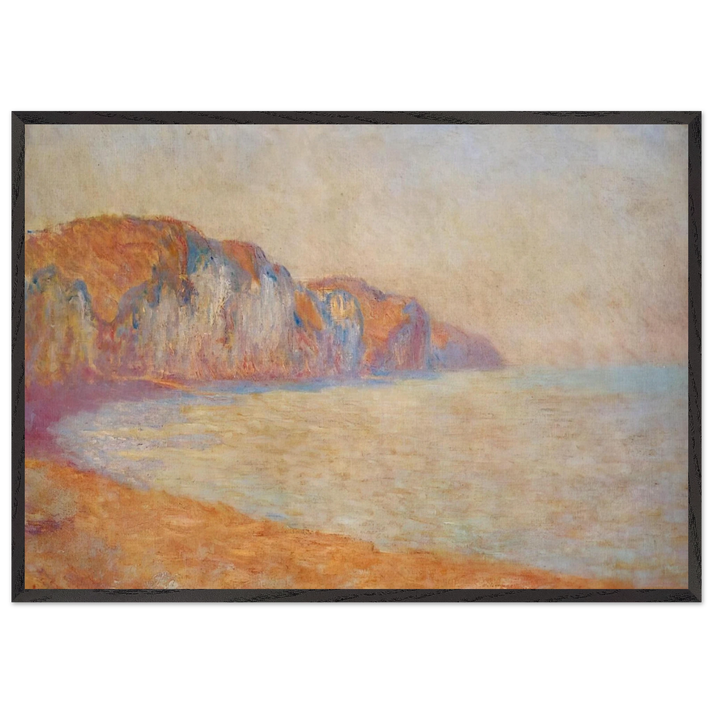
Cliff at Pourville in the Morning - claude monet 70x100 cm / 28x40 inches Framed Art Print – Black Wooden Frame
Cliff at Pourville in the Morning - claude monet 70x100 cm / 28x40 inches Framed Art Print – Black Wooden Frame
Couldn't load pickup availability
An Impressionist Vision: Cliff at Pourville in the Morning by Claude Monet
Capture the fleeting essence of the Normandy coastline with Claude Monet’s Cliff at Pourville in the Morning. Painted in 1882, this masterpiece exemplifies the Impressionist fascination with atmospheric conditions and the shifting play of light. This museum-quality reproduction brings Monet’s delicate palette of soft blues, pinks, and sea-foam greens into your home, offering a window into the serene coastal landscapes of Pourville-sur-Mer.
Monet was renowned for his ability to translate the 'envelope' of air and light onto canvas. In this specific piece, he employs rapid, textural brushstrokes to define the rugged chalk cliffs against the undulating rhythms of the English Channel. Our fine art print preserves every nuanced stroke and chromatic shift of the original oil painting, curated specifically for discerning collectors who value both historical depth and visual elegance.
Presented in a premium 28x40 inch format, this work is more than a mere decoration; it is an archival piece of history. Each print is meticulously crafted on 250 gsm (110 lb) museum-quality paper, chosen for its natural white, matte finish that eliminates glare while enhancing color depth. To ensure the longevity of your investment, we use acid-free, FSC-certified materials that resist yellowing over time.
Museum-Grade Framing and Craftsmanship
RedKalion elevates this Monet classic with a sophisticated Black Wooden Frame. Crafted from responsibly sourced oak and ash, the frame measures 20mm (0.79") in thickness and width—providing a more substantial and premium presence than standard gallery frames. The artwork is protected by high-clarity, shatterproof plexiglass, ensuring your masterpiece remains pristine for generations.
- Paper Quality: 250 gsm (110 lb) archival, uncoated natural white paper.
- Frame Material: Sustaintably sourced solid wood (Oak/Ash) in a sleek black finish.
- Protection: Shatterproof plexiglass for enhanced safety and UV protection.
- Ready to Hang: Includes a professional-grade hanging kit for immediate installation.
- Sustainability: FSC-certified materials ensuring ethical forestry practices.
By choosing RedKalion, you are acquiring a sophisticated reproduction that respects the integrity of the original work while utilizing modern archival technology. Elevate your space with an archival masterpiece that endures.
Discover Unlimited Art Possibilities
At RedKalion, you can find virtually any artwork from any artist, available in a wide range of sizes to perfectly match your space.
If you didn’t find what you’re looking for, contact us at support@redkalion.com . We will source any artwork and produce it in any size and format you need, including art prints, posters, canvas, framed pieces, framed canvas, and more.
For dedicated art enthusiasts, we also offer handcrafted replicas of any artwork, carefully painted by highly skilled artists using traditional techniques.
For custom requests, contact us at support@redkalion.com .
What is the quality of the paper used for this Monet print?
We use 250 gsm (110 lb) museum-quality paper. It is archival, acid-free, and uncoated with a natural white finish, ensuring the colors of Cliff at Pourville remain vibrant without yellowing over time.
How is the framed art print shipped and protected?
Each print is protected by shatterproof plexiglass and secured in robust packaging. The black wooden frame is made from 20mm thick oak or ash, providing superior durability compared to thinner alternatives.
Is the artwork ready to be displayed upon arrival?
Yes. Your Claude Monet framed print arrives ready-to-hang, complete with a specialized hanging kit. The 70x100 cm (28x40 inch) frame is pre-assembled for a seamless installation experience.
Are the materials used in the frame sustainable?
Absolutely. RedKalion uses FSC-certified wood (oak and ash) or equivalent sustainable materials, ensuring that your fine art reproduction supports responsible forestry and environmental conservation.
How does the archival quality ensure longevity?
By utilizing acid-free paper and UV-resistant shatterproof plexiglass, our prints prevent fading and deterioration, maintaining the integrity of Monet’s color palette for decades under normal indoor conditions.
Where did Claude Monet paint Cliff at Pourville in the Morning?
Monet painted this work in Pourville-sur-Mer, a small fishing village in Normandy, France. He spent several months there in 1882, captivated by the region's unique light and dramatic cliffs.
What artistic technique is most evident in this piece?
This piece showcases Monet’s 'en plein air' technique, using short, broken brushstrokes to capture the immediate sensory effect of morning light and reflection on the water and cliffs.