

RedKalion
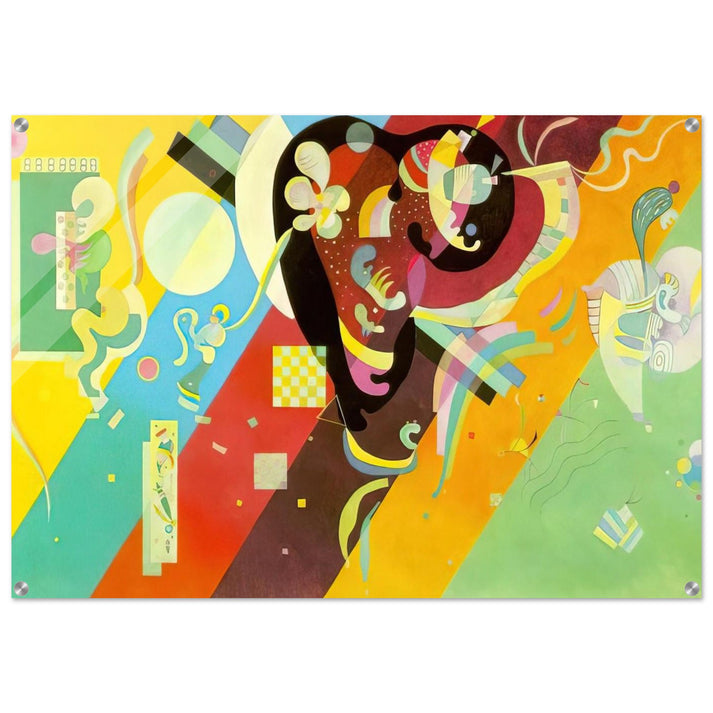
COMPOSITION IX 1936 - Wassily Kandinsky Acrylic Print - 70x100 cm / 28x40″ inches
COMPOSITION IX 1936 - Wassily Kandinsky Acrylic Print - 70x100 cm / 28x40″ inches
Couldn't load pickup availability
Wassily Kandinsky COMPOSITION IX 1936 - Museum-Quality Acrylic Print
Immerse yourself in the vibrant world of Wassily Kandinsky with this exquisite museum-quality reproduction of his seminal 1936 masterpiece, COMPOSITION IX. This iconic work, a cornerstone of abstract art, exemplifies Kandinsky's profound exploration of color, form, and spirituality. Our premium fine art print captures the dynamic energy and intricate detail that define Kandinsky's revolutionary approach to painting, making it a captivating focal point for any discerning collection.
Rendered on a substantial 4mm (0.15") acrylic panel, this artwork offers a sleek, modern aesthetic with exceptional depth and luminosity. The smooth, durable surface enhances the rich, saturated colors and sharp lines of Kandinsky's vision. This archival print features straight-cut corners for a contemporary presentation and is designed for effortless display, complete with a discreet hanging kit.
Wassily Kandinsky, a pioneer of abstract art, believed that colors and forms could evoke spiritual and emotional responses, akin to music. COMPOSITION IX is a testament to this philosophy, showcasing a complex interplay of geometric shapes and organic lines that create a harmonious yet exhilarating visual symphony. Elevate your space with an archival masterpiece that endures, bringing the profound legacy of abstract expressionism into your home or office.
- Artwork: COMPOSITION IX, 1936 by Wassily Kandinsky
- Material: 4mm (0.15") durable acrylic with vibrant, long-lasting colors
- Dimensions: 70x100 cm / 28x40 inches
- Finish: Sleek, modern appearance with straight-cut corners
- Hanging: Includes a comprehensive hanging kit with pre-drilled holes


Discover Unlimited Art Possibilities
At RedKalion, you can find virtually any artwork from any artist, available in a wide range of sizes to perfectly match your space.
If you didn’t find what you’re looking for, contact us at support@redkalion.com . We will source any artwork and produce it in any size and format you need, including art prints, posters, canvas, framed pieces, framed canvas, and more.
For dedicated art enthusiasts, we also offer handcrafted replicas of any artwork, carefully painted by highly skilled artists using traditional techniques.
For custom requests, contact us at support@redkalion.com .
What is COMPOSITION IX by Wassily Kandinsky?
COMPOSITION IX, created in 1936, is a significant abstract artwork by Wassily Kandinsky, celebrated for its complex forms and vibrant color palette, embodying his theories on abstract art and spirituality.
What are the specifications of this acrylic print?
This museum-quality reproduction is printed on 4mm (0.15") thick acrylic, featuring straight-cut corners and vibrant, archival inks for lasting visual impact.
How is this acrylic print displayed?
The print comes with a complete hanging kit, including hardware, screws, and pre-drilled holes for easy and secure wall mounting.
What is the size of this Wassily Kandinsky print?
This fine art print measures 70x100 cm (28x40 inches), providing a substantial and impactful presence for your wall decor.
How long will the colors on this acrylic print last?
Utilizing archival-grade inks and a durable acrylic substrate, this museum-quality print is designed for exceptional longevity and colorfastness.
What is the historical context of COMPOSITION IX?
Created during Kandinsky's period teaching at the Bauhaus, COMPOSITION IX reflects his mature abstract style, influenced by biomorphic forms and his continued exploration of color theory.
What techniques did Kandinsky use in COMPOSITION IX?
Kandinsky employed a meticulous layering of geometric shapes, fluid lines, and a sophisticated color palette to achieve the balanced yet dynamic composition characteristic of his later works.