RedKalion
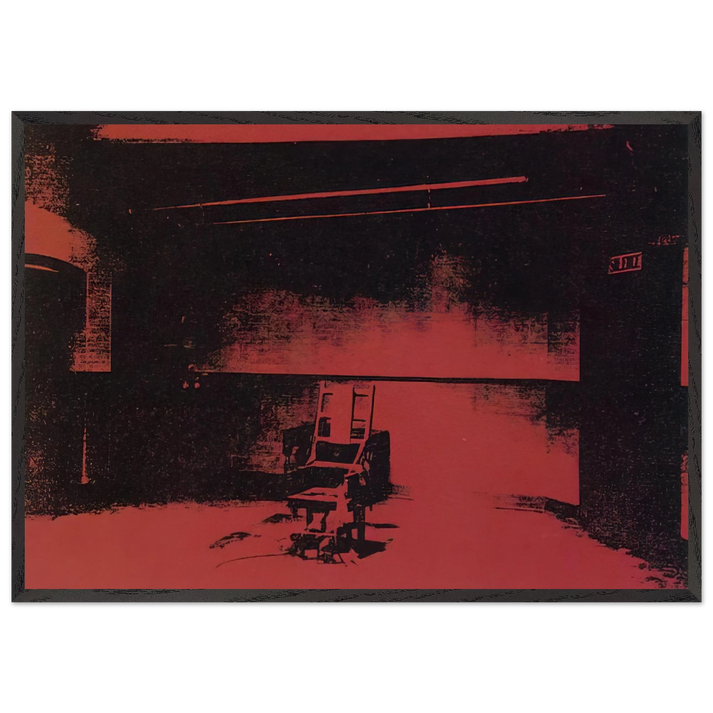
Early electric chair - Andy Warhol 70x100 cm / 28x40 inches Framed Art Print – Black Wooden Frame
Early electric chair - Andy Warhol 70x100 cm / 28x40 inches Framed Art Print – Black Wooden Frame
Couldn't load pickup availability
Andy Warhol "Early Electric Chair" Framed Art Print – Museum-Quality Reproduction
Immerse yourself in the provocative world of Andy Warhol with this museum-quality fine art print of his iconic "Early Electric Chair." This striking piece, part of Warhol's "Death and Disaster" series, challenges perceptions of celebrity and mortality, originally created in 1964. The "Early Electric Chair" print captures the artist's signature silkscreen technique, offering a stark and compelling visual statement.
RedKalion is proud to present this archival masterpiece, meticulously reproduced on heavy, matte, uncoated, natural white archival paper. Weighing 250 gsm (110 lb) with a thickness of 0.29 mm (11.4 mils), this paper is specifically chosen for its ability to faithfully render the bold imagery and somber tones of Warhol's original work. The natural white finish enhances the subtle nuances of the print, ensuring exceptional color accuracy and longevity.
Each "Early Electric Chair" art print is presented in a beautifully crafted frame made from responsibly sourced oak and ash wood. The frame measures a substantial 20mm (0.79") thick and wide, providing a more robust and visually impactful presentation than standard frames. For protection and clarity, the print is encased in shatterproof plexiglass, ensuring its pristine condition for years to come.
This framed art print is delivered ready to hang, complete with a pre-installed hanging kit. Elevate your space with an archival masterpiece that endures, a testament to Andy Warhol's revolutionary impact on Pop Art and contemporary culture. This limited edition print embodies the essence of a true collector's item, bringing a piece of art history into your home.
Product Details:
- Artwork: Early Electric Chair by Andy Warhol
- Print Type: Museum-Quality Fine Art Print
- Paper: 250 gsm (110 lb), 0.29 mm (11.4 mils) thick, matte, uncoated, natural white, archival
- Frame: 20mm (0.79") thick and wide, responsibly sourced oak and ash wood
- Protection: Shatterproof plexiglass
- Features: Ready to hang with included kit, FSC-certified paper

Discover Unlimited Art Possibilities
At RedKalion, you can find virtually any artwork from any artist, available in a wide range of sizes to perfectly match your space.
If you didn’t find what you’re looking for, contact us at support@redkalion.com . We will source any artwork and produce it in any size and format you need, including art prints, posters, canvas, framed pieces, framed canvas, and more.
For dedicated art enthusiasts, we also offer handcrafted replicas of any artwork, carefully painted by highly skilled artists using traditional techniques.
For custom requests, contact us at support@redkalion.com .
What is the artwork "Early Electric Chair" by Andy Warhol?
"Early Electric Chair" is a seminal 1964 artwork by Andy Warhol, part of his "Death and Disaster" series, exploring themes of mortality and media sensationalism through silkscreen technique.
What are the specifications of the museum-quality paper used for this print?
This fine art print utilizes 250 gsm (110 lb) archival, uncoated, natural white matte paper, 0.29 mm (11.4 mils) thick, ensuring exceptional detail and longevity for your artwork.
How is the print protected and framed?
The print is protected by shatterproof plexiglass and housed in a sturdy, 20mm thick frame crafted from responsibly sourced oak and ash wood.
Is the framed print ready to be displayed immediately?
Yes, each framed art print comes with a pre-installed hanging kit, making it ready to hang straight out of the package.
What makes the paper used for this print archival and sustainable?
The paper is archival-grade for longevity and is FSC-certified or equivalent, ensuring it meets strict environmental and forest management standards.
What is the historical context of Andy Warhol's "Early Electric Chair"?
Created during the height of the Pop Art movement, this piece reflects Warhol's fascination with mass media, celebrity, and the detached portrayal of death in American culture.
What is the significance of the silkscreen technique in this artwork?
Warhol's silkscreen method allowed for the repetition and mechanical reproduction of the electric chair image, emphasizing its ubiquity and the desensitization to violence in society.