RedKalion
Gerhard Richter - CANDLES 75x100 cm / 30x40inches Fine Art Poster
Gerhard Richter - CANDLES 75x100 cm / 30x40inches Fine Art Poster
Couldn't load pickup availability
Gerhard Richter - CANDLES: A Masterpiece of Photorealistic Ambiguity
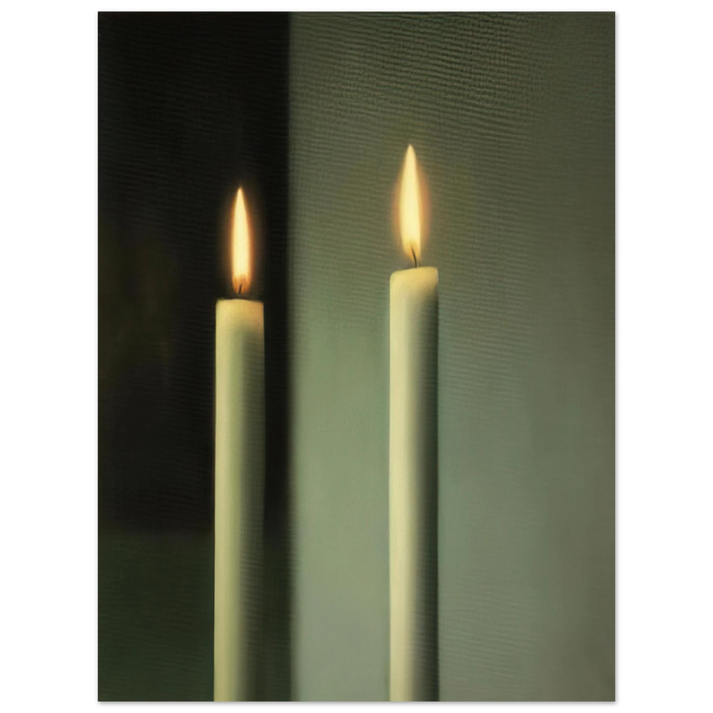
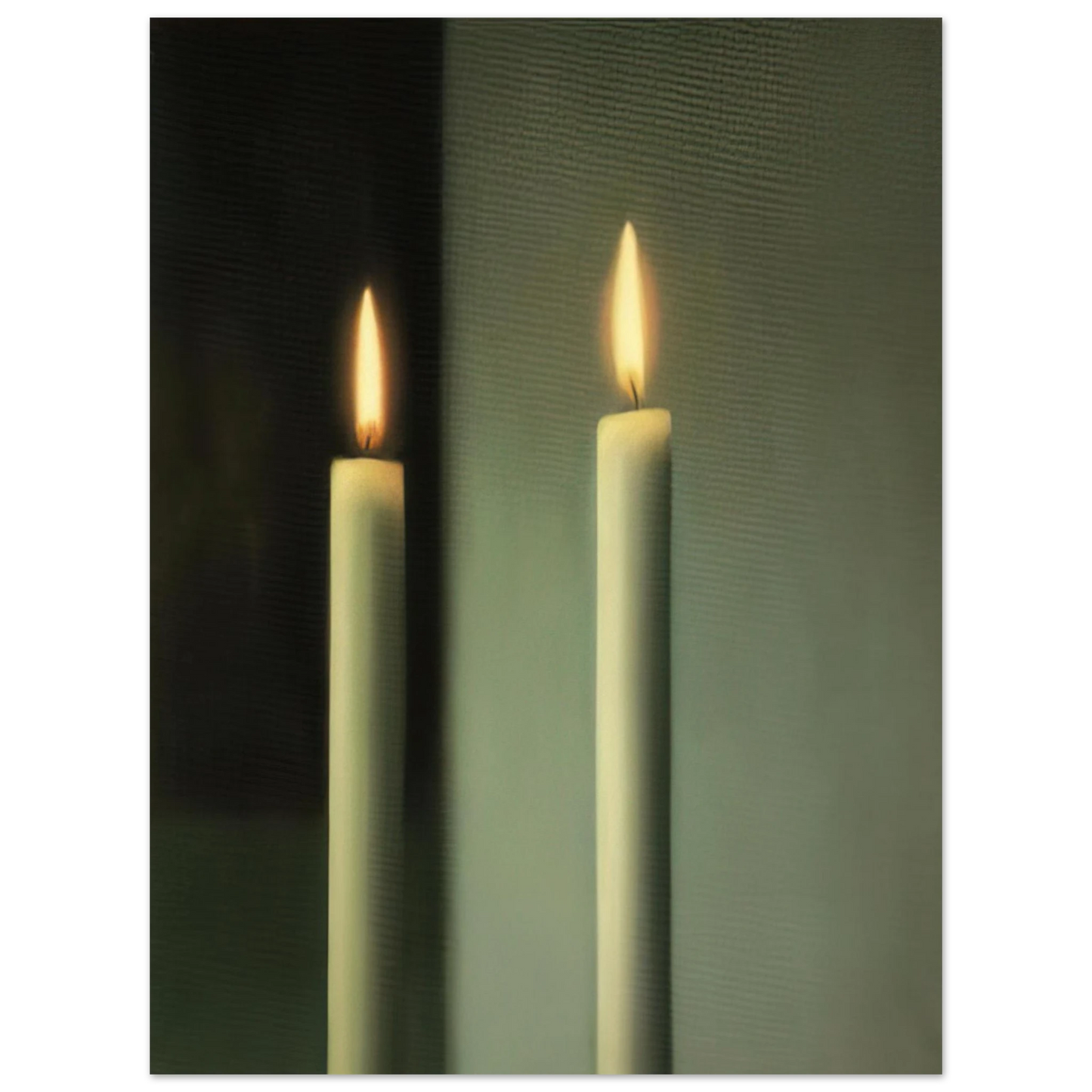
Experience the profound stillness of Gerhard Richter's CANDLES, now available as a museum-quality fine art print from RedKalion. This iconic 1982 work captures the ephemeral glow of candles in Richter's signature blurred photorealistic style, creating a meditative tension between representation and abstraction. Measuring 75x100 cm (30x40 inches), this archival reproduction invites you to explore the artist's fascination with memory, perception, and the sublime in everyday objects.
Richter, a pivotal figure in contemporary art, employed his unique "photo-painting" technique here—layering and smearing oil paint over a photographic base to dissolve hard edges into a hazy, dreamlike atmosphere. This process transforms a simple still life into a philosophical inquiry, where light flickers against darkness and clarity gives way to poetic uncertainty. The candles, rendered with meticulous detail yet soft focus, evoke themes of transience, hope, and introspection, making this piece a timeless addition to any sophisticated interior.
At RedKalion, we honor Richter's vision with an archival-grade reproduction that meets the highest standards of fine art printing. Printed on our exclusive Master's Edition archival paper, this piece features a matte, uncoated finish in a natural white hue, enhancing the artwork's subtle textures and luminous contrasts. The acid-free composition (pH above 7) ensures resistance to yellowing, while the substantial 250 gsm weight (0.29 mm thickness) provides a luxurious, gallery-ready presence. Crafted from FSC-certified sustainable sources, this print reflects our commitment to both artistic integrity and environmental responsibility.
Elevate your space with a museum-quality print that bridges historical significance and modern elegance. Each order is printed and shipped on demand with no minimums, ensuring personalized attention to detail. Trust RedKalion to deliver an heirloom-quality reproduction that captures the enigmatic beauty of Richter's CANDLES for generations to come.
Discover Unlimited Art Possibilities
At RedKalion, you can find virtually any artwork from any artist, available in a wide range of sizes to perfectly match your space.
If you didn’t find what you’re looking for, contact us at support@redkalion.com . We will source any artwork and produce it in any size and format you need, including art prints, posters, canvas, framed pieces, framed canvas, and more.
For dedicated art enthusiasts, we also offer handcrafted replicas of any artwork, carefully painted by highly skilled artists using traditional techniques.
For custom requests, contact us at support@redkalion.com .
What are the dimensions and details of this Gerhard Richter CANDLES fine art print?
This museum-quality reproduction measures 75x100 cm (30x40 inches), featuring Richter's 1982 photorealistic painting of candles with blurred, meditative effects, printed on archival paper for lasting beauty.
What type of paper is used for this archival print?
It uses Master's Edition archival paper, a museum-quality, acid-free (pH above 7) material with a matte, uncoated finish in natural white, weighing 250 gsm (0.29 mm thick) for premium durability.
How is this fine art poster shipped and are there order minimums?
We offer no minimum orders; each print is produced and shipped on demand to ensure fresh, high-quality fulfillment directly to your location.
Will this print resist yellowing over time?
Yes, the acid-free composition (pH above 7) prevents yellowing, making it an archival-grade reproduction designed for long-term display without degradation.
Is the paper environmentally sustainable?
Absolutely, the paper is FSC-certified, reflecting our commitment to sustainability in creating this museum-quality fine art print.
What artistic technique did Gerhard Richter use in CANDLES?
Richter employed his "photo-painting" method, blending oil paint over a photographic base to create blurred, ambiguous forms that explore memory and perception in this 1982 work.
Why are candles a recurring theme in Richter's art?
Candles symbolize transience and light in Richter's oeuvre, often used to evoke philosophical themes of time, hope, and the sublime in everyday still lifes.