
RedKalion
John W. Weeks Footbridge Art Print | Harvard University Bridge at Dusk | RedKalion
John W. Weeks Footbridge Art Print | Harvard University Bridge at Dusk | RedKalion
Couldn't load pickup availability
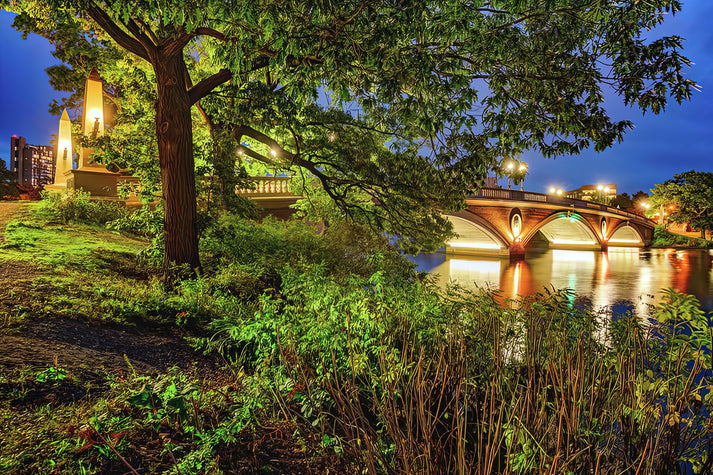
The John W. Weeks Footbridge, an iconic Harvard University landmark, is captured here at dusk in a fine art print. This steel and concrete structure, designed by architect John W. Weeks and completed in 1927, connects Harvard Yard to the Charles River. Its graceful arches and industrial elegance are softened by the evening light, creating a study in contrast between engineering and atmosphere.
John W. Weeks Footbridge: Architectural and Historical Context
Named for the Massachusetts senator who funded it, the bridge exemplifies early 20th-century Beaux-Arts design. Its functional form, with intricate railings and stone abutments, reflects a period when infrastructure was treated as public art. This print highlights the interplay of shadow and structure as daylight fades.
Artistic Details of the Harvard Bridge Print
The composition emphasizes the bridge's linear geometry against a twilight sky. Subtle tonal variations in the print reveal the texture of aged steel and the reflective surface of the river below. It's a nuanced portrayal of a historic site, balancing architectural precision with poetic mood.
Print Specifications & Materials
- Available Sizes: 75×100 cm / 30×40″, 40×50 cm / 16×20″, 21×29.7 cm / 8×12″
- Paper Finishing: Matte, uncoated, natural white (off-white)
- Acid-Free: pH above 7 to prevent yellowing over time
- Paper Weight: 250 gsm (110 lb) | Thickness: 0.29 mm (11.4 mils)
- Sustainable Paper: FSC-certified
This John W. Weeks Footbridge art print from RedKalion offers a museum-quality reproduction, ideal for admirers of Harvard's architectural heritage. Our archival standards ensure it remains a lasting tribute to this engineering landmark.

Discover Unlimited Art Possibilities
At RedKalion, you can find virtually any artwork from any artist, available in a wide range of sizes to perfectly match your space.
If you didn’t find what you’re looking for, contact us at support@redkalion.com . We will source any artwork and produce it in any size and format you need, including art prints, posters, canvas, framed pieces, framed canvas, and more.
For dedicated art enthusiasts, we also offer handcrafted replicas of any artwork, carefully painted by highly skilled artists using traditional techniques.
For custom requests, contact us at support@redkalion.com .
What is the John W. Weeks Footbridge?
The John W. Weeks Footbridge is a historic pedestrian bridge at Harvard University, built in 1927 and named after Senator John W. Weeks. It connects Harvard Yard to the Charles River, featuring Beaux-Arts design with steel arches and stone details.
What paper is used for this fine art print?
We use 250 gsm, FSC-certified, acid-free paper with a matte finish. This premium material ensures color accuracy and prevents yellowing, making it suitable for archival display of the Harvard bridge print.
How is the print shipped and packaged?
Prints are shipped flat in sturdy, protective packaging to prevent damage. We offer global shipping with tracking, and delivery times vary by location for this John W. Weeks Footbridge art.
How long will the print last without fading?
With acid-free paper and archival inks, this print resists fading for decades under normal indoor conditions. Avoid direct sunlight to preserve the dusk tones of the Harvard University bridge scene.
Who designed the John W. Weeks Footbridge?
The bridge was designed by architect John W. Weeks and completed in 1927. It reflects Beaux-Arts influences, combining functional steel construction with elegant architectural details characteristic of its era.
What makes this bridge significant at Harvard?
It's a key pedestrian link and historical landmark, symbolizing early 20th-century infrastructure as public art. The bridge's design integrates with Harvard's campus aesthetics, serving both practical and symbolic roles.