
RedKalion
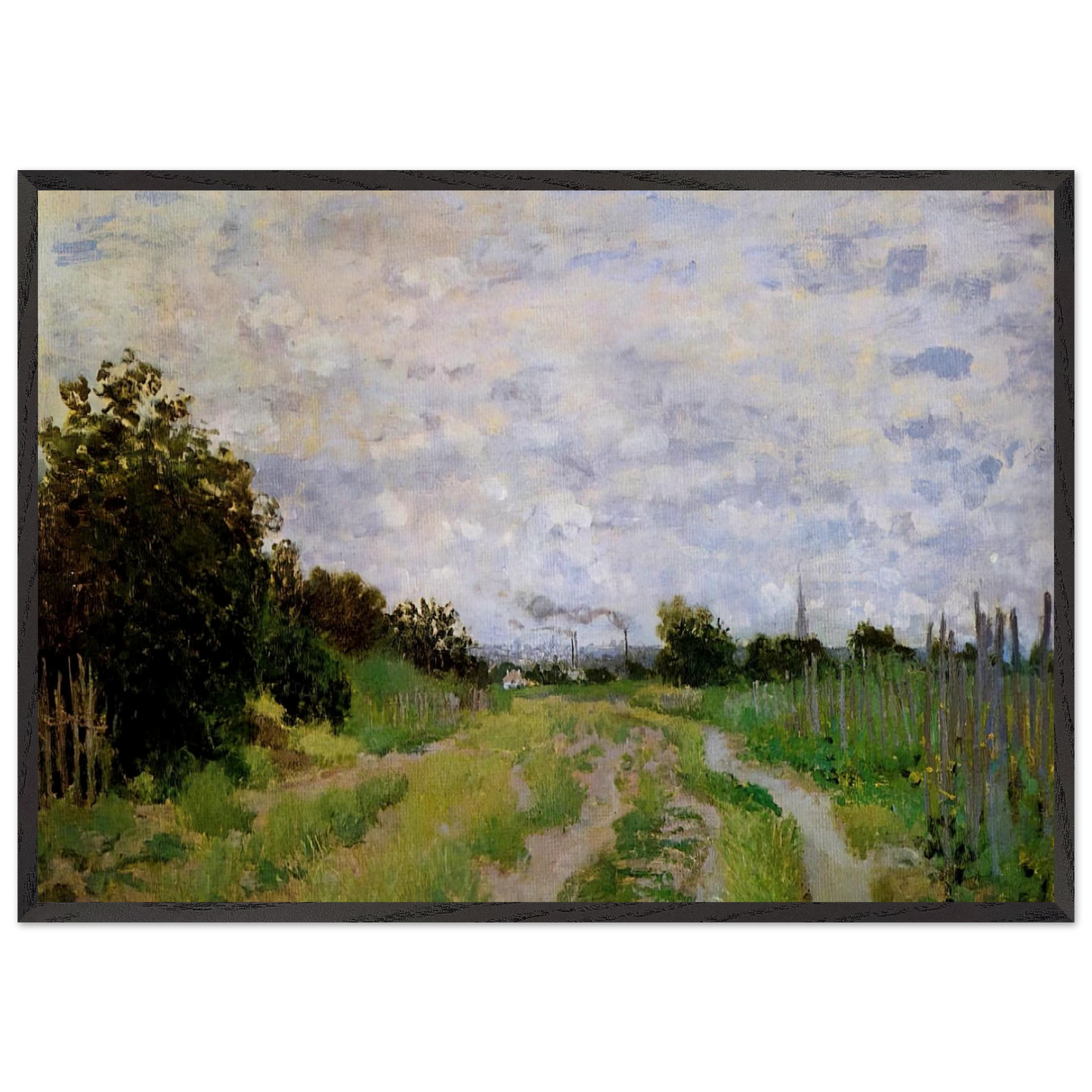
Lane in the Vineyards at Argenteuil - claude monet 70x100 cm / 28x40 inches Framed Art Print – Black Wooden Frame
Lane in the Vineyards at Argenteuil - claude monet 70x100 cm / 28x40 inches Framed Art Print – Black Wooden Frame
Couldn't load pickup availability
Lane in the Vineyards at Argenteuil - Claude Monet
Immerse yourself in the serene beauty of the French countryside with this museum-quality framed art print of Claude Monet's "Lane in the Vineyards at Argenteuil". This masterpiece captures Monet's pioneering Impressionist technique, where dappled sunlight filters through lush vineyards, evoking a tranquil, pastoral mood perfect for elevating any living space, office, or gallery wall.
Painted in 1872 during Monet's formative years in Argenteuil, this work exemplifies his revolutionary approach to light and color. By applying quick, visible brushstrokes, Monet dissolved rigid forms into atmospheric effects, a technique that would define the Impressionist movement. Our archival reproduction faithfully replicates every nuance of his palette, from the vibrant greens of the foliage to the soft blues of the distant sky.
This 70x100 cm / 28x40 inches framed art print arrives ready-to-hang, complete with a hanging kit for immediate display. Encased in a sophisticated black wooden frame crafted from responsibly sourced oak and ash wood, the piece features a substantial 20mm (0.79") thick and wide profile, offering a bold, contemporary presence that enhances its artistic impact. The print is safeguarded by shatterproof plexiglass, ensuring durability without compromising clarity.
Printed on 250 gsm (110 lb) matte, uncoated, natural white archival museum-quality paper with a thickness of 0.29 mm (11.4 mils), this fine art print delivers exceptional color fidelity and texture. The sustainable, FSC-certified materials guarantee both environmental responsibility and longevity, making it a timeless addition to your collection. RedKalion specializes in premium reproductions that honor artistic heritage, providing connoisseurs with archival-grade pieces that endure for generations.
Elevate your decor with an authentic slice of art history—this framed Monet print combines historical significance with RedKalion's uncompromising standards for quality and preservation.
Discover Unlimited Art Possibilities
At RedKalion, you can find virtually any artwork from any artist, available in a wide range of sizes to perfectly match your space.
If you didn’t find what you’re looking for, contact us at support@redkalion.com . We will source any artwork and produce it in any size and format you need, including art prints, posters, canvas, framed pieces, framed canvas, and more.
For dedicated art enthusiasts, we also offer handcrafted replicas of any artwork, carefully painted by highly skilled artists using traditional techniques.
For custom requests, contact us at support@redkalion.com .
What are the dimensions of this framed Monet print?
This framed art print measures 70x100 cm (28x40 inches), including the black wooden frame, which is 20mm (0.79") thick and wide for a bold, contemporary look.
Is the print ready to hang upon arrival?
Yes, it includes a hanging kit and is ready-to-hang directly on your wall, making installation quick and effortless for your fine art display.
What type of paper is used for this museum-quality reproduction?
We use 250 gsm (110 lb) matte, uncoated, natural white archival museum-quality paper, 0.29 mm (11.4 mils) thick, ensuring vibrant color and durability for your art print.
How is the print protected within the frame?
The print is safeguarded by shatterproof plexiglass, offering clear protection against damage while maintaining the artwork's visual integrity in your framed piece.
Are the materials sustainable and archival-grade?
Yes, the paper is FSC-certified or equivalent, and all materials are archival-grade, designed for long-term preservation of your Monet reproduction.
What is the historical significance of 'Lane in the Vineyards at Argenteuil'?
Painted in 1872, this work showcases Monet's early Impressionist style in Argenteuil, using quick brushstrokes to capture light and atmosphere, pivotal to the movement's development.
Why did Monet choose Argenteuil as a subject for this painting?
Argenteuil offered Monet a peaceful rural setting near Paris, allowing him to explore plein air painting and natural light effects central to his Impressionist technique.