RedKalion
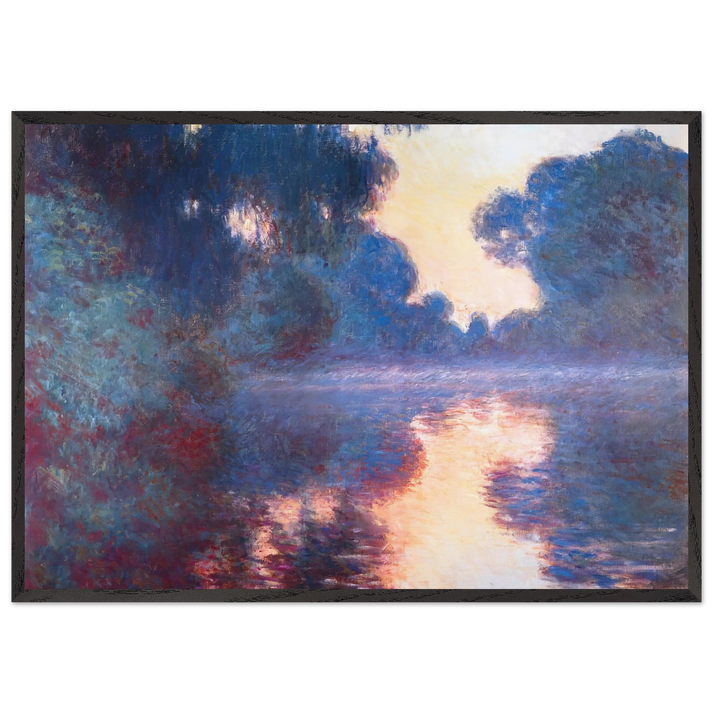
Misty Morning on the Seine in Bue - claude monet 70x100 cm / 28x40 inches Framed Art Print – Black Wooden Frame
Misty Morning on the Seine in Bue - claude monet 70x100 cm / 28x40 inches Framed Art Print – Black Wooden Frame
Couldn't load pickup availability
Misty Morning on the Seine in Bue - Claude Monet
Immerse yourself in the serene beauty of Claude Monet's "Misty Morning on the Seine in Bue," a quintessential Impressionist masterpiece now available as a museum-quality art print from RedKalion. This evocative scene captures the tranquil Seine River at dawn, enveloped in a delicate haze that blurs the boundaries between water, sky, and land—a hallmark of Monet's revolutionary technique. Painted during his later years in Giverny, this work exemplifies his lifelong pursuit of capturing fleeting atmospheric effects and natural light, making it a timeless addition to any art collection.
Our archival-grade reproduction ensures every brushstroke and subtle color gradient is faithfully preserved, printed on premium 250 gsm (110 lb) matte, uncoated paper with a natural white finish. This FSC-certified sustainable paper offers exceptional durability and a tactile, gallery-like feel. The print is elegantly framed in a responsibly sourced black wooden frame made from oak and ash wood, measuring 20mm (0.79") thick and wide for a substantial, modern presence. Complete with shatterproof plexiglass protection and a ready-to-hang kit, this 70x100 cm / 28x40 inches framed art print arrives fully assembled, allowing you to elevate your space with a piece of art history that endures.
At RedKalion, we curate only the finest fine art prints, combining expert craftsmanship with meticulous attention to detail. This Monet reproduction not only honors the artist's legacy but also provides an heirloom-quality piece designed to inspire for generations. Discover the magic of Impressionism and transform your home or office with this iconic work.

Discover Unlimited Art Possibilities
At RedKalion, you can find virtually any artwork from any artist, available in a wide range of sizes to perfectly match your space.
If you didn’t find what you’re looking for, contact us at support@redkalion.com . We will source any artwork and produce it in any size and format you need, including art prints, posters, canvas, framed pieces, framed canvas, and more.
For dedicated art enthusiasts, we also offer handcrafted replicas of any artwork, carefully painted by highly skilled artists using traditional techniques.
For custom requests, contact us at support@redkalion.com .
What are the dimensions of this Claude Monet framed print?
This fine art print measures 70x100 cm (28x40 inches) and comes in a black wooden frame that is 20mm (0.79") thick and wide, providing a substantial, ready-to-hang display for your wall.
What type of paper is used for this museum-quality reproduction?
We use archival museum-quality paper that is 250 gsm (110 lb) in weight, 0.29 mm (11.4 mils) thick, with a matte, uncoated, natural white finish and FSC-certified sustainable materials for long-lasting beauty.
Is this framed print ready to hang upon delivery?
Yes, this Monet art print includes a hanging kit and is fully assembled with shatterproof plexiglass, making it ready to hang directly on your wall for immediate enjoyment.
How durable is the frame and protection for this art print?
The frame is made from responsibly sourced oak and ash wood, 20mm thick, and features shatterproof plexiglass to protect your Impressionist masterpiece from damage and UV light.
What makes this Monet reproduction archival and long-lasting?
This print uses archival-grade, FSC-certified paper and high-quality inks, ensuring it resists fading and degradation, making it a durable fine art print for generations.
What is the historical significance of "Misty Morning on the Seine in Bue"?
Painted by Claude Monet in his later years, this work showcases his Impressionist focus on capturing atmospheric effects and light on the Seine River, reflecting his mastery of serene, misty landscapes.
How does Monet's technique in this painting differ from his earlier works?
In this piece, Monet uses softer brushstrokes and a hazy palette to evoke tranquility, demonstrating his evolution toward more abstract and mood-driven compositions in his later career.