

RedKalion
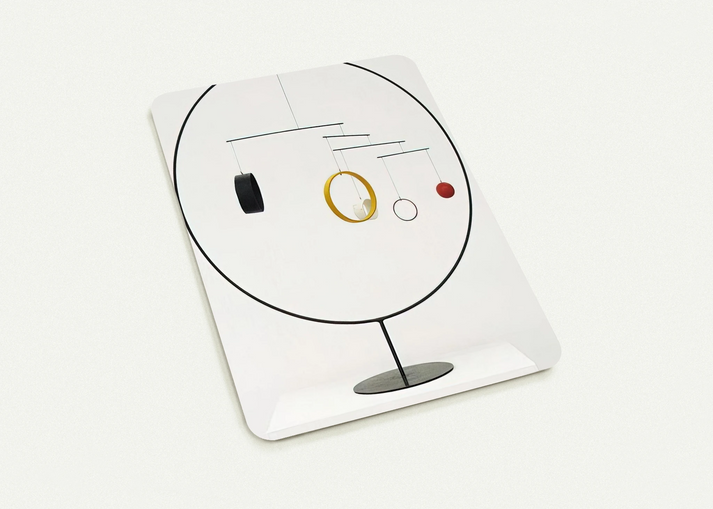
MOBILE 1934 By Alexander Calder Pack of 10 Post Cards | Alexander Calder Post Cards | A6 (10.5 x 14.8 cm) - 4.1 x 5.8 inches
MOBILE 1934 By Alexander Calder Pack of 10 Post Cards | Alexander Calder Post Cards | A6 (10.5 x 14.8 cm) - 4.1 x 5.8 inches
Couldn't load pickup availability
MOBILE 1934 By Alexander Calder: A Pack of 10 Post Cards
Introducing a unique collection of post cards featuring Alexander Calder's iconic MOBILE 1934, a pioneering work that redefined modern sculpture and kinetic art. This pack of 10 flat post cards captures the playful abstraction and dynamic balance of Calder's original mobile, offering a portable piece of art history perfect for any occasion—from personal correspondence to creative displays.
Each post card in this set is a museum-quality reproduction, printed with our advanced 12-color fine art printing technology to ensure vivid, accurate colors with stunning depth, far surpassing standard 4-color inkjet prints. The smooth matte finish provides a clean, glare-free display, while the 200 gsm (80 lb) FSC-certified paper ensures durability and an eco-friendly touch. Measuring A6 (10.5 x 14.8 cm or 4.1 x 5.8 inches), these post cards are versatile for framing, collecting, or sharing as thoughtful gifts.
At RedKalion, we specialize in archival-grade reproductions that honor the artist's vision. Calder's MOBILE 1934 marked a breakthrough in kinetic sculpture, using suspended shapes to explore movement and space—a testament to his innovative spirit. Elevate your correspondence or decor with this curated set, printed on demand with no minimum orders, and experience the enduring charm of Calder's artistry in a practical, high-quality format.


Discover Unlimited Art Possibilities
At RedKalion, you can find virtually any artwork from any artist, available in a wide range of sizes to perfectly match your space.
If you didn’t find what you’re looking for, contact us at support@redkalion.com . We will source any artwork and produce it in any size and format you need, including art prints, posters, canvas, framed pieces, framed canvas, and more.
For dedicated art enthusiasts, we also offer handcrafted replicas of any artwork, carefully painted by highly skilled artists using traditional techniques.
For custom requests, contact us at support@redkalion.com .
What is MOBILE 1934 by Alexander Calder?
MOBILE 1934 is a pioneering kinetic sculpture by Alexander Calder, known for its abstract, suspended shapes that move with air currents, redefining modern art with playful balance and innovation.
What are the specifications of these post cards?
Each post card is A6 size (10.5 x 14.8 cm or 4.1 x 5.8 inches), printed on 200 gsm FSC-certified paper with a smooth matte finish, using 12-color fine art printing for vibrant, museum-quality reproduction.
How is the color quality ensured in these fine art prints?
Our 12-color fine art printing technology delivers vivid, accurate colors with stunning depth, far beyond standard 4-color inkjet printing, ensuring a premium archival-grade reproduction for your post cards.
Are these post cards eco-friendly and durable?
Yes, they are printed on environmentally conscious, FSC-certified paper with a weight of 200 gsm (80 lb) and thickness of 0.26 mm (10.3 mils), offering durability for long-lasting use.
What is the shipping and ordering process for this pack?
These post cards are printed on demand with no minimum orders, ensuring fast, efficient shipping and a personalized experience for your art collection or gifting needs.
Why is MOBILE 1934 significant in art history?
MOBILE 1934 is significant as it introduced the term 'mobile' to kinetic sculpture, showcasing Calder's innovative use of abstract forms and movement to explore spatial relationships in modern art.
How does Calder's technique influence the design of these post cards?
Calder's technique of balancing abstract shapes is captured in the vibrant colors and dynamic composition of these post cards, reflecting his mastery of form and motion in a portable format.