
RedKalion
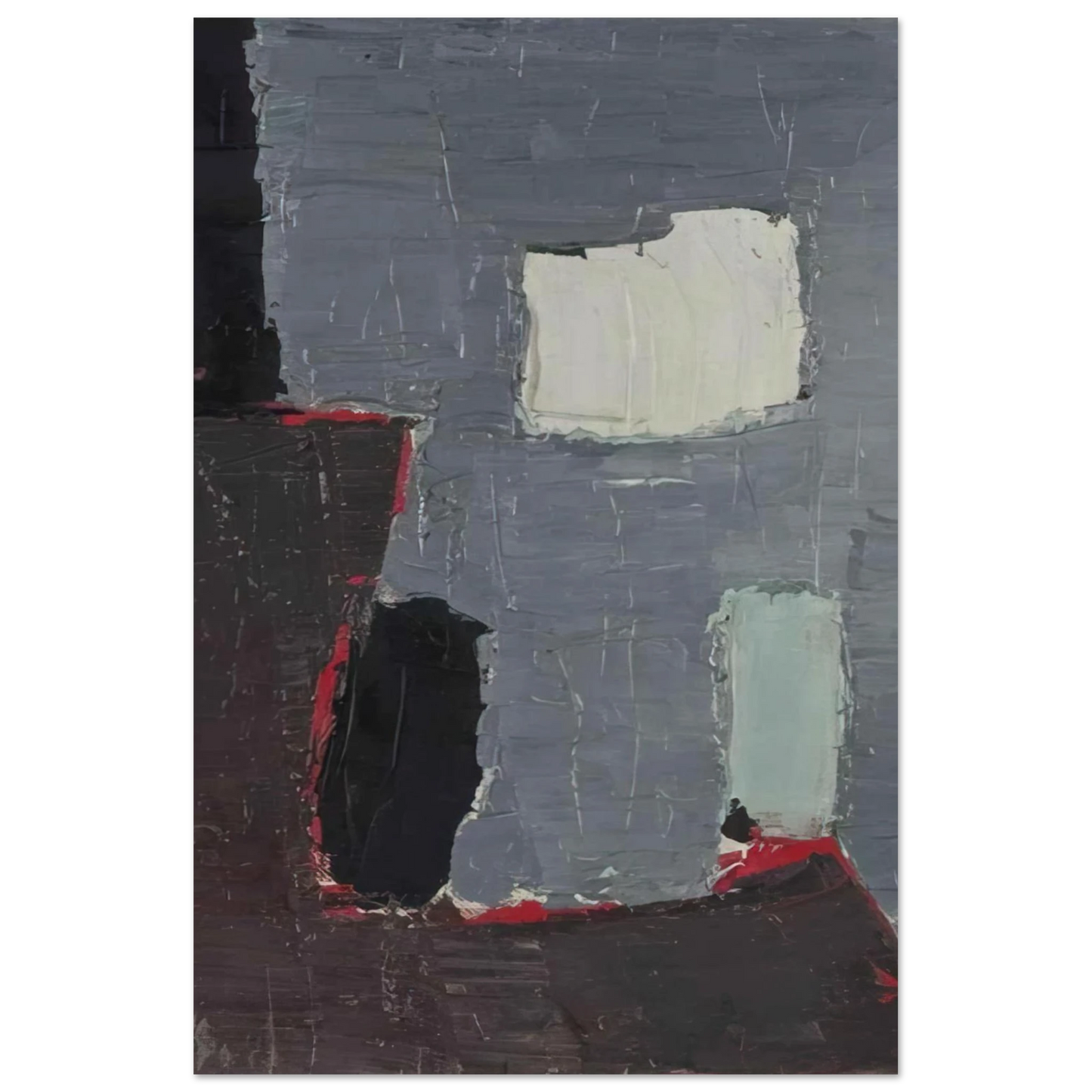
Nicolas de Stael - Composition - 1950 Fine Art Poster
Nicolas de Stael - Composition - 1950 Fine Art Poster
Couldn't load pickup availability
Nicolas de Staël - Composition (1950) - Museum-Quality Fine Art Print
Immerse yourself in the dynamic abstraction of Nicolas de Staël's "Composition" (1950), a pivotal work from the artist's post-war period. This fine art poster captures the raw energy and textured impasto that defined de Staël's unique style, blending geometric forms with expressive color fields. As a leading figure in the École de Paris, de Staël masterfully balanced abstraction and figuration, creating works that evoke profound emotional resonance through bold, tactile surfaces.
RedKalion presents this museum-quality reproduction on our exclusive Master's Edition archival paper, ensuring every nuanced brushstroke and chromatic intensity is preserved. The matte, uncoated finish in a natural white hue enhances the artwork's luxurious texture, mirroring the original's visceral impact. Printed on FSC-certified, acid-free paper (pH above 7), this 250 gsm (110 lb), 0.29 mm (11.4 mils) thick print is designed for archival longevity, resisting yellowing over decades.
Art Historical Insight: De Staël's technique in "Composition" involved layering thick oil paint with a palette knife, creating a sculptural quality that challenged traditional painting methods. This 1950 piece reflects his transition towards pure abstraction, influenced by his encounters with artists like Georges Braque and his own experiments with light and form.
Elevate your space with an archival masterpiece that endures, printed and shipped on demand with no minimum orders. Trust RedKalion as your curator of world-class reproductions, where expertise meets unparalleled craftsmanship.


Discover Unlimited Art Possibilities
At RedKalion, you can find virtually any artwork from any artist, available in a wide range of sizes to perfectly match your space.
If you didn’t find what you’re looking for, contact us at support@redkalion.com . We will source any artwork and produce it in any size and format you need, including art prints, posters, canvas, framed pieces, framed canvas, and more.
For dedicated art enthusiasts, we also offer handcrafted replicas of any artwork, carefully painted by highly skilled artists using traditional techniques.
For custom requests, contact us at support@redkalion.com .
What are the dimensions and details of this Nicolas de Staël fine art print?
This museum-quality reproduction of "Composition" (1950) is available in standard sizes, capturing de Staël's bold abstraction on archival paper. Contact us for custom sizing options to fit your space perfectly.
What type of paper is used for this museum-quality poster?
It's printed on Master's Edition archival paper, featuring a matte, uncoated finish in natural white for a luxurious texture. This acid-free, FSC-certified paper ensures long-lasting vibrancy.
How is this fine art print shipped and packaged?
We print and ship on demand with no minimum orders, using protective packaging to prevent damage. Delivery times vary by location, with tracking provided for all orders.
How long will this archival reproduction last without fading?
Our acid-free paper (pH above 7) and high-quality inks resist yellowing and fading, ensuring this Nicolas de Staël print remains vibrant for decades under proper display conditions.
Can I frame this poster, and what are the framing recommendations?
Yes, its 250 gsm weight and 0.29 mm thickness make it ideal for framing. We recommend UV-protective glass and acid-free mats to preserve this museum-quality artwork.
What artistic movement is Nicolas de Staël associated with?
De Staël was a key figure in the post-war École de Paris, known for blending abstraction and figuration. His work in "Composition" reflects influences from Tachism and Lyrical Abstraction.
What techniques did de Staël use in "Composition" (1950)?
He employed thick impasto with a palette knife, creating textured layers that give the painting a sculptural quality. This technique emphasizes light and form in his abstract compositions.