
RedKalion
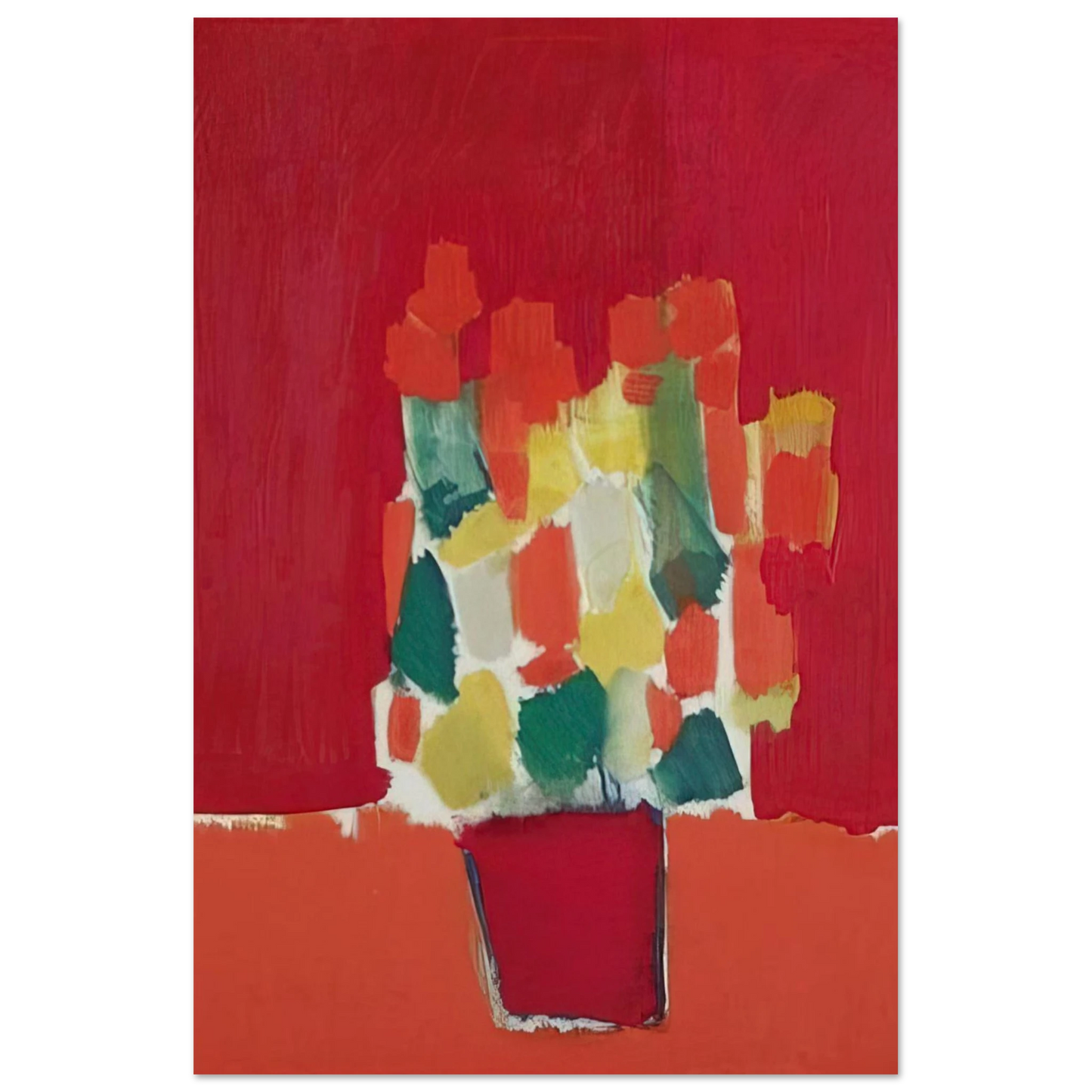
Nicolas de Stael - Fleurs rouges - 1952 Fine Art Poster
Nicolas de Stael - Fleurs rouges - 1952 Fine Art Poster
Couldn't load pickup availability
Nicolas de Staël - Fleurs rouges (1952) Fine Art Poster
Immerse yourself in the vibrant abstraction of Nicolas de Staël's "Fleurs rouges" (Red Flowers), a 1952 masterpiece that captures the raw energy of post-war European art. This museum-quality fine art print reproduces de Staël's bold, impasto technique—where thick layers of paint create a textured, almost sculptural surface—evoking the dynamic interplay between color and form. The composition, with its fiery red blooms set against a muted background, reflects the artist's transition from figurative to abstract expressionism, offering a timeless statement of emotional intensity and modernist innovation.
RedKalion presents this archival-grade reproduction on our exclusive Master's Edition archival paper, ensuring every brushstroke is rendered with precision. The matte, uncoated finish and natural white (off-white) hue provide a luxurious texture that mimics the original canvas, while the 250 gsm (110 lb) weight and 0.29 mm (11.4 mils) thickness deliver a substantial, gallery-ready feel. Crafted from FSC-certified, acid-free materials (pH above 7), this print resists yellowing and degradation, preserving its vivid colors for generations. Printed and shipped on demand with no minimum orders, it offers a seamless way to elevate your space with a piece of art history.
- Paper: Master's Edition archival paper, museum-quality.
- Finish: Matte, uncoated, natural white (off-white) for a luxurious texture.
- Longevity: Acid-free (pH above 7) to prevent yellowing over time.
- Weight & Thickness: 250 gsm (110 lb), Thickness: 0.29 mm (11.4 mils).
- Sustainability: FSC-certified paper.
- Fulfillment: No minimum orders, printed and shipped on demand.
Elevate your home or office with this archival masterpiece from RedKalion, where expertise in art curation meets premium reproduction standards. Trust in our commitment to quality and authenticity to bring a touch of mid-century brilliance into your daily life.


Discover Unlimited Art Possibilities
At RedKalion, you can find virtually any artwork from any artist, available in a wide range of sizes to perfectly match your space.
If you didn’t find what you’re looking for, contact us at support@redkalion.com . We will source any artwork and produce it in any size and format you need, including art prints, posters, canvas, framed pieces, framed canvas, and more.
For dedicated art enthusiasts, we also offer handcrafted replicas of any artwork, carefully painted by highly skilled artists using traditional techniques.
For custom requests, contact us at support@redkalion.com .
What is the significance of Nicolas de Staël's "Fleurs rouges" from 1952?
"Fleurs rouges" is a key work from de Staël's abstract period, showcasing his impasto technique and emotional use of color to bridge figurative and modernist styles in post-war art.
How does the Master's Edition archival paper enhance this fine art print?
Our museum-quality paper features a matte, uncoated finish and natural white hue, replicating the original texture while ensuring archival longevity with acid-free, FSC-certified materials.
What are the specifications for paper weight and thickness?
The print uses 250 gsm (110 lb) paper with a 0.29 mm (11.4 mils) thickness, providing a durable, premium feel suitable for framing and display.
How is this print shipped and are there minimum orders?
We offer on-demand printing and shipping with no minimum orders, ensuring fast fulfillment and reducing waste for a sustainable art purchase.
Will this archival print resist yellowing over time?
Yes, the acid-free paper (pH above 7) prevents yellowing, preserving the vibrant colors of this Nicolas de Staël reproduction for decades.
What artistic techniques did de Staël use in "Fleurs rouges"?
De Staël employed thick impasto layers and bold red hues to create a textured, abstract composition that conveys emotional depth and modernist innovation.
How does this print reflect de Staël's transition in style?
This 1952 work marks his shift from figurative to abstract expressionism, using floral motifs to explore form and color in a dynamic, post-war context.