RedKalion
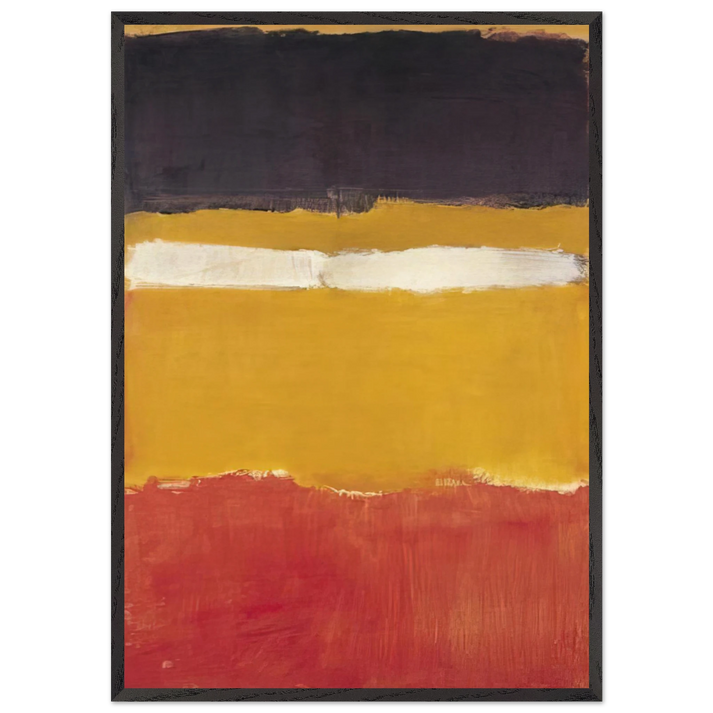
Number 24 Untitled - 1951 - Mark Rothko 70x100 cm / 28x40 inches Framed Art Print – Black Wooden Frame
Number 24 Untitled - 1951 - Mark Rothko 70x100 cm / 28x40 inches Framed Art Print – Black Wooden Frame
Couldn't load pickup availability
Number 24 Untitled - 1951 by Mark Rothko
Immerse yourself in the profound emotional resonance of Mark Rothko's Number 24 Untitled - 1951, a quintessential example of his iconic Color Field paintings. This museum-quality reproduction captures the subtle gradations of color and ethereal luminosity that define Rothko's mature style, where floating rectangular forms evoke introspection, spirituality, and sublime contemplation. Created during a pivotal period in his career, this work exemplifies his mastery in using color as a direct conduit to human emotion, inviting viewers into a meditative space.
RedKalion presents this archival masterpiece as a framed art print, meticulously crafted to honor Rothko's vision. The print is produced on 250 gsm (110 lb) matte, uncoated, natural white archival museum-quality paper with a thickness of 0.29 mm (11.4 mils), ensuring exceptional durability and color fidelity. It is protected by shatterproof plexiglass and elegantly framed in a black wooden frame made from responsibly sourced oak and ash wood, measuring 20mm (0.79") thick and wide for a bold, contemporary presence. This 70x100 cm / 28x40 inches piece arrives ready-to-hang with a hanging kit included, allowing you to elevate your space with a timeless work that endures.
Art Historical Insight: Rothko's technique involved layering thin washes of pigment to create luminous, vibrating color fields that seem to hover on the canvas. His 1950s works, like this one, moved away from figurative elements to pure abstraction, aiming to evoke universal human experiences through color alone—a revolutionary approach that cemented his legacy in modern art.

Discover Unlimited Art Possibilities
At RedKalion, you can find virtually any artwork from any artist, available in a wide range of sizes to perfectly match your space.
If you didn’t find what you’re looking for, contact us at support@redkalion.com . We will source any artwork and produce it in any size and format you need, including art prints, posters, canvas, framed pieces, framed canvas, and more.
For dedicated art enthusiasts, we also offer handcrafted replicas of any artwork, carefully painted by highly skilled artists using traditional techniques.
For custom requests, contact us at support@redkalion.com .
What are the dimensions of this Mark Rothko framed art print?
The print measures 70x100 cm (28x40 inches) and is framed in a black wooden frame that is 20mm (0.79") thick and wide, providing a bold, contemporary look for your wall decor.
What type of paper is used for this fine art reproduction?
We use 250 gsm (110 lb) matte, uncoated, natural white archival museum-quality paper with a thickness of 0.29 mm (11.4 mils), ideal for capturing Rothko's subtle color gradations in a durable print.
Is this framed print ready to hang?
Yes, this ready-to-hang framed art print includes a hanging kit, so you can display it directly on your wall without any additional setup.
How does the frame protect the print?
The frame features shatterproof plexiglass to safeguard the print from damage, and it is made from responsibly sourced oak and ash wood for a sustainable, high-quality finish.
Is the paper environmentally friendly?
Yes, the paper is FSC-certified or equivalent, ensuring sustainable materials are used in this archival museum-quality reproduction.
What is the historical significance of Mark Rothko's Number 24 Untitled - 1951?
This work is a key example of Rothko's Color Field paintings from the 1950s, where he used floating rectangular forms and layered colors to evoke deep emotional and spiritual responses, marking a shift toward pure abstraction in modern art.
How does Rothko's technique influence the appearance of this print?
Rothko's technique involved thin washes of pigment to create luminous, vibrating color fields; our reproduction captures these subtle gradations on matte archival paper to maintain the ethereal quality of the original.