
RedKalion
Pass Go Collect 200 Dollars Vintage Monopoly Board Game Card Art Print | RedKalion
Pass Go Collect 200 Dollars Vintage Monopoly Board Game Card Art Print | RedKalion
Couldn't load pickup availability
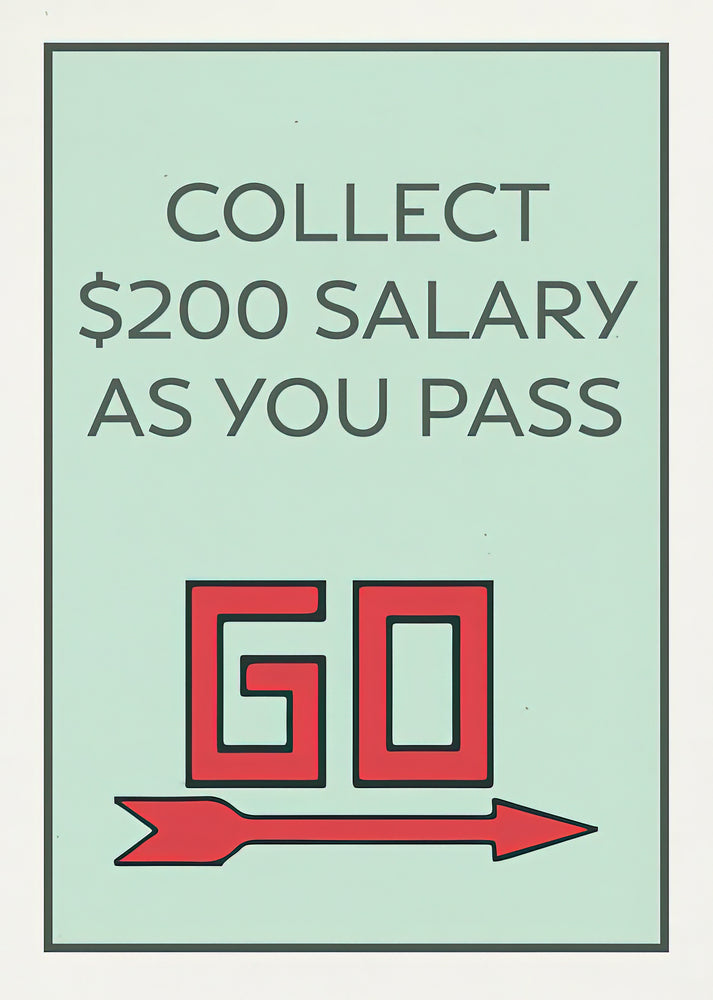
This vintage Monopoly board game card, featuring the iconic 'Pass Go Collect $200' instruction, is a piece of 20th-century American pop culture history. Created by Parker Brothers in the 1930s, the design reflects the Art Deco and Streamline Moderne influences of the era, with its bold typography, geometric border, and symbolic color palette of red, yellow, and black evoking themes of capitalism and chance.
Artistic Analysis of the Pass Go Collect Card
The card's minimalist aesthetic prioritizes legibility and function, mirroring the game's focus on strategy and luck. Its design has become a cultural touchstone, representing both the thrill of economic gain and the nostalgia of family game nights. This print captures every detail, from the crisp lettering to the subtle aging of the original artifact.
Vintage Monopoly Board Game Theme in Home Decor
Ideal for game rooms, offices, or eclectic interiors, this art print adds a playful, nostalgic accent. It sparks conversation about design history and shared cultural memories. RedKalion's reproduction ensures museum-quality fidelity, allowing you to display this iconic piece with the respect it deserves.
Print Specifications & Materials
- Available Sizes: 75×100 cm / 30×40″, 40×50 cm / 16×20″, 21×29.7 cm / 8×12″
- Paper Finishing: Matte, uncoated, natural white (off-white)
- Acid-Free: pH above 7 to prevent yellowing over time
- Paper Weight: 250 gsm (110 lb) | Thickness: 0.29 mm (11.4 mils)
- Sustainable Paper: FSC-certified
Own a piece of gaming history with this premium art print from RedKalion, where expert curation meets archival quality.

Discover Unlimited Art Possibilities
At RedKalion, you can find virtually any artwork from any artist, available in a wide range of sizes to perfectly match your space.
If you didn’t find what you’re looking for, contact us at support@redkalion.com . We will source any artwork and produce it in any size and format you need, including art prints, posters, canvas, framed pieces, framed canvas, and more.
For dedicated art enthusiasts, we also offer handcrafted replicas of any artwork, carefully painted by highly skilled artists using traditional techniques.
For custom requests, contact us at support@redkalion.com .
What is the historical context of this Pass Go Collect 200 Dollars card?
This card originates from the classic Monopoly board game, first published by Parker Brothers in 1935. Its design reflects 1930s American graphic style, symbolizing economic themes of the Great Depression era.
What are the exact dimensions available for this Monopoly art print?
Available in 75×100 cm (30×40″), 40×50 cm (16×20″), and 21×29.7 cm (8×12″) to suit various display spaces, from statement walls to desktop accents.
Is the paper used for this vintage game card print archival quality?
Yes, it uses 250 gsm FSC-certified acid-free paper with a pH above 7, ensuring long-term color stability and resistance to yellowing for decades.
How is this Pass Go Collect print shipped to prevent damage?
Prints are carefully rolled in a protective tube with reinforced ends and shipped via tracked courier, with global delivery options available.
Can I frame this Monopoly board game theme print easily?
Yes, the standard sizes match common frame options. The matte, uncoated paper reduces glare and is ideal for framing under glass or acrylic.
Why does the card use red, yellow, and black colors?
The color palette draws from early 20th-century printing techniques and symbolic design: red for urgency, yellow for wealth, and black for formality, enhancing the card's iconic status.
How does this design compare to modern Monopoly versions?
This print replicates the original vintage design, which features simpler typography and a more geometric border than later editions, preserving its historical authenticity.