RedKalion
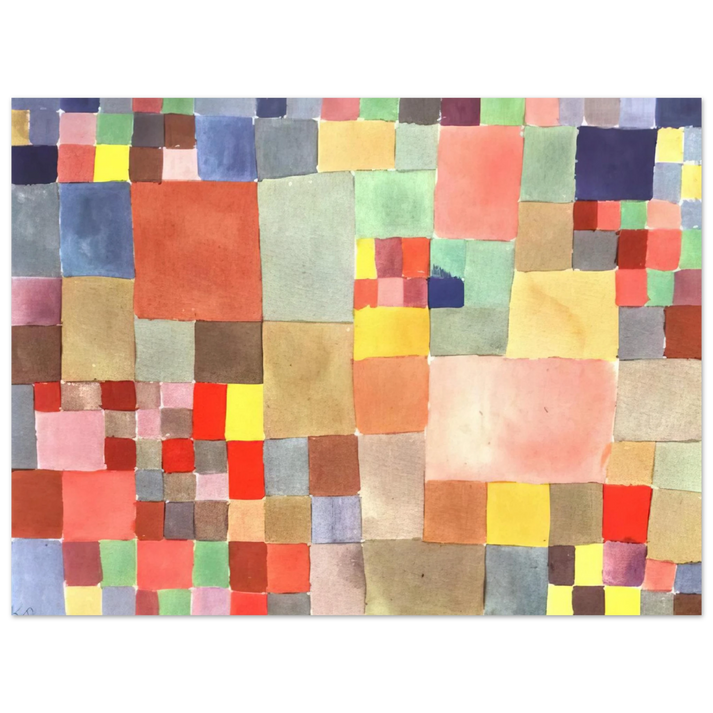
Paul Klee - FLORA ON SAND 1927 75x100 cm / 30x40inches Fine Art Poster
Paul Klee - FLORA ON SAND 1927 75x100 cm / 30x40inches Fine Art Poster
Couldn't load pickup availability
Paul Klee - FLORA ON SAND 1927: A Masterpiece of Modernist Abstraction
Immerse yourself in the whimsical world of Paul Klee with this museum-quality fine art print of "Flora on Sand" (1927). This iconic work, measuring 75x100 cm (30x40 inches), captures Klee's unique blend of surrealism, cubism, and expressionism, offering a vibrant testament to his innovative vision during the Bauhaus era. The composition features abstract floral forms set against a textured sandy backdrop, evoking a dreamlike, organic harmony that invites contemplation and sparks imagination.
RedKalion presents this archival reproduction on our exclusive Master's Edition archival paper, ensuring every delicate line and subtle hue of Klee's original is preserved with impeccable fidelity. The matte, uncoated finish in a natural white (off-white) shade provides a luxurious texture that enhances the artwork's tactile appeal, while the acid-free (pH above 7) composition guarantees it remains vibrant and resistant to yellowing for generations. Crafted from FSC-certified paper with a substantial 250 gsm (110 lb) weight and 0.29 mm (11.4 mils) thickness, this print embodies both sustainability and durability, making it a sophisticated addition to any art collection.
Elevate your space with an archival masterpiece that endures, printed and shipped on demand with no minimum orders, exclusively through RedKalion—your trusted curator of premium fine art prints.

Discover Unlimited Art Possibilities
At RedKalion, you can find virtually any artwork from any artist, available in a wide range of sizes to perfectly match your space.
If you didn’t find what you’re looking for, contact us at support@redkalion.com . We will source any artwork and produce it in any size and format you need, including art prints, posters, canvas, framed pieces, framed canvas, and more.
For dedicated art enthusiasts, we also offer handcrafted replicas of any artwork, carefully painted by highly skilled artists using traditional techniques.
For custom requests, contact us at support@redkalion.com .
What are the dimensions of this Paul Klee fine art print?
This museum-quality reproduction measures 75x100 cm (30x40 inches), perfectly capturing the original scale of Klee's "Flora on Sand" for an impactful display in your home or office.
What type of paper is used for this archival print?
It's printed on Master's Edition archival paper, a museum-quality, acid-free (pH above 7) material that ensures longevity and prevents yellowing over time, ideal for preserving fine art.
How is this print shipped and are there minimum orders?
We offer on-demand printing and shipping with no minimum orders, allowing you to receive this Paul Klee poster quickly and conveniently, ready to frame and enjoy.
What is the finish and weight of this art print?
It features a matte, uncoated finish on natural white (off-white) paper with a luxurious texture, weighing 250 gsm (110 lb) and 0.29 mm (11.4 mils) thick for a premium feel.
Is this print environmentally sustainable?
Yes, it uses FSC-certified paper, supporting responsible forestry and making this Paul Klee reproduction an eco-friendly choice for art enthusiasts.
What artistic style does "Flora on Sand" represent?
"Flora on Sand" exemplifies Paul Klee's modernist style, blending surrealism, cubism, and expressionism with abstract floral forms to create a dreamlike, organic composition from 1927.
Why is Paul Klee's work from 1927 significant?
Created during Klee's Bauhaus period, this piece reflects his exploration of color theory and abstraction, marking a key moment in early 20th-century art history that influences modern art today.