RedKalion
Potassium Flame Color Art Print | Scientific Illustration Fine Art Print | RedKalion
Potassium Flame Color Art Print | Scientific Illustration Fine Art Print | RedKalion
Couldn't load pickup availability
The potassium flame color, a vibrant lilac or pale violet, is a hallmark of analytical chemistry, specifically flame tests used to identify metal ions. This phenomenon occurs when potassium compounds are introduced into a flame, exciting electrons that emit light at characteristic wavelengths upon returning to ground state. The resulting hue, often described as a soft purple, is distinct from the crimson of lithium or the yellow of sodium, making it a key diagnostic tool in both educational and research laboratories.
Historical Context of Flame Test Science
Flame tests date back to the early 19th century, with pioneers like Robert Bunsen and Gustav Kirchhoff systematizing their use in spectroscopy to discover new elements like cesium and rubidium. The potassium flame color, while subtle, played a role in these advancements, illustrating how atomic emission spectra could reveal elemental composition. This scientific method bridges art and science, capturing fleeting chemical reactions in visual form.
Analyzing the Potassium Flame Color Aesthetic
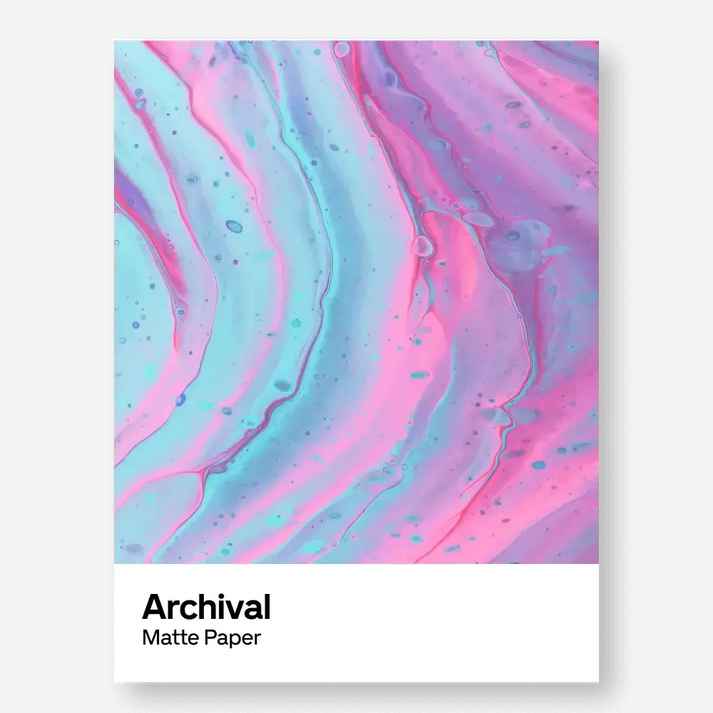
From an artistic perspective, the potassium flame color offers a unique palette: its lilac tones blend cool purples with warm undertones, creating a luminous effect that evokes both mystery and precision. Unlike more dramatic flames, this hue is often depicted in scientific illustrations with delicate gradients, emphasizing its transient, ethereal quality. It symbolizes the intersection of empirical observation and natural beauty, making it a compelling subject for fine art prints.
Why Choose a Potassium Flame Color Print?
This print appeals to science enthusiasts, educators, and art collectors seeking pieces that combine intellectual depth with visual appeal. It serves as a conversation starter in homes, offices, or laboratories, celebrating scientific discovery through high-quality reproduction. RedKalion ensures each print captures the nuanced color accuracy and detail essential for such specialized subjects.
Print Specifications & Materials
- Available Sizes: 75×100 cm / 30×40″, 40×50 cm / 16×20″, 21×29.7 cm / 8×12″
- Paper Finishing: Matte, uncoated, natural white (off-white)
- Acid-Free: pH above 7 to prevent yellowing over time
- Paper Weight: 250 gsm (110 lb) | Thickness: 0.29 mm (11.4 mils)
- Sustainable Paper: FSC-certified
Explore the potassium flame color in a premium art print from RedKalion, where scientific accuracy meets museum-quality craftsmanship. Ideal for enhancing spaces with a touch of scholarly elegance.

Discover Unlimited Art Possibilities
At RedKalion, you can find virtually any artwork from any artist, available in a wide range of sizes to perfectly match your space.
If you didn’t find what you’re looking for, contact us at support@redkalion.com . We will source any artwork and produce it in any size and format you need, including art prints, posters, canvas, framed pieces, framed canvas, and more.
For dedicated art enthusiasts, we also offer handcrafted replicas of any artwork, carefully painted by highly skilled artists using traditional techniques.
For custom requests, contact us at support@redkalion.com .
What is the potassium flame color used for in science?
The potassium flame color, a lilac or pale violet, is used in flame tests to identify potassium ions in analytical chemistry and educational demonstrations.
What paper types are available for this art print?
We use FSC-certified, acid-free paper with a matte finish and 250 gsm weight, ensuring archival quality and vibrant color reproduction for the potassium flame color print.
How is the potassium flame color print shipped?
Prints are shipped flat in protective packaging to prevent damage, with options for global delivery and tracking for secure arrival.
Will the potassium flame color print fade over time?
No, our acid-free paper and pigment-based inks resist fading, maintaining the lilac hues of the potassium flame color for decades under normal display conditions.
Can I customize the size of the potassium flame color print?
Yes, choose from standard sizes like 30x40 inches or 16x20 inches to fit your space, with custom options available upon inquiry for this scientific art print.
Who discovered the potassium flame color phenomenon?
Robert Bunsen and Gustav Kirchhoff popularized flame tests in the 1850s, using the potassium flame color in spectroscopy to study elemental emissions and advance chemical analysis.
Why does potassium produce a lilac flame color?
Potassium emits a lilac color due to electron transitions at specific wavelengths when heated, a principle of atomic emission spectra that distinguishes it from other metals.