RedKalion
Still Life Majolica Jug with Wildflowers - Vincent van Gogh 70x100 cm / 28x40 inches Framed Art Print – Black Wooden Frame
Still Life Majolica Jug with Wildflowers - Vincent van Gogh 70x100 cm / 28x40 inches Framed Art Print – Black Wooden Frame
Couldn't load pickup availability
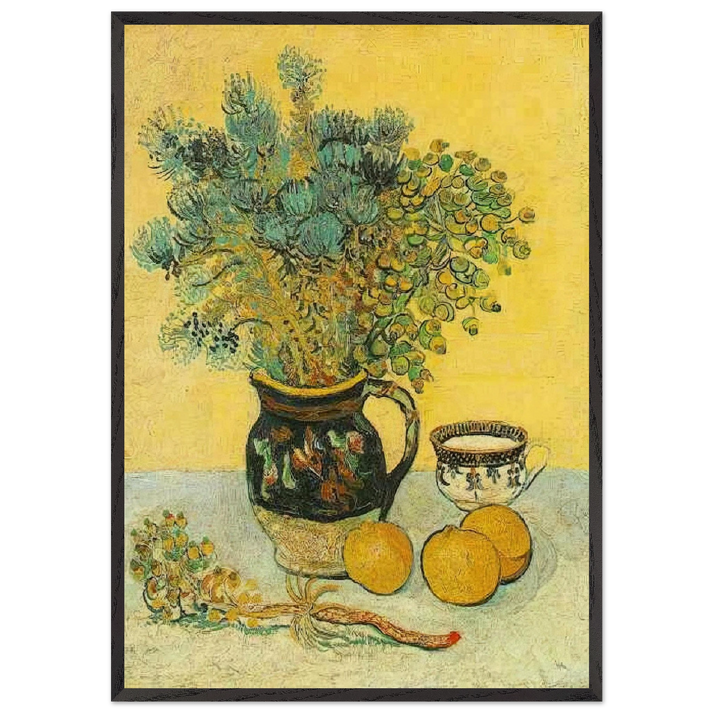
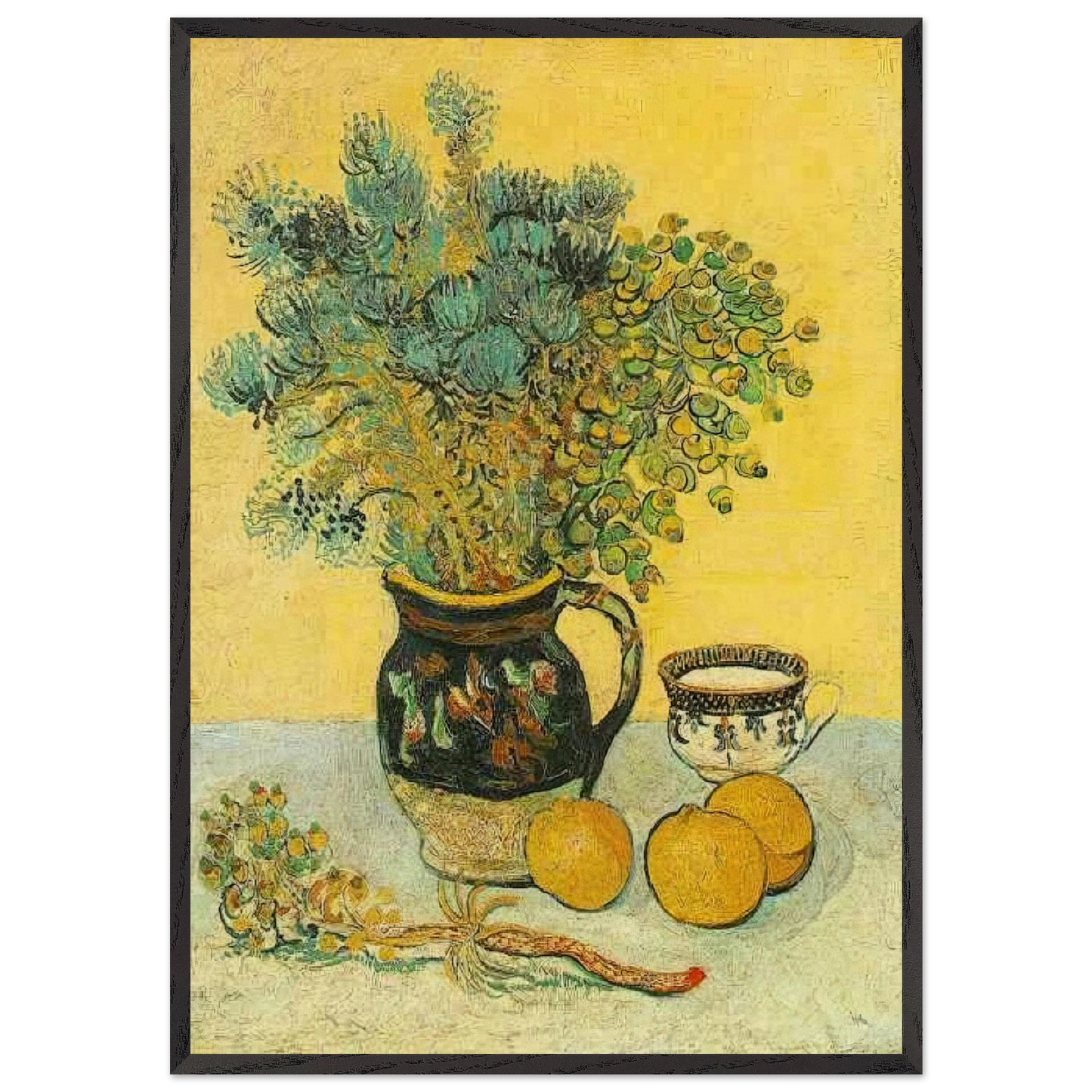
Still Life Majolica Jug with Wildflowers by Vincent van Gogh
Immerse yourself in the vibrant energy of Vincent van Gogh's "Still Life Majolica Jug with Wildflowers" (1889), a masterful fine art print that captures the artist's signature post-impressionist style. This museum-quality reproduction brings to life van Gogh's bold brushstrokes and intense color palette, depicting a rustic majolica jug overflowing with wildflowers—a testament to his fascination with nature and everyday objects during his time in Saint-Rémy-de-Provence. As a premium framed art print from RedKalion, this piece is crafted to elevate any space with archival excellence and timeless beauty.
Our framed art print measures 70x100 cm (28x40 inches) and features a sophisticated black wooden frame made from responsibly sourced oak and ash wood. The frame is 20mm (0.79") thick and wide, offering a substantial, gallery-worthy presence that enhances the artwork's impact. Each print is produced on 250 gsm (110 lb) archival museum-quality paper with a matte, uncoated, natural white finish, ensuring rich color reproduction and durability. Protected by shatterproof plexiglass and made with sustainable FSC-certified materials, this ready-to-hang piece includes a hanging kit for immediate display.
At RedKalion, we specialize in museum-quality reproductions that honor the original artistry while providing long-lasting value. This van Gogh print is not just a decoration but an investment in fine art that endures, perfect for collectors, art enthusiasts, or anyone seeking to add a touch of historical elegance to their home or office.
Discover Unlimited Art Possibilities
At RedKalion, you can find virtually any artwork from any artist, available in a wide range of sizes to perfectly match your space.
If you didn’t find what you’re looking for, contact us at support@redkalion.com . We will source any artwork and produce it in any size and format you need, including art prints, posters, canvas, framed pieces, framed canvas, and more.
For dedicated art enthusiasts, we also offer handcrafted replicas of any artwork, carefully painted by highly skilled artists using traditional techniques.
For custom requests, contact us at support@redkalion.com .
What are the dimensions of this framed van Gogh print?
This framed art print measures 70x100 cm (28x40 inches), with a black wooden frame that is 20mm (0.79") thick and wide, offering a substantial gallery-style presence for your fine art reproduction.
What type of paper is used for this museum-quality print?
We use 250 gsm (110 lb) archival museum-quality paper with a matte, uncoated, natural white finish, ideal for vibrant color reproduction and long-lasting durability in your fine art print.
Is this framed print ready to hang?
Yes, this framed art print includes a hanging kit and is ready-to-hang directly on your wall, making it easy to display your Vincent van Gogh reproduction immediately.
How is the print protected in the frame?
The print is protected by shatterproof plexiglass, ensuring your museum-quality reproduction remains safe from damage while maintaining clear visibility of van Gogh's artwork.
What materials are used in the frame?
The black wooden frame is made from responsibly sourced oak and ash wood, with sustainable FSC-certified materials, reflecting our commitment to quality and environmental responsibility.
What is the historical significance of this van Gogh painting?
Painted in 1889 during van Gogh's time in Saint-Rémy-de-Provence, this still life showcases his post-impressionist technique with bold brushstrokes and vibrant colors, highlighting his focus on everyday objects and nature.
Why did van Gogh choose a majolica jug for this still life?
Van Gogh often used rustic items like majolica jugs to explore texture and form, reflecting his interest in simple, pastoral themes that contrasted with his turbulent personal life during this period.