RedKalion
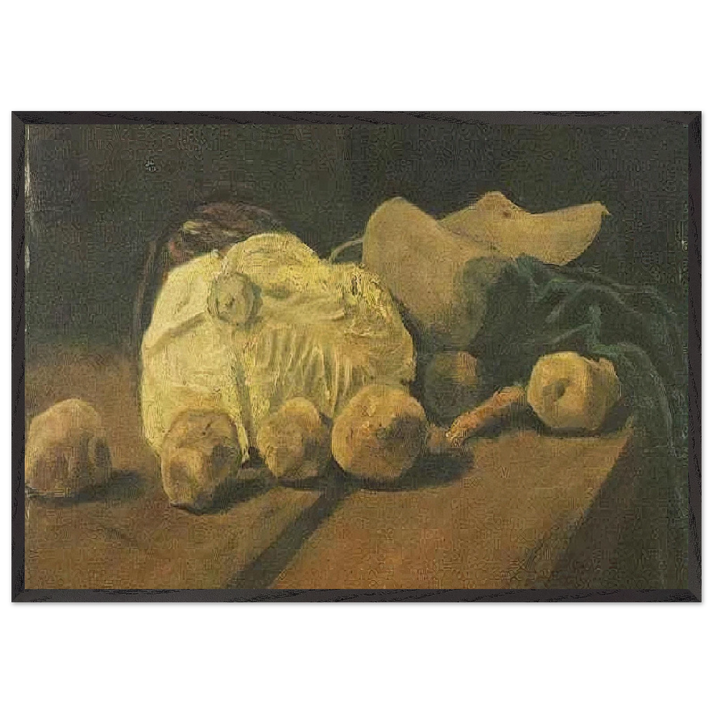
Still Life with Cabbage and Clogs - Vincent van Gogh 70x100 cm / 28x40 inches Framed Art Print – Black Wooden Frame
Still Life with Cabbage and Clogs - Vincent van Gogh 70x100 cm / 28x40 inches Framed Art Print – Black Wooden Frame
Couldn't load pickup availability
Still Life with Cabbage and Clogs by Vincent van Gogh
Immerse yourself in the rustic charm of Vincent van Gogh's Still Life with Cabbage and Clogs, a masterful oil painting from 1881 that captures the humble beauty of Dutch peasant life. This early work showcases van Gogh's emerging talent for texture and earthy tones, reflecting his deep connection to rural subjects before his iconic Post-Impressionist style fully blossomed. The composition, with its simple cabbage and worn wooden clogs, evokes a sense of authenticity and quiet dignity, making it a timeless addition to any art collection.
RedKalion presents this masterpiece as a museum-quality reproduction, meticulously printed on archival-grade, 250 gsm (110 lb) matte paper that ensures vibrant color fidelity and longevity. The print is elegantly framed in a responsibly sourced black wooden frame, crafted from oak and ash wood, with a substantial 20mm (0.79") thickness for a bold, gallery-worthy presence. Protected by shatterproof plexiglass, this fine art print arrives ready-to-hang, complete with a hanging kit, allowing you to elevate your space with an archival masterpiece that endures.
- Frame: Black wooden frame made from responsibly sourced oak and ash wood, 20mm (0.79") thick and wide.
- Paper: 250 gsm (110 lb) matte, uncoated, natural white archival museum-quality paper, FSC-certified for sustainability.
- Protection: Shatterproof plexiglass to safeguard the print.
- Size: 70x100 cm / 28x40 inches, including frame.
- Ready-to-Hang: Includes hanging kit for immediate display.

Discover Unlimited Art Possibilities
At RedKalion, you can find virtually any artwork from any artist, available in a wide range of sizes to perfectly match your space.
If you didn’t find what you’re looking for, contact us at support@redkalion.com . We will source any artwork and produce it in any size and format you need, including art prints, posters, canvas, framed pieces, framed canvas, and more.
For dedicated art enthusiasts, we also offer handcrafted replicas of any artwork, carefully painted by highly skilled artists using traditional techniques.
For custom requests, contact us at support@redkalion.com .
What is the historical significance of Still Life with Cabbage and Clogs by Vincent van Gogh?
Painted in 1881, this early work reflects van Gogh's focus on rural Dutch life before his Post-Impressionist period, showcasing his skill in texture and earthy tones to depict humble subjects authentically.
How does the frame enhance this van Gogh art print?
The black wooden frame, made from responsibly sourced oak and ash wood, is 20mm (0.79") thick for a bold, gallery-worthy look that complements this museum-quality reproduction.
What type of paper is used for this fine art print?
We use 250 gsm (110 lb) matte, uncoated, natural white archival museum-quality paper, FSC-certified for sustainability, ensuring vibrant color and longevity in your art print.
Is this framed print ready to hang on the wall?
Yes, this ready-to-hang art print includes a hanging kit, so you can display your van Gogh masterpiece immediately upon arrival.
How is the print protected in the frame?
The print is safeguarded by shatterproof plexiglass, providing durable protection while maintaining clarity for this archival-grade reproduction.
What details make this a museum-quality reproduction?
This print features high-resolution imaging on 250 gsm archival paper with precise color matching, ensuring it meets professional standards for fine art displays.
Why did van Gogh choose cabbage and clogs as subjects?
Van Gogh selected these everyday items to celebrate the simplicity and dignity of peasant life, a theme central to his early works in the Netherlands.