
RedKalion
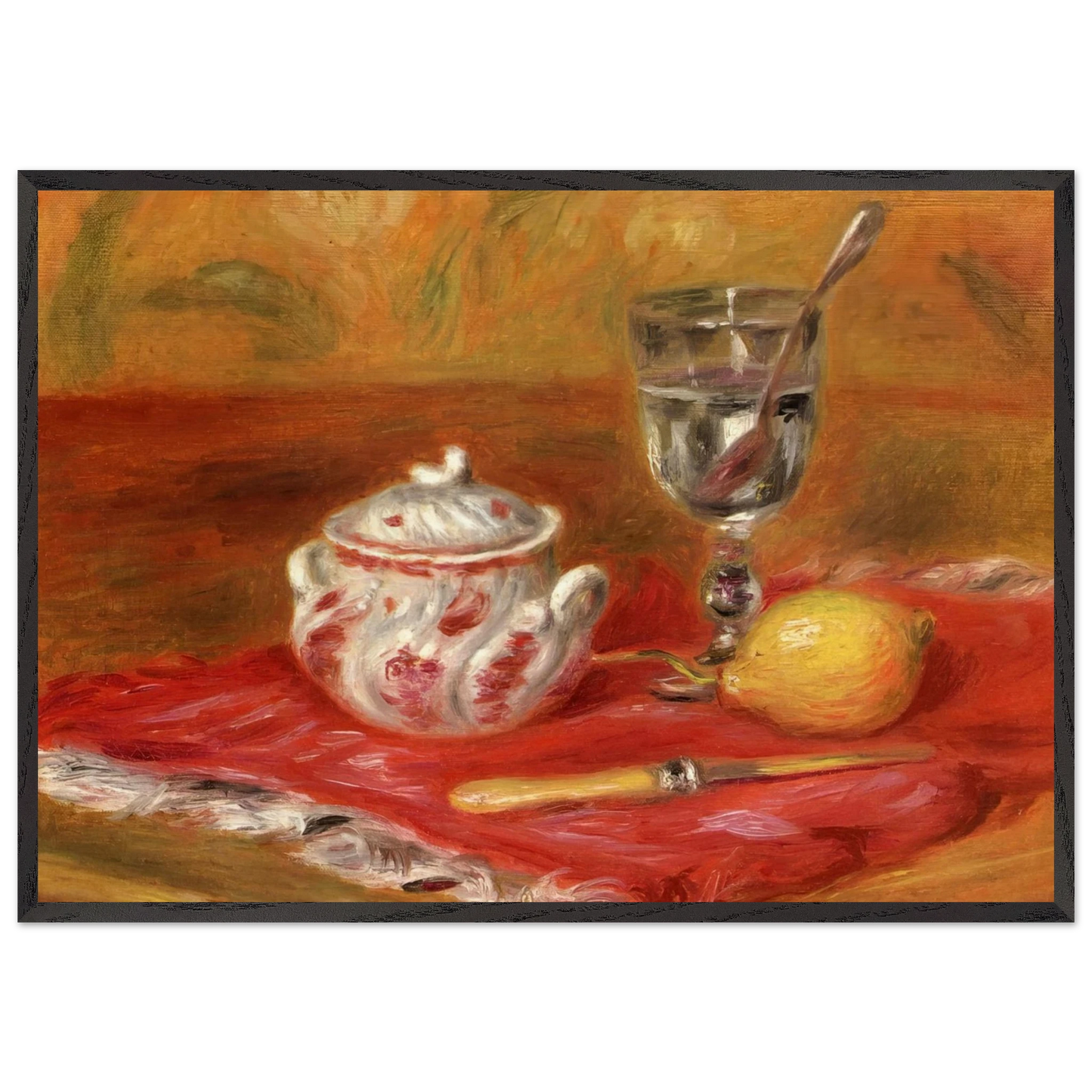
Still LIfe with Glass and Lemon - Pierre-Auguste Renoir 70x100 cm / 28x40 inches Framed Art Print – Black Wooden Frame
Still LIfe with Glass and Lemon - Pierre-Auguste Renoir 70x100 cm / 28x40 inches Framed Art Print – Black Wooden Frame
Couldn't load pickup availability
Still Life with Glass and Lemon by Pierre-Auguste Renoir
Immerse yourself in the luminous charm of Pierre-Auguste Renoir's Still Life with Glass and Lemon, a masterful fine art print that captures the artist's signature Impressionist touch. This intimate composition, created during Renoir's later years, showcases his enduring fascination with light and texture, transforming everyday objects into a vibrant tableau of color and form. The delicate interplay of the glass's transparency and the lemon's vivid hue exemplifies Renoir's ability to infuse ordinary scenes with poetic warmth, making it a timeless addition to any art collection.
RedKalion presents this museum-quality reproduction on premium archival paper, ensuring every brushstroke and nuance is preserved with exceptional fidelity. Our commitment to excellence means you receive a framed art print that not only honors Renoir's legacy but also elevates your space with enduring beauty. The artwork measures 70x100 cm / 28x40 inches, perfectly scaled for both intimate nooks and statement walls.
Premium Framing & Materials
- Ready-to-Hang: Includes a complete hanging kit for immediate display.
- Frame Material: Crafted from responsibly sourced oak and ash wood, with a sleek black finish.
- Frame Measurements: Features a substantial 20mm (0.79") thickness, wider than classic 14mm frames for enhanced presence.
- Paper Specifications: Printed on 250 gsm (110 lb) matte, uncoated, natural white archival paper (0.29 mm / 11.4 mils thick), ideal for fine art reproductions.
- Protection: Shatterproof plexiglass safeguards the print while maintaining clarity.
- Sustainability: Made with FSC-certified materials, reflecting our dedication to eco-conscious practices.
Elevate your home or office with this archival masterpiece from RedKalion, where art history meets unparalleled craftsmanship in every detail.
Discover Unlimited Art Possibilities
At RedKalion, you can find virtually any artwork from any artist, available in a wide range of sizes to perfectly match your space.
If you didn’t find what you’re looking for, contact us at support@redkalion.com . We will source any artwork and produce it in any size and format you need, including art prints, posters, canvas, framed pieces, framed canvas, and more.
For dedicated art enthusiasts, we also offer handcrafted replicas of any artwork, carefully painted by highly skilled artists using traditional techniques.
For custom requests, contact us at support@redkalion.com .
What are the dimensions of this Renoir framed art print?
This fine art print measures 70x100 cm / 28x40 inches, including the black wooden frame, making it a versatile size for various spaces.
What type of paper is used for this museum-quality reproduction?
It's printed on 250 gsm (110 lb) matte, uncoated, natural white archival paper, 0.29 mm (11.4 mils) thick, ensuring durability and vibrant color reproduction for your Pierre-Auguste Renoir print.
Is the frame ready to hang upon delivery?
Yes, this framed art print includes a hanging kit and is ready-to-hang directly on your wall for immediate display.
How does the frame material and thickness enhance this piece?
The frame is made from responsibly sourced oak and ash wood, with a 20mm (0.79") thickness—wider than classic 14mm frames—adding substantial presence and protection to your Renoir artwork.
What protection does the print have against damage?
It features shatterproof plexiglass that protects the print from impacts while maintaining optical clarity, ensuring your Still Life with Glass and Lemon remains pristine.
What is the historical significance of Still Life with Glass and Lemon by Renoir?
Created in Renoir's later years, this work reflects his mature Impressionist style, focusing on light and texture to elevate everyday objects into art, showcasing his enduring mastery beyond portraiture.
Why did Renoir choose a lemon and glass for this still life?
Renoir used the lemon's vibrant color and the glass's transparency to explore contrasts in light and form, a common theme in his later still lifes that emphasized simplicity and luminosity.