RedKalion
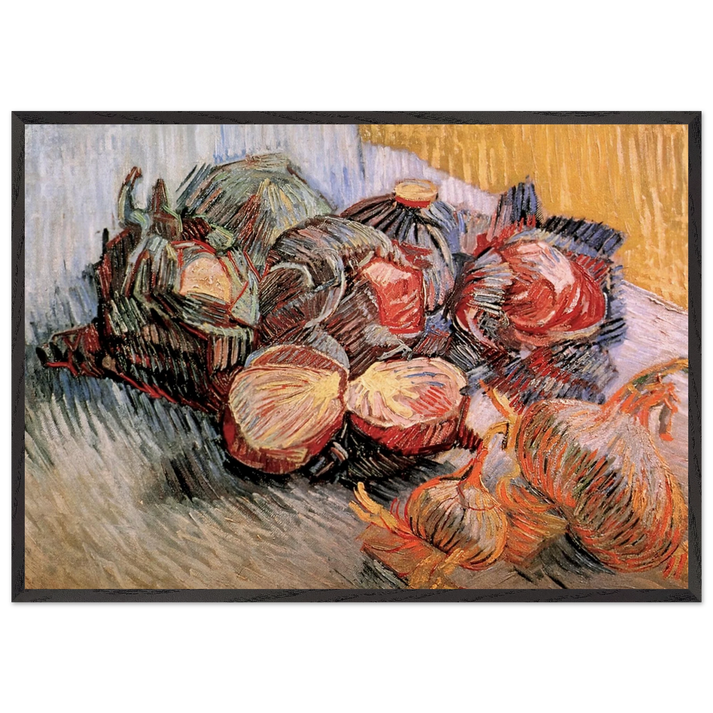
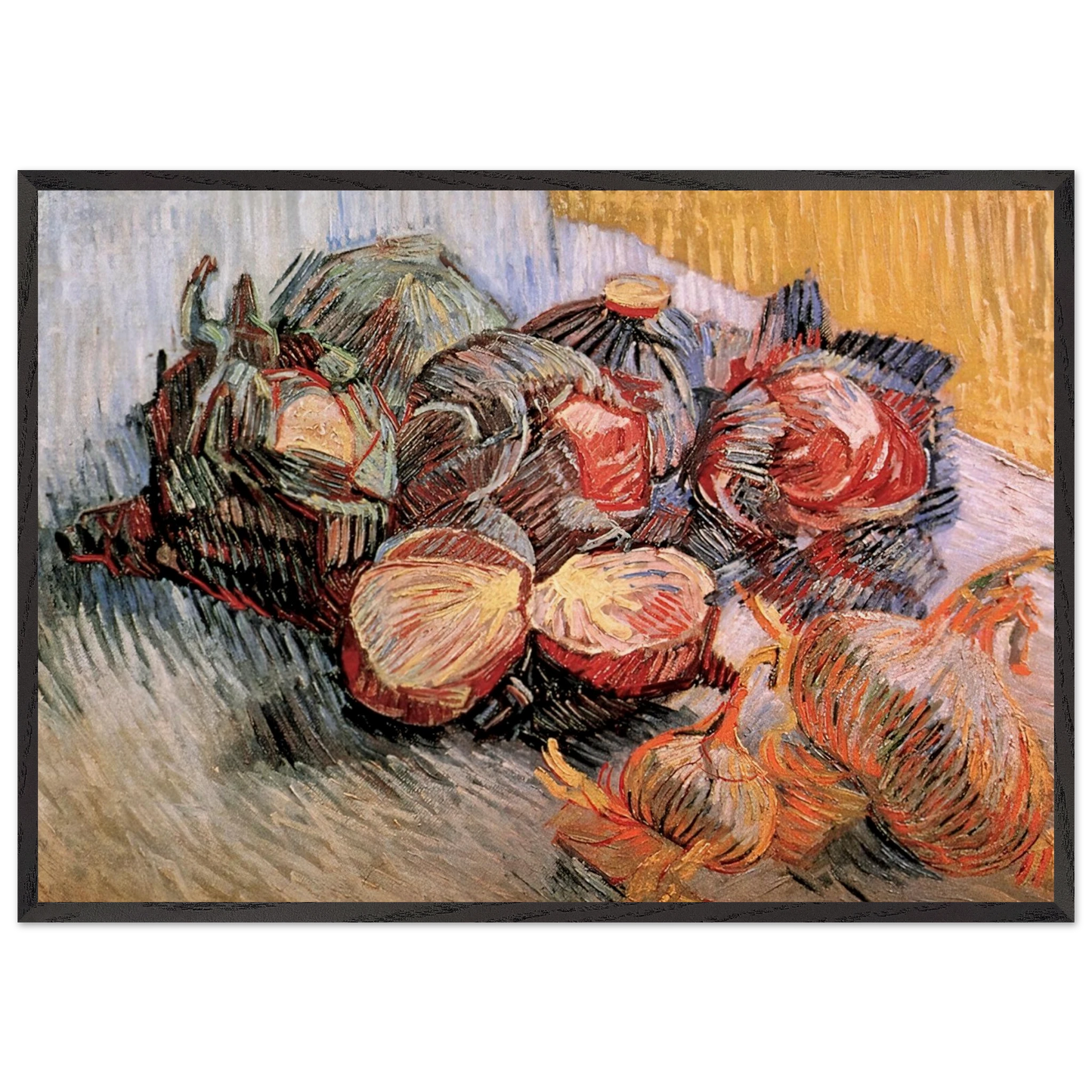
Still Life with Red Cabbages and Onions - Vincent van Gogh 70x100 cm / 28x40 inches Framed Art Print – Black Wooden Frame
Still Life with Red Cabbages and Onions - Vincent van Gogh 70x100 cm / 28x40 inches Framed Art Print – Black Wooden Frame
Couldn't load pickup availability
Still Life with Red Cabbages and Onions - Vincent van Gogh Framed Art Print
Immerse yourself in the vibrant, expressive world of Vincent van Gogh with this museum-quality reproduction of his 1887 masterpiece, Still Life with Red Cabbages and Onions. This framed art print captures the raw energy and bold color palette that defined van Gogh's Paris period, where he experimented with Impressionist techniques to transform humble vegetables into a symphony of texture and light.
Van Gogh's thick, impasto brushstrokes and dynamic composition—featuring the rich reds of cabbages contrasted with earthy onions—are reproduced with stunning fidelity on our premium, archival paper. This fine art print is not merely a decoration but a window into the artist's revolutionary approach to still life, where everyday objects become vessels of emotional intensity.
Presented in a sophisticated black wooden frame, this piece is crafted to elevate any interior. The frame, made from responsibly sourced oak and ash wood, measures 20mm thick and wide—offering a substantial, gallery-worthy presence that enhances the artwork's impact. It comes ready-to-hang with an included kit, so you can display it immediately upon arrival.
Your print is safeguarded by shatterproof plexiglass and printed on FSC-certified, matte-finish paper weighing 250 gsm (110 lb) for exceptional durability and color richness. Trust RedKalion to deliver an archival masterpiece that endures, blending historical significance with contemporary craftsmanship.
Discover Unlimited Art Possibilities
At RedKalion, you can find virtually any artwork from any artist, available in a wide range of sizes to perfectly match your space.
If you didn’t find what you’re looking for, contact us at support@redkalion.com . We will source any artwork and produce it in any size and format you need, including art prints, posters, canvas, framed pieces, framed canvas, and more.
For dedicated art enthusiasts, we also offer handcrafted replicas of any artwork, carefully painted by highly skilled artists using traditional techniques.
For custom requests, contact us at support@redkalion.com .
What are the dimensions of this framed van Gogh print?
This framed art print measures 70x100 cm (28x40 inches), including the black wooden frame. The frame itself is 20mm (0.79") thick and wide, providing a substantial, gallery-quality look.
What type of paper is used for this museum-quality reproduction?
We use archival museum-quality paper that is 250 gsm (110 lb) thick, with a matte, uncoated finish. It's FSC-certified for sustainability and ensures vibrant, long-lasting color reproduction of van Gogh's work.
Is this framed print ready to hang?
Yes, this fine art print comes fully assembled with a hanging kit included, so you can display it directly on your wall without any additional setup.
How does the frame protect the artwork?
The frame features shatterproof plexiglass that shields the print from dust, UV light, and damage, while the responsibly sourced oak and ash wood construction adds durability and elegance.
Is this print suitable for long-term display?
Absolutely. With archival paper and protective plexiglass, this reproduction is designed to resist fading and deterioration, making it a lasting addition to your collection.
What is the historical significance of this van Gogh painting?
Painted in 1887 during van Gogh's Paris period, this still life showcases his shift toward brighter colors and Impressionist influences, highlighting his innovative use of texture and light in everyday subjects.
Why did van Gogh choose cabbages and onions for this artwork?
Van Gogh often painted humble objects to explore color and form; here, the red cabbages and onions allowed him to experiment with contrasting hues and dynamic brushstrokes, reflecting his emotional intensity.