RedKalion
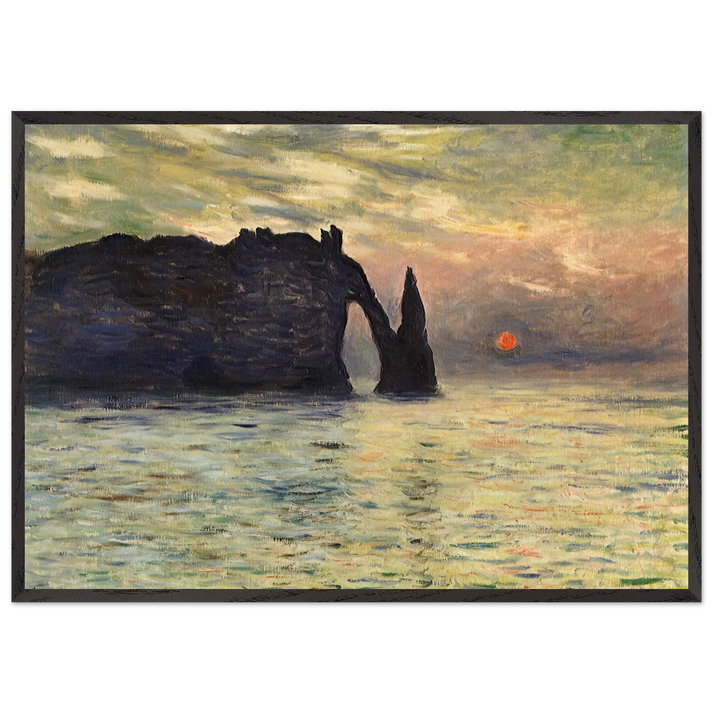
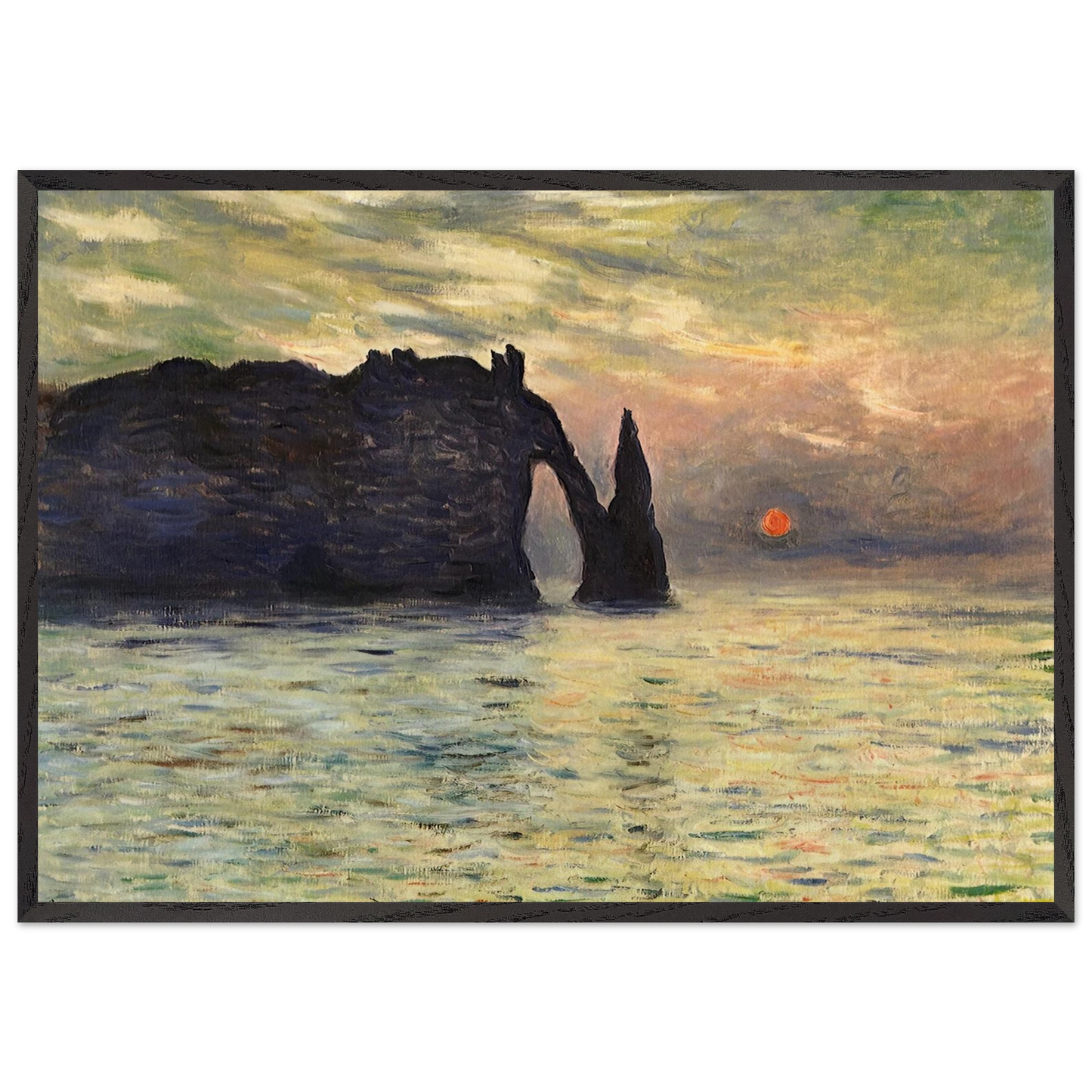
The Manneport Cliff at Etretat Sunset - claude monet 70x100 cm / 28x40 inches Framed Art Print – Black Wooden Frame
The Manneport Cliff at Etretat Sunset - claude monet 70x100 cm / 28x40 inches Framed Art Print – Black Wooden Frame
Couldn't load pickup availability
Claude Monet's 'The Manneport Cliff at Étretat Sunset': A Masterpiece of Impressionism
Immerse yourself in the radiant glow of Claude Monet's 'The Manneport Cliff at Étretat Sunset', a breathtaking fine art print that captures the French coastline in its most dramatic light. This museum-quality reproduction, available as a 70x100 cm / 28x40 inches framed art print, brings the iconic Impressionist's vision directly into your home or office. Monet painted this scene in 1885 during his series at Étretat, where he masterfully explored the interplay of light, color, and natural form. The composition features the majestic arch of the Manneport cliff bathed in the warm hues of sunset, with brushstrokes that evoke the transient beauty of the moment—a hallmark of his revolutionary technique.
RedKalion presents this archival masterpiece with uncompromising quality. Each print is produced on 250 gsm (110 lb) matte, uncoated, natural white paper, ensuring rich color fidelity and a texture that honors the original artwork. The print is protected by shatterproof plexiglass and elegantly framed in a black wooden frame crafted from responsibly sourced oak and ash wood, with a substantial 20mm (0.79") thickness for a premium, gallery-ready appearance. This piece is ready-to-hang, complete with a hanging kit, allowing you to elevate your space effortlessly.
As a trusted curator of fine art reproductions, RedKalion ensures every detail—from the FSC-certified sustainable paper to the precise color matching—meets the highest archival standards. Own a slice of art history with this enduring Claude Monet print that transforms any room into a sanctuary of beauty and inspiration.
Discover Unlimited Art Possibilities
At RedKalion, you can find virtually any artwork from any artist, available in a wide range of sizes to perfectly match your space.
If you didn’t find what you’re looking for, contact us at support@redkalion.com . We will source any artwork and produce it in any size and format you need, including art prints, posters, canvas, framed pieces, framed canvas, and more.
For dedicated art enthusiasts, we also offer handcrafted replicas of any artwork, carefully painted by highly skilled artists using traditional techniques.
For custom requests, contact us at support@redkalion.com .
What are the dimensions of this Claude Monet framed art print?
This fine art print measures 70x100 cm (28x40 inches) and comes in a black wooden frame with a 20mm (0.79") thickness, wider than classic frames for a bold, museum-quality display.
What type of paper is used for this Monet reproduction?
We use 250 gsm (110 lb) matte, uncoated, natural white archival museum-quality paper, which is FSC-certified for sustainability and ideal for fine art prints with rich color depth.
Is this framed print ready to hang?
Yes, this framed art print includes a hanging kit and is ready-to-hang directly on your wall, making installation simple and hassle-free.
How is the print protected in the frame?
The print is safeguarded by shatterproof plexiglass, ensuring durability and protection against damage while maintaining clear visibility of the artwork.
Is this Monet print archival and long-lasting?
Absolutely, this reproduction uses archival-grade materials, including FSC-certified paper and high-quality inks, designed to resist fading and endure for generations.
Why did Monet paint the Manneport Cliff at Étretat?
Monet was fascinated by Étretat's cliffs, painting them in various lights to study natural effects; this sunset version from 1885 highlights his Impressionist focus on fleeting moments and color harmony.
What makes Monet's technique in this artwork unique?
Monet used loose, rapid brushstrokes and layered colors to capture the sunset's glow, emphasizing light and atmosphere over detail, a key innovation in Impressionist art history.