RedKalion
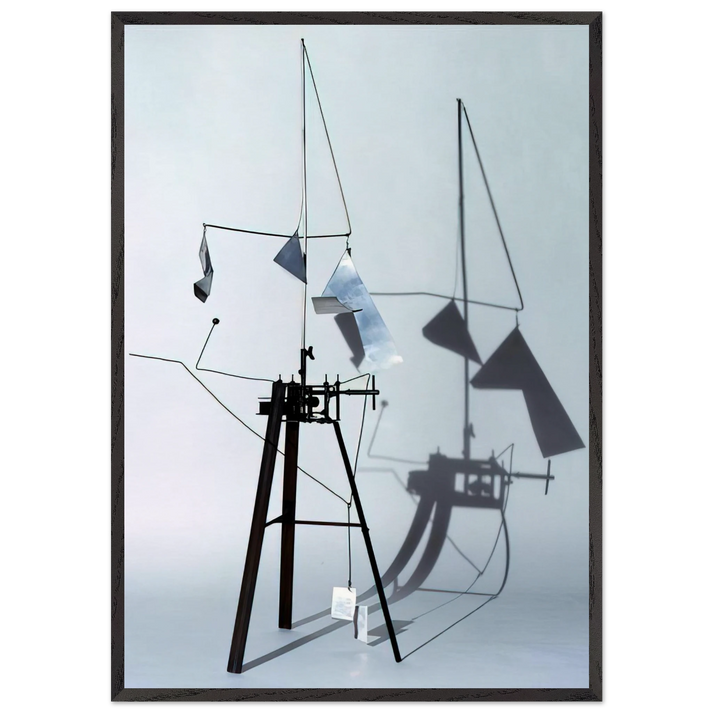
Useless Machine Arrhythmic Carousel - 1953 - Bruno Munari 70x100 cm / 28x40 inches Framed Art Print – Black Wooden Frame
Useless Machine Arrhythmic Carousel - 1953 - Bruno Munari 70x100 cm / 28x40 inches Framed Art Print – Black Wooden Frame
Couldn't load pickup availability
Useless Machine Arrhythmic Carousel - 1953 by Bruno Munari
Immerse yourself in the playful genius of Italian artist Bruno Munari with this framed art print of Useless Machine Arrhythmic Carousel. Created in 1953, this iconic piece exemplifies Munari's pioneering work in kinetic art and the Arte Programmata movement, where he explored chance, motion, and viewer interaction through whimsical, mechanical sculptures. The artwork's abstract, rhythmic forms evoke a sense of joyful unpredictability, making it a captivating centerpiece for modern interiors that celebrates mid-century innovation.
RedKalion presents this masterpiece as a museum-quality reproduction, meticulously crafted to honor Munari's original vision. Our fine art print is produced on archival, matte-finish paper—250 gsm (110 lb) weight and 0.29 mm (11.4 mils) thickness—ensuring rich detail and longevity. The print is elegantly framed in a responsibly sourced black wooden frame made from oak and ash, measuring 20mm (0.79") thick and wide for a bold, contemporary presence. Protected by shatterproof plexiglass, this ready-to-hang piece includes a hanging kit for effortless display.
Elevate your space with an archival masterpiece that endures, blending art historical significance with premium craftsmanship. This framed print is not just a decoration but a testament to Munari's legacy of blending art, design, and technology.

Discover Unlimited Art Possibilities
At RedKalion, you can find virtually any artwork from any artist, available in a wide range of sizes to perfectly match your space.
If you didn’t find what you’re looking for, contact us at support@redkalion.com . We will source any artwork and produce it in any size and format you need, including art prints, posters, canvas, framed pieces, framed canvas, and more.
For dedicated art enthusiasts, we also offer handcrafted replicas of any artwork, carefully painted by highly skilled artists using traditional techniques.
For custom requests, contact us at support@redkalion.com .
What is the historical significance of Bruno Munari's Useless Machine Arrhythmic Carousel?
Created in 1953, this artwork is part of Munari's Useless Machines series, key to the Arte Programmata movement in Italy. It explores kinetic art, chance, and interactive sculpture, reflecting mid-century avant-garde ideas that blend art with mechanical playfulness.
What are the dimensions of this framed art print?
The framed print measures 70x100 cm (28x40 inches), with a black wooden frame that is 20mm (0.79") thick and wide, offering a substantial, modern look for your wall decor.
What type of paper is used for this fine art print?
We use archival museum-quality paper: 250 gsm (110 lb) weight, 0.29 mm (11.4 mils) thickness, with a matte, uncoated, natural white finish. It's FSC-certified for sustainability, ideal for long-lasting reproductions.
Is this framed print ready to hang?
Yes, it includes a hanging kit and is ready to hang directly on your wall, making setup simple and ensuring your artwork is displayed securely from day one.
How does the frame protect the print?
The frame features shatterproof plexiglass that safeguards the print from dust, UV light, and damage, while the responsibly sourced oak and ash wood provides durable, elegant framing.
Why is this considered a museum-quality reproduction?
Our prints use high-resolution imaging and archival materials to capture Munari's details accurately, meeting standards for fine art collections and ensuring color fidelity and longevity.
What makes Bruno Munari's work unique in art history?
Munari was a multidisciplinary innovator who merged art, design, and technology. His Useless Machines challenge traditional art by incorporating movement and viewer interaction, influencing later kinetic and conceptual art movements.