
RedKalion
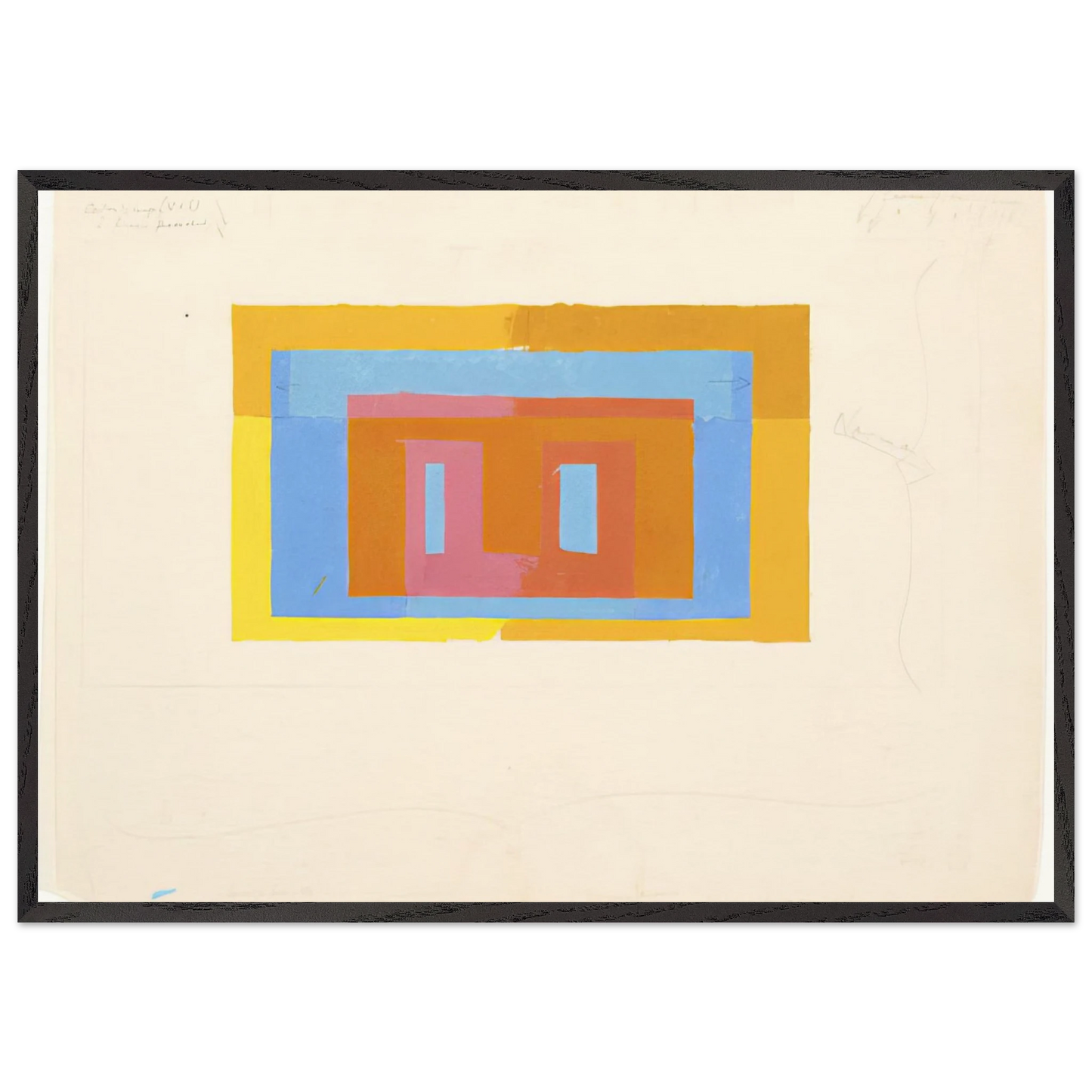
VARIANT ADOBE - Josef Albers 70x100 cm / 28x40 inches Framed Art Print – Black Wooden Frame
VARIANT ADOBE - Josef Albers 70x100 cm / 28x40 inches Framed Art Print – Black Wooden Frame
Couldn't load pickup availability
VARIANT ADOBE - Josef Albers 70x100 cm / 28x40 inches Framed Art Print – Black Wooden Frame
Experience the iconic minimalism of Josef Albers with this museum-quality framed art print of VARIANT ADOBE. As a leading figure in the Bauhaus movement and color theory, Albers' work explores the perceptual relationships between hues, creating dynamic visual effects through precise geometric abstraction. This piece, part of his renowned Homage to the Square series, showcases his mastery in evoking depth and emotion through layered squares, making it a timeless addition to modern interiors.
RedKalion presents this archival reproduction on premium 250 gsm (110 lb) matte, uncoated paper with a natural white finish, ensuring vibrant color fidelity and longevity. The print is elegantly framed in a responsibly sourced oak and ash wood black frame, measuring 20mm (0.79") thick and wide for a substantial, gallery-worthy presence. Protected by shatterproof plexiglass, this ready-to-hang piece includes a hanging kit for immediate display. Elevate your space with a sustainable, FSC-certified masterpiece that endures.
- Frame: Black wooden frame made from responsibly sourced oak and ash wood, 20mm (0.79") thick and wide.
- Print: 70x100 cm / 28x40 inches on 250 gsm (110 lb) matte, uncoated, archival museum-quality paper.
- Protection: Shatterproof plexiglass for durability and clarity.
- Sustainability: FSC-certified materials or equivalent.
- Ready-to-Hang: Includes hanging kit for easy installation.
Discover Unlimited Art Possibilities
At RedKalion, you can find virtually any artwork from any artist, available in a wide range of sizes to perfectly match your space.
If you didn’t find what you’re looking for, contact us at support@redkalion.com . We will source any artwork and produce it in any size and format you need, including art prints, posters, canvas, framed pieces, framed canvas, and more.
For dedicated art enthusiasts, we also offer handcrafted replicas of any artwork, carefully painted by highly skilled artists using traditional techniques.
For custom requests, contact us at support@redkalion.com .
What is the significance of Josef Albers' VARIANT ADOBE in art history?
VARIANT ADOBE is part of Albers' Homage to the Square series, pivotal in color theory and Bauhaus minimalism, exploring perceptual depth through layered geometric abstraction for a timeless fine art print.
How does the black wooden frame enhance this framed art print?
The responsibly sourced oak and ash wood frame, 20mm thick and wide, provides a substantial gallery-quality presence, complementing Albers' minimalist design for a museum-quality reproduction.
What are the specifications of the archival museum-quality paper used?
This print uses 250 gsm (110 lb) matte, uncoated, natural white paper, 0.29 mm thick, ensuring vibrant color fidelity and longevity for a premium art reproduction.
Is this framed art print ready to hang upon delivery?
Yes, it includes a hanging kit and is ready-to-hang, allowing for immediate display of your Josef Albers masterpiece in any interior space.
How does the shatterproof plexiglass protect the print?
The shatterproof plexiglass offers durable protection against damage while maintaining clarity, ensuring your archival art print remains pristine over time.
What sustainable materials are used in this product?
We use FSC-certified or equivalent materials for the paper and responsibly sourced wood for the frame, supporting eco-friendly fine art practices.
Can you explain Albers' technique in VARIANT ADOBE?
Albers employed layered squares with subtle color variations to create optical illusions of depth and movement, a hallmark of his Bauhaus-inspired geometric abstraction.