
RedKalion
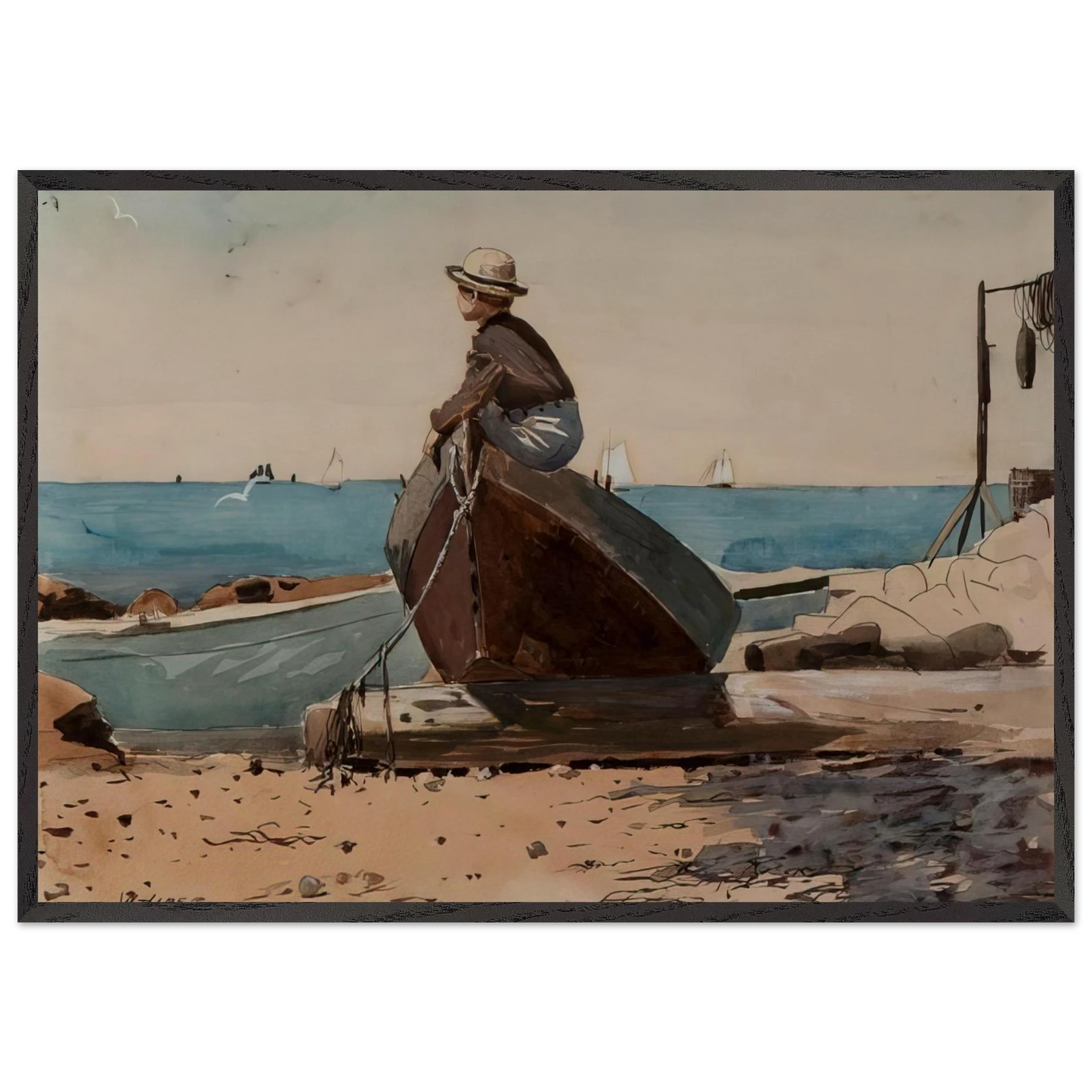
WAITING FOR DAD - Winslow Homer 70x100 cm / 28x40 inches Framed Art Print – Black Wooden Frame
WAITING FOR DAD - Winslow Homer 70x100 cm / 28x40 inches Framed Art Print – Black Wooden Frame
Couldn't load pickup availability
WAITING FOR DAD - Winslow Homer 70x100 cm / 28x40 inches Framed Art Print – Black Wooden Frame
Experience the poignant realism of Winslow Homer's "Waiting for Dad" with this museum-quality reproduction from RedKalion. This framed art print captures the emotional depth of Homer's 1873 masterpiece, which depicts a young girl gazing seaward with quiet anticipation, a hallmark of his narrative American realism. The scene evokes a mood of serene longing and coastal solitude, making it an ideal centerpiece for living rooms, studies, or offices seeking timeless elegance.
Our fine art print is meticulously crafted on archival museum-quality paper—250 gsm (110 lb), 0.29 mm thick, with a matte, uncoated, natural white finish that ensures vibrant color fidelity and longevity. It is framed in a responsibly sourced oak and ash wood black frame, measuring 20mm thick and wide for a substantial, gallery-worthy presence. The shatterproof plexiglass provides durable protection, while the included hanging kit makes it ready-to-hang directly on your wall. Elevate your space with an archival masterpiece that endures, backed by RedKalion's expertise in premium reproductions.
Art Historical Insight: Winslow Homer, a pivotal figure in 19th-century American art, often explored themes of human resilience and nature's majesty. In "Waiting for Dad," his masterful use of watercolor and oil techniques conveys subtle emotional nuances, reflecting his transition from illustrator to fine artist. This piece exemplifies his ability to blend narrative depth with atmospheric detail, capturing a moment of everyday life with profound sensitivity.
Discover Unlimited Art Possibilities
At RedKalion, you can find virtually any artwork from any artist, available in a wide range of sizes to perfectly match your space.
If you didn’t find what you’re looking for, contact us at support@redkalion.com . We will source any artwork and produce it in any size and format you need, including art prints, posters, canvas, framed pieces, framed canvas, and more.
For dedicated art enthusiasts, we also offer handcrafted replicas of any artwork, carefully painted by highly skilled artists using traditional techniques.
For custom requests, contact us at support@redkalion.com .
What are the dimensions of this Winslow Homer framed art print?
This fine art print measures 70x100 cm (28x40 inches) and is framed in a black wooden frame that is 20mm thick and wide, providing a substantial gallery look.
What type of paper is used for this museum-quality reproduction?
We use archival museum-quality paper: 250 gsm (110 lb) weight, 0.29 mm thick, with a matte, uncoated, natural white finish for optimal color and longevity in fine art prints.
Is this Winslow Homer print ready to hang?
Yes, this framed art print includes a hanging kit and is ready-to-hang directly on your wall for immediate display.
How is the print protected in the frame?
The print is protected by shatterproof plexiglass, ensuring durability and safety while maintaining clarity for your Winslow Homer reproduction.
What materials are used in the black wooden frame?
The frame is made from responsibly sourced oak and ash wood, contributing to a sustainable and high-quality finish for your art print.
What is the historical significance of "Waiting for Dad" by Winslow Homer?
"Waiting for Dad" (1873) is a key example of Winslow Homer's American realism, depicting coastal life with emotional depth and showcasing his evolution from illustration to fine art.
How does Winslow Homer's technique enhance this artwork?
Homer used watercolor and oil techniques to create subtle textures and atmospheric effects, capturing the girl's anticipation and the sea's mood in this narrative scene.