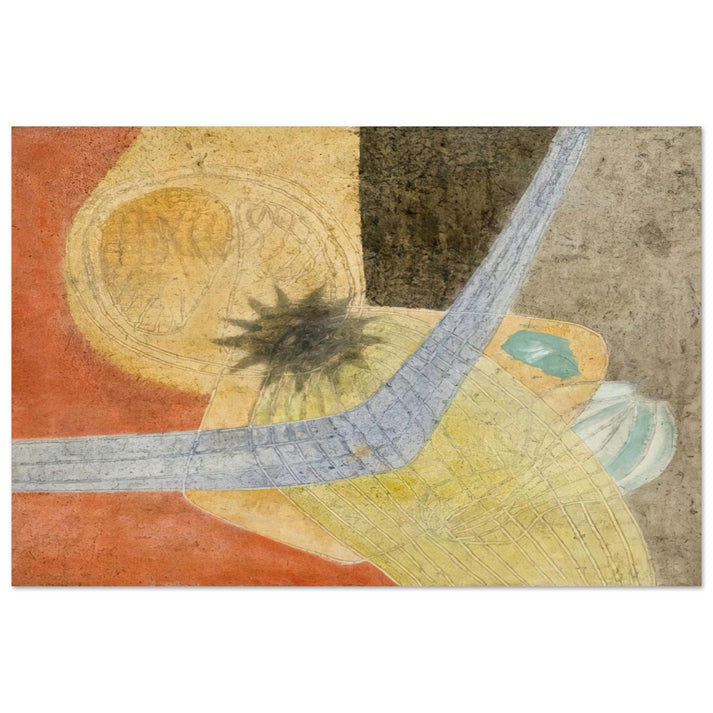


Composition - 1933 - John Ferren Art Prints - 100x150 cm / 40x60″ inches | John Ferren Poster | John Ferren Prints
Composition - 1933 - John Ferren Art Prints - 100x150 cm / 40x60″ inches | John Ferren Poster | John Ferren Prints
No se pudo cargar la disponibilidad de retiro
John Ferren’s Composition (1933): A Masterpiece of Modern Abstraction, Reborn in Archival Splendor
Step into the bold, visionary world of John Ferren with this exquisite museum-quality fine art print of Composition (1933). A pivotal figure in the American Abstract Expressionist movement, Ferren crafted this dynamic work during a transformative period in modern art—where geometric precision met emotional intensity. Now, RedKalion brings this rare masterpiece to your walls in a luxurious, archival reproduction designed to endure for generations.
Ferren’s Composition (1933) is a symphony of intersecting planes, vibrant hues, and rhythmic forms. Painted during his time in Paris, the work reflects the artist’s deep engagement with European modernism, particularly the influence of Cubism and Constructivism. Yet, Ferren’s unique voice shines through in his masterful balance of structure and spontaneity—a hallmark of his later contributions to Abstract Expressionism. This print captures every nuance of the original, from the subtle texture of the brushstrokes to the luminous interplay of color.
Crafted on RedKalion’s Master’s Edition archival paper, this 100x150 cm (40x60″) fine art print is a testament to uncompromising quality. Our FSC-certified, acid-free paper—with a 250 gsm (110 lb) weight and 0.29 mm (11.4 mils) thickness—ensures a rich, tactile experience that mirrors the depth of the original artwork. The matte, uncoated, off-white finish not only preserves the integrity of Ferren’s palette but also eliminates glare, allowing the artwork to command attention from every angle.
Whether you’re a seasoned collector or a connoisseur of modern art, this John Ferren print is more than a decoration—it’s a statement. Hang it in a sunlit gallery, a minimalist loft, or a contemporary office to infuse your space with the energy of 1930s avant-garde innovation. With RedKalion’s commitment to sustainability and archival excellence, you’re not just purchasing a print; you’re investing in a piece of art history, meticulously preserved for your enjoyment.
Elevate your space with a museum-quality reproduction that bridges the gap between past and present. Composition (1933) by John Ferren awaits—ready to inspire, captivate, and endure.


Discover Unlimited Art Possibilities
At RedKalion, you can find virtually any artwork from any artist, available in a wide range of sizes to perfectly match your space.
If you didn’t find what you’re looking for, contact us at support@redkalion.com . We will source any artwork and produce it in any size and format you need, including art prints, posters, canvas, framed pieces, framed canvas, and more.
For dedicated art enthusiasts, we also offer handcrafted replicas of any artwork, carefully painted by highly skilled artists using traditional techniques.
For custom requests, contact us at support@redkalion.com .
What makes this Composition (1933) print by John Ferren a museum-quality reproduction?
This print is crafted on acid-free, FSC-certified archival paper with a 250 gsm weight and matte, uncoated finish, ensuring longevity and true-to-life color reproduction. RedKalion’s Master’s Edition paper meets the highest standards for fine art prints.
How does the paper’s off-white, uncoated finish enhance the viewing experience?
The off-white, uncoated paper reduces glare and mimics the texture of traditional art paper, allowing Ferren’s vibrant colors and geometric forms to stand out with depth and authenticity.
Is this John Ferren print available in other sizes?
Currently, this Composition (1933) print is available in 100x150 cm (40x60″). Custom sizes may be available upon request—contact RedKalion for details.
How should I care for my archival fine art print to ensure its longevity?
Avoid direct sunlight and humidity. Handle with clean hands or gloves, and store flat in a protective sleeve. The acid-free paper resists yellowing, but proper care will preserve its beauty for decades.
What is the expected shipping time for this 100x150 cm John Ferren poster?
Shipping typically takes 5-7 business days within the continental U.S. and 7-14 days internationally. Tracking is provided for all orders.
How does John Ferren’s Composition (1933) reflect his artistic influences?
Ferren’s work blends Cubist structure with Constructivist dynamism, reflecting his time in Paris and his engagement with European modernism. The geometric precision and bold colors are hallmarks of his early style.
Why did John Ferren choose abstraction for this 1933 piece?
Ferren embraced abstraction to explore emotional expression through form and color, moving beyond representational art. Composition (1933) captures his belief in art as a universal language of rhythm and harmony.