


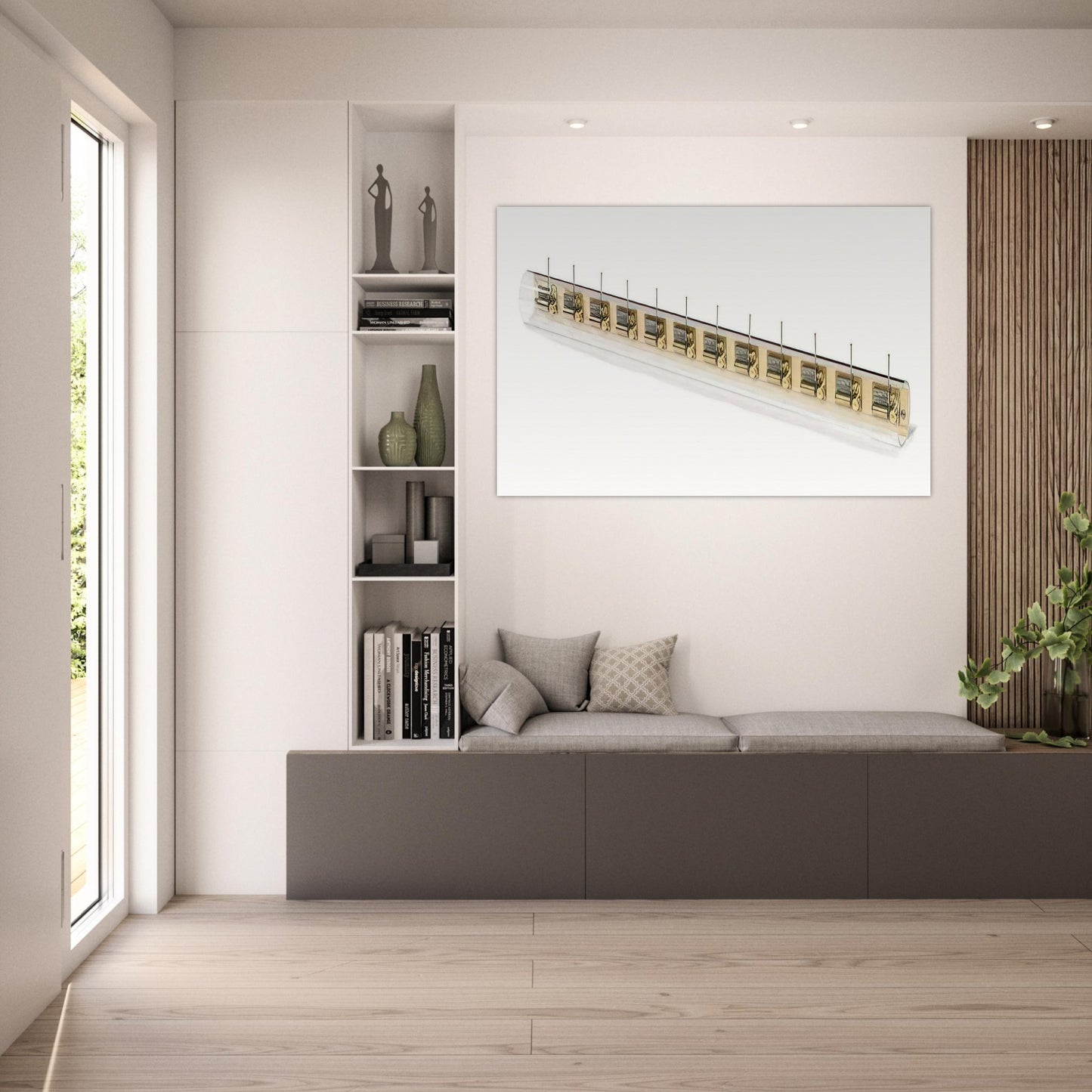
Extended Lullaby - Neo-Dada - John Cage Art Prints - 100x150 cm / 40x60″ inches | John Cage Poster | John Cage Prints
Extended Lullaby - Neo-Dada - John Cage Art Prints - 100x150 cm / 40x60″ inches | John Cage Poster | John Cage Prints
No se pudo cargar la disponibilidad de retiro
Elevate Your Space with Extended Lullaby: A Neo-Dada Masterpiece by John Cage
Extended Lullaby (1980s) by John Cage is a striking exemplar of the Neo-Dada movement, where avant-garde experimentation meets poetic minimalism. This museum-quality fine art print captures Cage’s signature interplay of silence, texture, and conceptual depth—a testament to his revolutionary approach to art and music. Whether you’re a collector, a connoisseur of 20th-century art, or simply seeking to infuse your space with intellectual intrigue, this archival reproduction brings the essence of Cage’s genius into your home.
The Artwork: A Symphony of Silence and Subversion
John Cage, best known for his groundbreaking composition 4’33”, redefined the boundaries of art by embracing chance, indeterminacy, and the beauty of the mundane. Extended Lullaby embodies this philosophy, blending visual and auditory elements into a meditative experience. The piece’s abstract forms and subtle textures invite contemplation, making it a conversation starter for any modern interior. As a pivotal figure in Neo-Dada, Cage’s work challenges traditional aesthetics, offering a quiet rebellion against convention.
Museum-Quality Reproduction: Crafted for Longevity and Luxury
This John Cage print is meticulously reproduced on RedKalion’s Master’s Edition archival paper, designed to preserve the integrity of the original artwork for generations. Our FSC-certified, acid-free paper (pH above 7) ensures your print remains vibrant and free from yellowing over time. With a 250 gsm (110 lb) weight and 0.29 mm (11.4 mils) thickness, the paper exudes a luxurious, tactile quality that enhances the visual depth of Cage’s composition.
- Matte, uncoated finish: Soft, natural white (off-white) surface that reduces glare and highlights the artwork’s nuances.
- Sustainable and ethical: Sourced from responsibly managed forests, aligning with your values and Cage’s own reverence for nature.
- Generous dimensions: Available in a commanding 100x150 cm (40x60″ inches) size, perfect for making a bold statement in galleries, living spaces, or offices.
Why Choose RedKalion for Your Extended Lullaby Print?
At RedKalion, we curate only the finest museum-quality reproductions, bridging the gap between art history and contemporary living. Our John Cage poster is not merely a print—it’s an heirloom-quality piece that honors the artist’s legacy while meeting the highest standards of archival preservation. Whether you’re drawn to Cage’s experimental spirit or the timeless allure of Neo-Dada, this print is a seamless fusion of art and craftsmanship.
Transform your space with a piece that transcends decoration. Extended Lullaby is more than a print; it’s an invitation to pause, reflect, and engage with the unexpected beauty of silence.


Discover Unlimited Art Possibilities
At RedKalion, you can find virtually any artwork from any artist, available in a wide range of sizes to perfectly match your space.
If you didn’t find what you’re looking for, contact us at support@redkalion.com . We will source any artwork and produce it in any size and format you need, including art prints, posters, canvas, framed pieces, framed canvas, and more.
For dedicated art enthusiasts, we also offer handcrafted replicas of any artwork, carefully painted by highly skilled artists using traditional techniques.
For custom requests, contact us at support@redkalion.com .
What is the significance of Extended Lullaby by John Cage?
Extended Lullaby (1980s) is a Neo-Dada artwork by John Cage, blending visual abstraction with his signature exploration of silence and chance. It reflects his avant-garde approach to art and music, challenging traditional aesthetics.
What paper is used for this John Cage fine art print?
This print is produced on RedKalion’s Master’s Edition archival paper: matte, uncoated, acid-free (pH above 7), and FSC-certified, with a 250 gsm (110 lb) weight for durability and luxury.
Is this John Cage print archival-quality and fade-resistant?
Yes, our museum-quality reproduction uses acid-free, archival paper to prevent yellowing and fading, ensuring your Extended Lullaby print remains vibrant for decades.
What are the dimensions of this John Cage poster?
This print is available in a large 100x150 cm (40x60″ inches) size, ideal for making a bold statement in any space.
How is the print packaged and shipped?
Your John Cage print is carefully rolled in a protective tube and shipped with tracking. We ensure safe, secure delivery worldwide.
Can I frame this Neo-Dada print myself?
Absolutely! The matte, uncoated finish is perfect for custom framing. We recommend using acid-free mats and UV-protective glass for optimal preservation.
How does John Cage’s Extended Lullaby relate to his musical compositions?
Like his famous 4’33”, Extended Lullaby embraces silence and indeterminacy, blurring the lines between visual art and music. It’s a visual manifestation of Cage’s revolutionary ideas.