


Five Pears - 1976 - William Scott Art Prints - 100x150 cm / 40x60″ inches | William Scott Poster | William Scott Prints
Five Pears - 1976 - William Scott Art Prints - 100x150 cm / 40x60″ inches | William Scott Poster | William Scott Prints
No se pudo cargar la disponibilidad de retiro
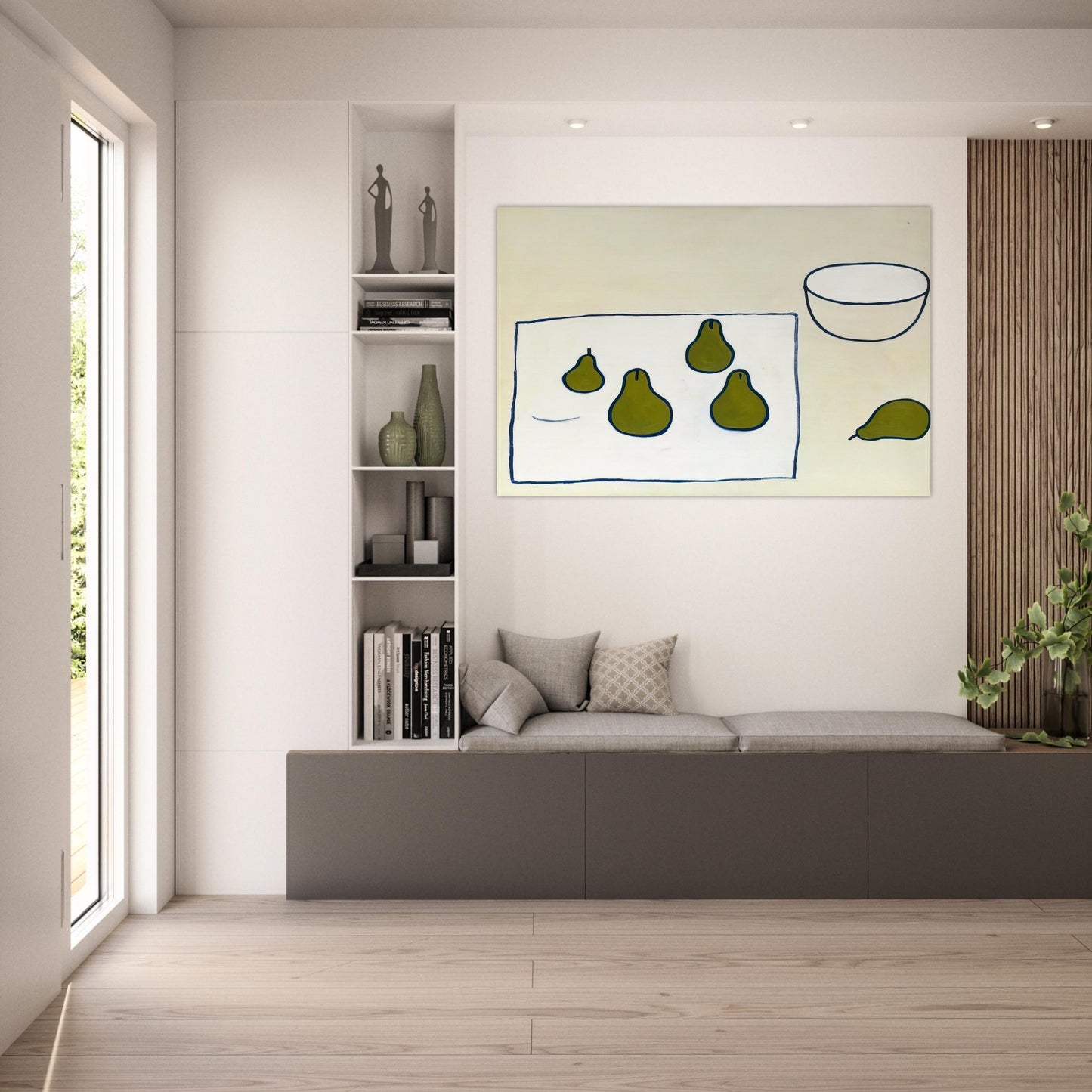
William Scott's Five Pears (1976) – A Masterpiece of Modern Still Life
Elevate your space with this exquisite museum-quality reproduction of Five Pears, a seminal 1976 work by British modernist master William Scott. Renowned for his bold, semi-abstract compositions, Scott transforms the humble pear into a study of form, color, and spatial harmony. This fine art print captures the artist's signature balance between figuration and abstraction, making it a timeless addition to any contemporary interior.
Why This Print Belongs in Your Collection
- Archival Excellence: Printed on RedKalion's Master's Edition archival paper, this reproduction is crafted to endure. Our 250 gsm (110 lb), acid-free, FSC-certified paper ensures longevity, with a natural off-white tone that enhances the artwork's subtle hues.
- Museum-Quality Reproduction: Every detail of Scott's brushwork—from the pears' voluptuous contours to the muted background—is rendered with precision, offering a true-to-life interpretation of the original.
- Sophisticated Aesthetic: Scott's minimalist palette and geometric precision evoke the quiet elegance of mid-century modernism, making this print a versatile centerpiece for modern, Scandinavian, or eclectic interiors.
- Generous Scale: Presented in a commanding 100x150 cm (40x60″) format, this print commands attention while maintaining the intimacy of Scott's composition.
The Art Historical Significance of Five Pears
William Scott (1913–1989) was a pivotal figure in post-war British art, bridging the gap between European modernism and American abstraction. Five Pears exemplifies his mature style, where everyday objects are distilled into essential forms. Unlike the hyperrealism of traditional still life, Scott's pears become almost architectural, their curves and shadows creating a dynamic interplay of light and space. This work reflects his fascination with the tension between representation and abstraction—a hallmark of his oeuvre.
Crafted for Discerning Collectors
RedKalion's William Scott prints are produced using state-of-the-art giclée technology, ensuring color accuracy and depth. The matte, uncoated finish of our paper provides a velvety texture that invites close inspection, while its 0.29 mm (11.4 mils) thickness lends a substantial, gallery-worthy presence. Whether displayed in a living room, office, or gallery, this print is a testament to the enduring power of modernist art.
Own a piece of art history—where simplicity meets sophistication, and every pear tells a story.


Discover Unlimited Art Possibilities
At RedKalion, you can find virtually any artwork from any artist, available in a wide range of sizes to perfectly match your space.
If you didn’t find what you’re looking for, contact us at support@redkalion.com . We will source any artwork and produce it in any size and format you need, including art prints, posters, canvas, framed pieces, framed canvas, and more.
For dedicated art enthusiasts, we also offer handcrafted replicas of any artwork, carefully painted by highly skilled artists using traditional techniques.
For custom requests, contact us at support@redkalion.com .
What makes this Five Pears print museum-quality?
Our William Scott Five Pears print is produced on acid-free, 250 gsm archival paper with a matte finish, ensuring color fidelity and longevity. The uncoated, off-white paper enhances the artwork's subtle tones, just like in a museum setting.
Is the paper used for this print sustainable?
Yes! Our FSC-certified paper is sourced responsibly, ensuring your William Scott art print is as eco-conscious as it is beautiful.
What are the dimensions of this Five Pears print?
This William Scott poster is available in a large 100x150 cm (40x60″) size, perfect for making a bold statement in any space.
How should I display this print to preserve its quality?
Avoid direct sunlight to prevent fading. We recommend framing with UV-protective glass to maintain the archival quality of your William Scott fine art print.
What is the expected shipping time for this print?
Shipping typically takes 5–7 business days within the EU and 7–10 days internationally. Tracking is provided for all William Scott prints.
How does William Scott's style differ from other still-life artists?
Scott's Five Pears blends abstraction with figuration, focusing on form and spatial relationships rather than realistic detail—a hallmark of his modernist approach.
Why did William Scott choose pears as a subject?
Pears were a recurring motif in Scott's work, symbolizing simplicity and purity. Their organic shapes allowed him to explore geometric abstraction and the interplay of light and shadow.