
Über Zwei Quadrate: In 6 Konstruktionen Kunstprint | RedKalion
Über Zwei Quadrate: In 6 Konstruktionen Kunstprint | RedKalion
Verfügbarkeit für Abholungen konnte nicht geladen werden
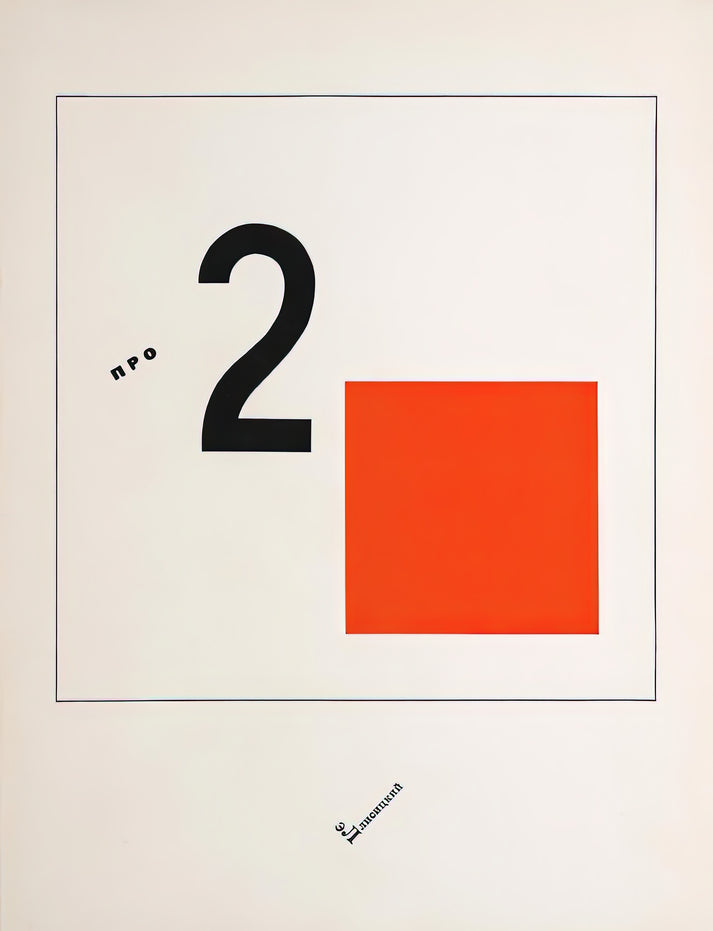
El Lissitzkys Meisterwerk von 1922, Über zwei Quadrate: In 6 Konstruktionen, ist ein bahnbrechendes Werk des suprematistischen Grafikdesigns. Dieses avantgardistische Kinderbuch destilliert die geometrische Reinheit der Bewegung in eine dynamische Erzählung von zwei Quadraten, die sich über sechs kühne Kompositionen hinweg gegenseitig beeinflussen. Lissitzky, eine Schlüsselfigur des russischen Konstruktivismus, setzte schroffe schwarze und rote Formen vor weißem Hintergrund ein, um universelle Ideen von Konflikt, Harmonie und räumlicher Revolution zu vermitteln. Damit überstieg er bloße Illustration und wurde zu einem philosophischen Manifest.
Suprematist-Kunstprint: Über zwei Quadrate in 6 Konstruktionen
Unser hochwertiger Kunstprint fängt die präzise Typografie und die schroffen Farbkontraste der Original-Lithografien ein. Jede Konstruktion wird mit archivtreuer Genauigkeit reproduziert, sodass die geometrische Spannung und die minimalistische Balance erhalten bleiben, wie Lissitzky sie beabsichtigt hatte. Dieser Print dient sowohl als historisches Dokument als auch als markantes visuelles Statement für moderne Innenräume.
El Lissitzkys geometrische Erzählung von 1922
Dieses in postrevolutionären Russland entstandene Werk verkörpert Lissitzkys „Proun“-Experimente, die Malerei und Architektur verbinden. Die sechs Konstruktionen entwickeln sich von einfacher Gegenüberstellung zu komplexer Interaktion und spiegeln die suprematistischen Ideale einer neuen Weltordnung durch abstrakte Formen wider. Es bleibt ein Grundpfeiler der modernistischen Designtheorie.
Druckspezifikationen & Materialien
- Verfügbare Größen: 75×100 cm / 30×40″, 40×50 cm / 16×20″, 21×29,7 cm / 8×12″
- Papierfinish: Matt, ungestrichen, natürlich weiß (cremeweiß)
- Säurefrei: pH-Wert über 7 zur Vermeidung von Vergilbung im Laufe der Zeit
- Papiergewicht: 250 g/m² (110 lb) | Dicke: 0,29 mm (11,4 mils)
- Nachhaltiges Papier: FSC-zertifiziert
RedKalions museumreifer Print von Über zwei Quadrate: In 6 Konstruktionen bietet Sammlern und Designbegeisterten ein authentisches Stück avantgardistischer Geschichte. Unsere Archivstandards sorgen dafür, dass diese suprematistische Erzählung für Generationen lebendig bleibt.
```
Discover Unlimited Art Possibilities
At RedKalion, you can find virtually any artwork from any artist, available in a wide range of sizes to perfectly match your space.
If you didn’t find what you’re looking for, contact us at support@redkalion.com . We will source any artwork and produce it in any size and format you need, including art prints, posters, canvas, framed pieces, framed canvas, and more.
For dedicated art enthusiasts, we also offer handcrafted replicas of any artwork, carefully painted by highly skilled artists using traditional techniques.
For custom requests, contact us at support@redkalion.com .
What is the artistic significance of About Two Squares: In 6 Constructions?
El Lissitzky's 1922 work is a foundational Suprematist graphic narrative, using geometric abstraction to convey universal themes. It revolutionized children's book design and influenced modernist typography.
How many constructions are in the About Two Squares series?
The series consists of six distinct lithographic constructions, each depicting the dynamic interaction between two squares in a progressive narrative sequence.
What paper type is used for this fine art print?
We use FSC-certified, acid-free paper with a matte finish and 250 gsm weight, ensuring archival longevity and true color reproduction for your Suprematist art print.
How is this art print shipped to prevent damage?
Prints are carefully rolled in a protective tube with acid-free tissue, shipped via tracked courier to ensure your About Two Squares print arrives in pristine condition.
Will this print fade or yellow over time?
No, our acid-free paper and pigment-based inks resist fading and yellowing, preserving the bold black and red hues of this Suprematist masterpiece for decades.
What was El Lissitzky's role in the Suprematist movement?
El Lissitzky was a pivotal figure who expanded Suprematism from painting into graphic design and architecture, with About Two Squares exemplifying his innovative 'Proun' concepts.
Why are only black and red colors used in this artwork?
The limited palette of black and red on white reflects Suprematist principles of geometric purity and stark contrast, emphasizing form and spatial dynamics over decorative color.