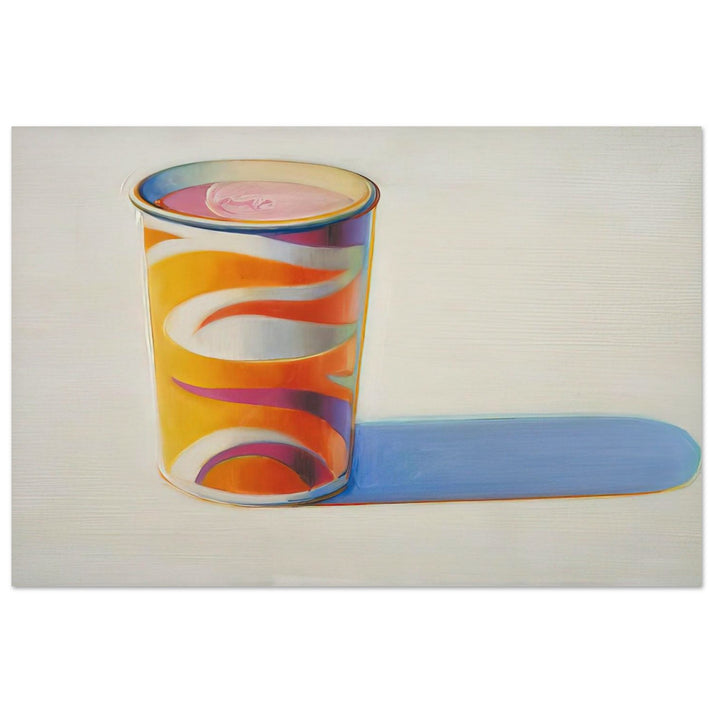


Drink Cup - 1972 - Wayne Thiebaud Art Prints - 100x150 cm / 40x60″ inches | Wayne Thiebaud Poster | Wayne Thiebaud Prints
Drink Cup - 1972 - Wayne Thiebaud Art Prints - 100x150 cm / 40x60″ inches | Wayne Thiebaud Poster | Wayne Thiebaud Prints
Verfügbarkeit für Abholungen konnte nicht geladen werden
Wayne Thiebaud’s Drink Cup (1972): A Masterpiece of Pop Art Sensuality
Elevate your space with this museum-quality reproduction of Wayne Thiebaud’s iconic Drink Cup (1972), a jewel of American Pop Art rendered in luscious, buttery strokes. Thiebaud’s hyper-saturated palette and exaggerated shadows transform an everyday object into a celebration of texture, light, and nostalgia—hallmarks of his signature style.
This archival fine art print captures the tactile richness of Thiebaud’s oil paintings, from the glossy condensation on the cup to the velvety folds of the straw. Printed on RedKalion’s Master’s Edition archival paper—a 250 gsm, acid-free, FSC-certified matte surface—it delivers unparalleled depth and longevity. The off-white, uncoated finish enhances the artwork’s warmth, ensuring a gallery-worthy presentation that resists yellowing for generations.
Why Drink Cup Belongs in Your Collection
- Pop Art with a Human Touch: Thiebaud’s work bridges the gap between Warhol’s cool detachment and the intimate charm of still-life traditions. His Drink Cup is a love letter to mid-century Americana, evoking diners, road trips, and the quiet joy of a simple pleasure.
- Technical Brilliance: Notice the impasto technique in the cup’s highlights—Thiebaud’s thick, sculptural brushwork creates a three-dimensional illusion, making the print feel almost edible.
- Archival Excellence: Our 100x150 cm (40x60″) reproduction is crafted on pH-neutral, 0.29 mm-thick paper, ensuring museum-grade durability. The matte finish eliminates glare, allowing the colors to sing in any lighting.
RedKalion’s Drink Cup print is more than a poster—it’s a conversation piece, a slice of art history, and a testament to the enduring power of Thiebaud’s vision. Whether displayed in a modern loft or a cozy café, it brings warmth, wit, and a touch of California cool to any environment.
Own a piece of Pop Art history—curated by RedKalion for discerning collectors.


Discover Unlimited Art Possibilities
At RedKalion, you can find virtually any artwork from any artist, available in a wide range of sizes to perfectly match your space.
If you didn’t find what you’re looking for, contact us at support@redkalion.com . We will source any artwork and produce it in any size and format you need, including art prints, posters, canvas, framed pieces, framed canvas, and more.
For dedicated art enthusiasts, we also offer handcrafted replicas of any artwork, carefully painted by highly skilled artists using traditional techniques.
For custom requests, contact us at support@redkalion.com .
What makes this Drink Cup print different from a standard poster?
This is a museum-quality fine art print on 250 gsm, acid-free, FSC-certified paper, designed to replicate the texture and depth of Thiebaud’s original oil painting. Unlike posters, it resists fading and yellowing for decades.
Is the paper truly matte, and will it reflect light?
Yes, the uncoated matte finish eliminates glare, ensuring vibrant colors and crisp details in any lighting. Perfect for spaces with natural or artificial light.
How thick is the paper, and will it wrinkle or curl?
The paper is 0.29 mm thick (11.4 mils) and weighs 250 gsm, providing a sturdy, premium feel. It’s resistant to curling and wrinkling when properly framed or mounted.
What are the exact dimensions of the 100x150 cm print?
The print measures 100x150 cm (40x60 inches), offering a bold, immersive presence ideal for large walls or statement spaces.
How does RedKalion ensure the print’s longevity?
Our acid-free, pH-neutral paper prevents yellowing, while the archival inks resist fading. With proper care, this print will last over 100 years without degradation.
What inspired Wayne Thiebaud to paint Drink Cup in 1972?
Thiebaud was fascinated by everyday objects and their sensory appeal. Drink Cup reflects his love for diner culture, mid-century aesthetics, and the interplay of light on glossy surfaces.
How does Thiebaud’s technique differ from other Pop artists like Warhol?
Unlike Warhol’s flat, mechanical style, Thiebaud used thick impasto brushstrokes and exaggerated shadows to create a tactile, almost sculptural effect, blending Pop Art with traditional still-life techniques.