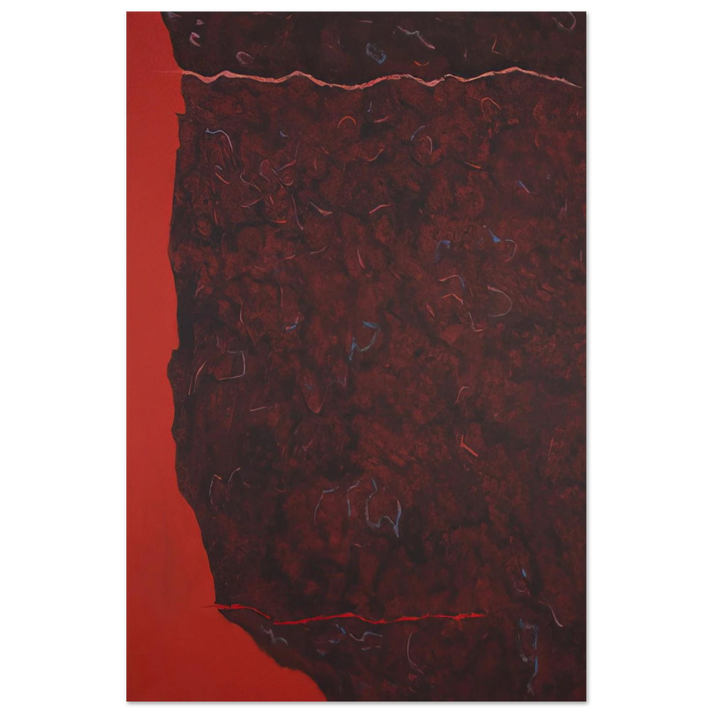


Edge of Burning Brush - 1986 - Theodoros Stamos Art Prints - 100x150 cm / 40x60″ inches | Theodoros Stamos Poster | Theodoros Stamos Prints
Edge of Burning Brush - 1986 - Theodoros Stamos Art Prints - 100x150 cm / 40x60″ inches | Theodoros Stamos Poster | Theodoros Stamos Prints
Verfügbarkeit für Abholungen konnte nicht geladen werden
Theodoros Stamos' Edge of Burning Brush (1986): A Luminous Masterpiece Reborn
Step into the radiant world of Theodoros Stamos with this museum-quality reproduction of Edge of Burning Brush (1986), a defining work from the artist's late-career exploration of light, color, and cosmic energy. As a pivotal figure in the Abstract Expressionist movement, Stamos crafted compositions that transcend mere abstraction—they become meditative portals into the sublime. This archival print captures the painting's ethereal glow, where layered washes of pigment evoke the primal forces of nature: fire, water, and the infinite expanse of the universe.
Rendered on RedKalion's Master's Edition archival paper, this fine art print is a testament to both artistic legacy and uncompromising craftsmanship. The 250 gsm (110 lb), acid-free, FSC-certified paper—with its velvety matte finish and natural off-white hue—faithfully replicates the tactile depth of Stamos' original brushstrokes. Every detail, from the subtle gradations of ochre to the dynamic interplay of crimson and cobalt, is preserved with archival precision, ensuring your print remains vibrant for generations.
Measuring 100x150 cm (40x60″), this large-scale reproduction commands attention, transforming any space into a gallery-worthy sanctuary. Whether displayed in a minimalist loft, a sunlit study, or a corporate foyer, Edge of Burning Brush infuses the room with a sense of quiet intensity—a visual symphony of color and emotion that invites contemplation.
Stamos, a protégé of the legendary Arshile Gorky, was renowned for his ability to distill the essence of the natural world into pure abstraction. In Edge of Burning Brush, he employs a technique akin to sfumato, blending pigments with a delicacy that suggests both dissolution and renewal. The result is a painting that feels simultaneously ancient and timeless, as if capturing the fleeting moment between dusk and dawn.
Elevate your collection with a piece that embodies the spirit of Abstract Expressionism while meeting the exacting standards of museum conservation. This is not merely a print—it is a curated experience, meticulously produced by RedKalion to honor the artist's vision and the discerning eye of the collector.
- Archival Quality: Acid-free, pH-neutral paper prevents yellowing, ensuring longevity.
- Museum-Grade Materials: 250 gsm weight, 0.29 mm thickness, and FSC-certified sustainability.
- True-to-Original Reproduction: Matte, uncoated finish preserves the artist's intended texture and depth.
- Generous Scale: 100x150 cm (40x60″) for a commanding, immersive presence.


Discover Unlimited Art Possibilities
At RedKalion, you can find virtually any artwork from any artist, available in a wide range of sizes to perfectly match your space.
If you didn’t find what you’re looking for, contact us at support@redkalion.com . We will source any artwork and produce it in any size and format you need, including art prints, posters, canvas, framed pieces, framed canvas, and more.
For dedicated art enthusiasts, we also offer handcrafted replicas of any artwork, carefully painted by highly skilled artists using traditional techniques.
For custom requests, contact us at support@redkalion.com .
What makes this Theodoros Stamos print a museum-quality reproduction?
Our Edge of Burning Brush print uses archival-grade, acid-free paper with a 250 gsm weight and matte finish, ensuring color fidelity and longevity comparable to museum standards.
How does the paper's off-white, uncoated finish enhance the artwork?
The natural off-white, uncoated paper mimics the texture of Stamos' original canvas, preserving the subtle tonal variations and depth of his abstract brushwork.
Is the 100x150 cm (40x60″) size suitable for residential spaces?
Yes! The 100x150 cm size is ideal for statement walls in living rooms, offices, or galleries, offering a bold yet balanced presence in any modern interior.
What is the expected lifespan of this archival print?
With proper care, our acid-free, pH-neutral paper ensures your print remains vibrant for 100+ years, resisting yellowing and deterioration.
How is the print packaged and shipped to prevent damage?
We ship prints in sturdy, reinforced tubes with protective layers to prevent creasing, moisture damage, or bending during transit.
What inspired Theodoros Stamos' Edge of Burning Brush (1986)?
Stamos drew inspiration from nature's primal forces—fire, water, and cosmic energy—using layered washes of pigment to evoke a meditative, almost spiritual abstraction.
How does Stamos' technique differ from other Abstract Expressionists?
Stamos employed a sfumato-like blending technique, creating ethereal transitions between colors, unlike the bold gestural strokes of peers like Pollock or de Kooning.